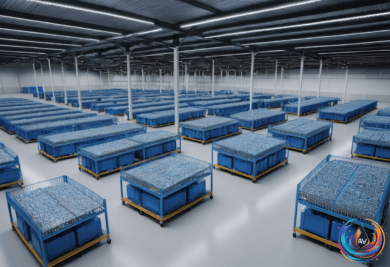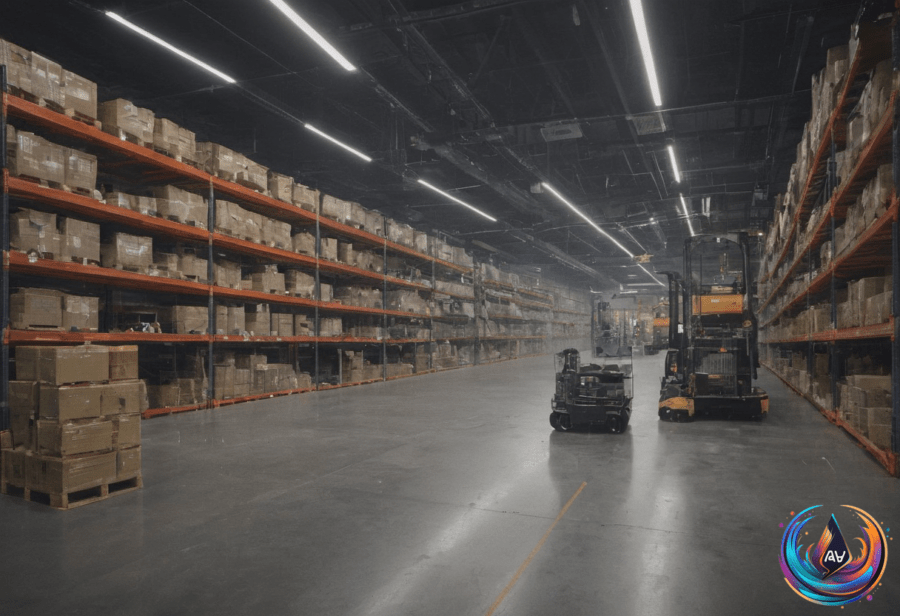
Guess’s Venlo operation now runs on warehouse robots. GXO Logistics and Exotec have deployed an Exotec Skypod automated storage and retrieval system at GXO’s facility in Venlo, the Netherlands, to support Guess’s fashion logistics. The installation was in operation on September 15, 2026.
The system processes between 40,000 and 70,000 pieces per day, giving the facility an automated foundation for handling Guess products across its logistics operation. During peak periods, it can reach throughput of up to 2,200 order lines per hour — a useful number when fashion demand decides to stop behaving like a spreadsheet.
The installation includes 127 robots, 60,000 rack locations, eight goods-to-person picking stations and 200 meters of conveyor network. Together, those components support the movement and picking of products through the Venlo facility without relying on a collection of disconnected automation systems.
Automation Built Around Fashion’s Messy Calendar
GXO manages inbound logistics, value-added services and outbound distribution for Guess at the Venlo site. Those services include quality control and garment conditioning, with distribution covering EMEA and Asia.
The system was designed around the demands of fashion logistics: high SKU counts, seasonal demand fluctuations and evolving customer needs. GXO was handling a large, seasonally variable volume of Guess products at Venlo while preparing to absorb new e-commerce flows for the Benelux region.
That combination creates a specific operational problem. The facility must manage a wide range of products, respond to seasonal changes and support new order flows without treating every demand spike as a surprise. The Skypod system addresses that operating model through automated storage, robotic movement and goods-to-person picking stations.
One Integrator Instead of a Vendor Jigsaw
GXO selected Exotec as a single system integrator rather than assembling components from multiple vendors. Exotec coordinated the integration and end-to-end deployment across the facility, keeping responsibility for the system’s installation within one project structure.
For Mark Donné, operations manager at GXO Venlo, the result means “faster processing, greater predictability and a smoother workflow across the site.” The statement points to the practical goal of the deployment: not automation for its own sake, but a logistics process that can handle volume and change across the facility.
Wim Vermeir, senior sales executive Benelux at Exotec, described the design challenge directly: “fashion logistics involves high SKU counts, seasonal spikes and EMEA-wide distribution that require precision engineering rather than off-the-shelf automation.” That distinction matters because fashion warehouses do not handle one stable product stream. They manage shifting assortments, seasonal volumes and customer requirements that keep moving.
The Venlo deployment places those requirements inside one automated storage and retrieval system. Its 127 robots and 60,000 rack locations provide the storage scale, while the eight goods-to-person picking stations and 200 meters of conveyor network connect storage with order processing.
GXO and Exotec are now using the system to support Guess’s global fashion logistics from Venlo, including inbound operations, value-added services and outbound distribution across EMEA and Asia. The installation also prepares the site for new Benelux e-commerce flows — because apparently the warehouse had not already been given enough ways to stay busy.