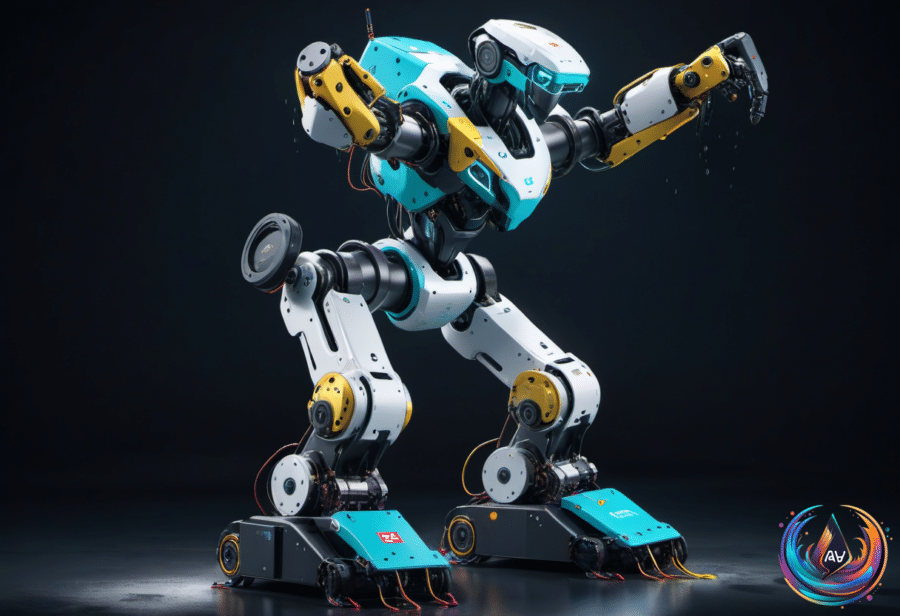
FORT Robotics has secured approximately $20 million in new funding commitments as it prepares to expand its physical AI safety operations and pursue a Nasdaq listing. Tiger Global leads an approximately $10 million financing, while Mark Cuban Companies is also participating.
The commitments are expected to close during the week of October 22, 2026. Tiger Global is also putting another $10 million into a previously announced PIPE connected to FORT’s proposed business combination, bringing total committed capital tied to that transaction above $50 million.
That gives FORT more than a fresh cash infusion. The company is positioning safety technology as a core part of the next stage of robotics, where machines need to make decisions and act in the physical world.
What FORT Robotics Builds
Samuel Reeves founded FORT Robotics in 2018 as a US-based robotics safety technology company. FORT develops hardware, software, and services for autonomous machines, with its main platform called the FORT Trust Layer.
The platform provides remote control, safety monitoring, emergency stopping, and secure communications. Those functions are designed for machines that operate beyond a simple demonstration, including systems used by robot manufacturers, automation developers, and industrial operators.
FORT supports over 600 customers, including Agility Robotics, DoorDash, Zoox, and Google DeepMind. Prologis Ventures is an existing investor in the company.
The company’s work focuses on a practical challenge: making autonomous machines easier to supervise when they move through warehouses, roads, workplaces, and other real-world settings. Physical AI systems use sensors, software, and automated decision-making to interact with that world through robots, autonomous vehicles, and industrial equipment.
A Growing Market for Physical AI
The funding arrives during a strong period for robotics and physical AI investment. The sector raised $33.4 billion globally in the first half of the year, compared with more than $28.7 billion across all of last year. Funding in 2020 stood at just under $5 billion.
Several large transactions show where investor attention is going. Anduril, a defense company, raised $5 billion in May. Saronic, an autonomous shipbuilder, raised $1.75 billion in March, while Skild AI raised $1.4 billion in January. Physical Intelligence raised about $1 billion in May.
Other activity has added to the momentum. On October 20, 2026, Firefly raised $20 million, and on October 21, 2026, Daytona raised a $60 million Series B. Figure AI, a humanoid robotics company, secured a $39 billion valuation last year.
These numbers point to a market that extends beyond individual robots. Jensen Huang, the Nvidia CEO, described robotics as a $50 trillion industry, and robotics companies are going after that opportunity across industrial equipment, autonomous vehicles, defense systems, logistics, and humanoid machines.
That expansion also raises a basic question: how do companies keep autonomous systems safe as more machines enter everyday operations? A robot that can act without constant human control needs ways to monitor its decisions, stop during an emergency, and maintain secure communication with operators.
Why Safety Matters as Machines Gain Independence
FORT’s funding plan connects those safety needs with the company’s expansion and proposed Nasdaq listing. Its Trust Layer brings remote control, monitoring, emergency stopping, and secure communications into one platform, giving customers tools to manage autonomous machines after deployment.
The need for those tools grows as physical AI moves from research settings into commercial and industrial use. PwC’s 2026 Physical AI Governance report says the use of AI in robotics and autonomous vehicles is increasing.
Governance matters because physical AI can affect people, property, vehicles, and industrial equipment. Software errors in a digital product may disrupt a service, but a failure in an autonomous machine can also create a direct safety problem. Monitoring and emergency controls give operators a way to respond when automated behavior does not match expectations.
FORT’s customer base spans robot manufacturers, automation developers, and industrial operators, which places its technology across several parts of the robotics supply chain. Its support for more than 600 customers also gives the company a broad base as it seeks to expand.
The upcoming commitments will not answer every challenge facing physical AI, but they show where investors see a need. As more companies build machines that sense, decide, and act, safety systems may become as important to deployment as the robots themselves.
Based on