Weather forecasting is entering a difficult stretch: the period three to five weeks ahead, when accurate predictions become harder to produce. An artificial-intelligence application developed for this subseasonal range improves forecasts of precipitation, temperature and pressure up to a month in advance.
The tool also helps identify extreme weather earlier, including heat, cold, rainfall and flooding. Research by Guan, H. et al. describes an approach that works with both physics-based and AI-based weather models, giving forecasters a way to refine predictions across a challenging time window.
Why the Three-to-Five-Week Range Matters
The application focuses on forecasts made 3–5 weeks before weather conditions occur. That period sits beyond the shorter forecast window while remaining close enough for useful predictions of upcoming conditions. The research describes this as the difficult subseasonal range, where better guidance on precipitation, temperature and pressure can make a clear difference in how weather risks are understood.
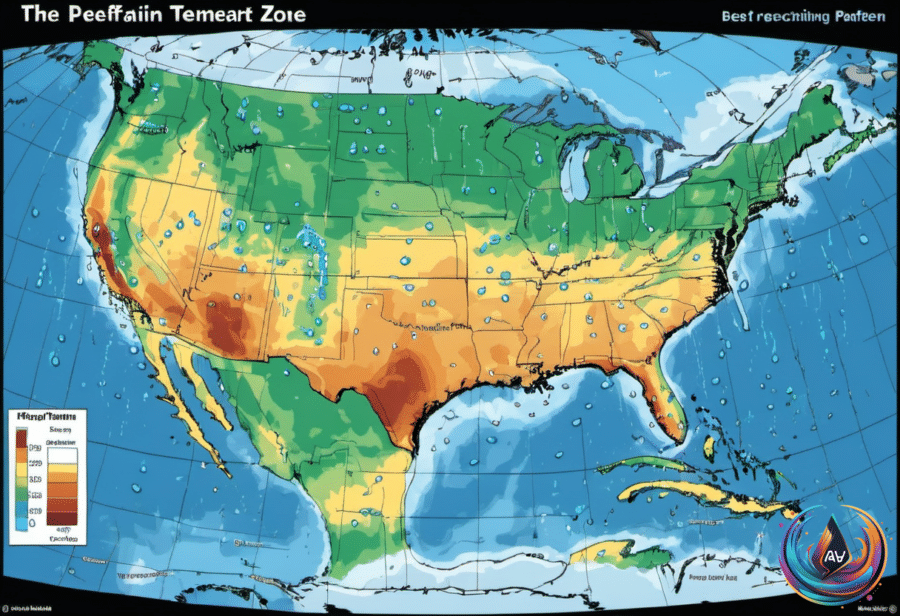
Instead of focusing on one type of weather information, the tool improves three key parts of a forecast. Precipitation predictions cover expected rainfall, while temperature forecasts help show the risk of heat or cold. Pressure forecasts add another part of the picture, allowing the application to strengthen predictions across several weather measures at once.
The result is not a forecast limited to one upcoming day or one weather event. The application provides accurate forecasts as far as three to five weeks ahead, extending useful information toward the one-month mark. That longer view is the central feature of the research.
Refining Physics-Based and AI Weather Models
The tool refines both physics-based weather models and AI-based weather models. That matters because the application is designed to improve different kinds of forecasting systems rather than replace one approach with another. Its role is to enhance the models that produce predictions for the subseasonal period.
Physics-based models and AI-based models are both part of the tool’s focus, but the available research does not describe a separate method for each one. The verified finding is clear: the application refines both categories and improves forecasts of precipitation, temperature and pressure 3–5 weeks in advance.
This combined focus gives the tool a broad place in weather forecasting. It addresses the forecast period itself while also working across the two model types named in the research. The application’s value comes from joining those improvements with earlier warnings about extreme conditions.
Earlier Signals for Extreme Weather
Extreme weather is another major target of the application. The research says it improves early prediction of extreme heat, extreme cold, rainfall and flooding. These forecasts can reach up to a month ahead, giving the tool a role in detecting several different forms of weather risk before they arrive.
That range is important because the tool does not focus on one extreme alone. Heat and cold represent temperature extremes, while rainfall and flooding represent precipitation-related dangers. By improving predictions across all four, the application offers a wider view of possible extreme weather during the subseasonal period.
Early detection is the key point. The tool improves the prediction of extremes before they occur, not only the description of conditions after they have developed. Better forecasts of temperature, precipitation and pressure support that earlier view, linking everyday weather predictions with the detection of heat, cold, rainfall and flooding.
The research by Guan, H. et al. was dated 21 October 2026. Its central finding is that artificial intelligence can strengthen weather forecasting in the difficult three-to-five-week range, improving both standard conditions and extreme weather predictions.
For weather forecasting, the advance is measured in time and coverage: up to a month ahead, across precipitation, temperature and pressure, with earlier prediction of heat, cold, rainfall and flooding. The application brings those gains to both physics-based and AI-based models.
Based on