The familiar phone-to-dashboard connection is entering a new phase. Several car manufacturers are turning away from Apple CarPlay and Android Auto, choosing native infotainment systems that bring software, maps, music, and AI assistants directly into the vehicle.
General Motors is leading that shift, but one important exception gives drivers a reason to keep watching. The 2027 Cadillac Lyriq will continue supporting both Android Auto and Apple CarPlay, even as GM removes those features from other vehicles and rebuilds its in-house system around Google’s Gemini.
GM Is Replacing Phone Mirroring With Its Own System
GM confirmed that it will phase out Apple CarPlay and Android Auto from its gas-powered vehicle lineup. The company already dropped support from its electric vehicles in 2023, and other EVs, including the Chevy Silverado EV Work Truck and GMC Hummer EV, had their CarPlay and Android Auto functions removed earlier this year.
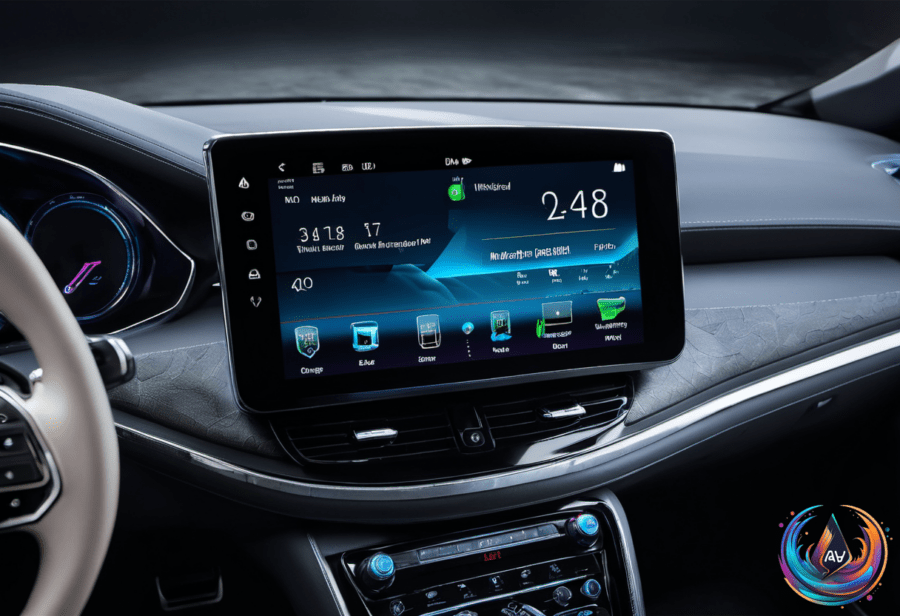
GM’s replacement is not simply another dashboard menu. The company is upgrading its in-house infotainment system by replacing its built-in Google operating system with Google’s AI assistant, Gemini. The new Gemini-powered system gives drivers access to Google Maps and other applications available through the Google Play Store.
GM is also working toward a custom-built AI assistant designed around its vehicles. The company stated in April that it hopes to deliver that assistant by the end of 2026, with the system fine-tuned using proprietary vehicle data.
That strategy puts verbal commands and smart features at the center of GM’s dashboard experience. The company is banking on customers preferring an AI-driven system that can connect vehicle information, applications, and commands inside one in-house platform.
Customer Feedback Is Driving the Split
GM CEO Mary Barra said customer feedback shaped the company’s decision. She described moving between GM’s in-house system and third-party applications as “very clunky,” pointing to a problem GM believes its own software can solve.
The change creates a sharp contrast with the popularity of Apple’s dashboard platform. Seventy-nine percent of car buyers would not choose a model without CarPlay support, while 55 percent of users consider losing CarPlay a “deal breaker.” CarPlay supports more than 800 different models, giving the feature a broad presence across the vehicle market.
Those numbers make the Cadillac Lyriq exception stand out. A Cadillac representative explained that the vehicle’s access to phone mirroring applications was preserved “based on customer feedback,” allowing the 2027 Lyriq to keep both Apple CarPlay and Android Auto.
The Lyriq decision shows that GM’s transition is not uniform across every model. Instead, the company is testing a future where its own AI system handles core vehicle functions while selected vehicles continue to offer familiar phone mirroring.
Entertainment Remains Part of GM’s Software Push
GM is not removing every outside technology from its vehicles. In December of last year, the company announced that Apple Music would be available on its in-car software platform for all 2025 and 2026 models.
GM’s VP of global product management Tim Twerdahl described Apple Music as “the latest example of how we’re expanding entertainment choices built directly into our vehicles.” That move shows how GM is separating individual applications from the larger question of who controls the dashboard experience.
Apple Music can remain available inside GM’s software platform even as Apple CarPlay disappears from many vehicles. At the same time, Gemini, Google Maps, and applications from the Google Play Store will form part of the system GM wants customers to use without switching into a phone-based interface.
For drivers who still want phone mirroring in affected Chevy, GMC, and Cadillac EVs, the EV Play LT offers another path. This third-party product provides wired and wireless phone mirroring, supports Apple CarPlay and Android Auto, costs $199.99, and has no subscription fees.
That option does not change GM’s factory software direction, but it gives owners a way to restore the functions that many buyers already expect from a vehicle dashboard.
The Dashboard Becomes an AI Choice
GM’s plans turn infotainment into a direct competition between two experiences: the familiar phone screen mirrored onto a vehicle display, or a native system built around AI, verbal commands, and vehicle-specific data.
The 2027 Cadillac Lyriq keeps both choices alive, while other GM EVs move toward the company’s Gemini-powered platform. By the end of 2026, GM hopes its custom-built AI assistant will add another layer to that system, giving the company a chance to prove that an in-house dashboard can feel less clunky and more useful than switching between separate platforms.
The result will be a major test of what drivers value most: access to the phone features they already know, or an AI assistant designed specifically for the vehicle in front of them.
Based on