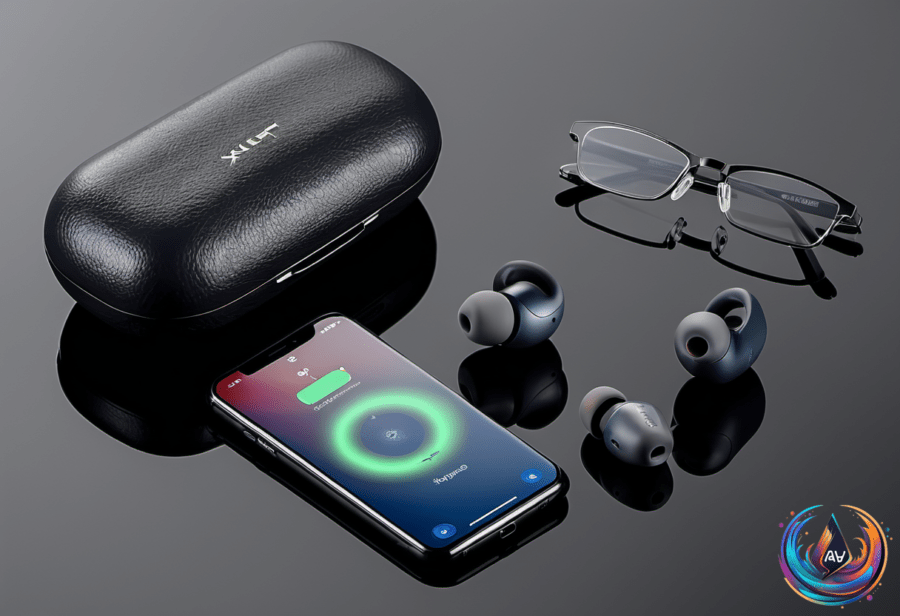
AI hardware is moving closer to the moments when people actually need it: during calls, conversations, meetings, and everyday life. Plaud has announced earphones with an eSIM-enabled case for talking to AI agents, while hearing technology startup Legato has emerged from stealth with glasses designed to help people hear voices more clearly.
The two announcements place audio at the center of the next wave of wearable technology. Plaud is preparing a consumer product with recording, transcription, and AI access, while Legato is targeting people with mild to moderate hearing loss through a new type of hearing device.
Plaud One Brings AI Conversations Into Earphones
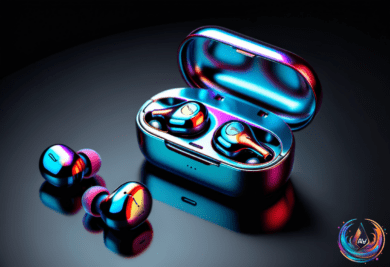
Plaud announced its Plaud One earphones on August 27, 2026. The earphones can record calls and in-person conversations, and their case supports an eSIM card, creating a direct path for users to talk to AI agents without relying on a separate device.
The earphones feature 12mm drivers and can record six hours of in-person meetings or three hours of calls on a single charge. Add the case, and Plaud One can record up to 25 hours of conversations on a single charge.
That combination turns the charging case into more than a place to store the earphones. It becomes part of the recording system and supports the eSIM connection that Plaud built into the product. Nathan Xu, Plaud’s CEO, described earbuds as “an interface to talk to AI from anywhere.”
Plaud already has over 2.5 million people using its hardware or software. The company also claimed in June that it had reached an annual run-rate revenue of $100 million, giving the new earphones a large installed base and a business with room to expand its AI services.
Transcription Plans Add A New Layer
Plaud One buyers will receive 300 minutes of free transcription per month. Additional plans start from $8.33 per month when paid annually, giving users a way to extend transcription beyond the included allowance.
Plaud also plans to introduce a credit-based system for tasks, and buyers of Plaud One will receive $200 in credits. That system could connect the earphones to more AI-powered actions, although the announced details focus on the credits, transcription, and conversation recording.
The pre-order price for Plaud One is $249, with shipping scheduled for Q4 2026. The product’s timeline puts its arrival after Plaud’s August announcement and gives buyers a clear path from pre-order to a device built around recorded conversations and AI access.
For people who move between calls, meetings, and in-person discussions, the appeal is easy to see: one pair of earphones can capture several types of conversation, while the case extends recording time and supports an eSIM card. Plaud is betting that AI becomes more useful when it can follow the user through those moments.
Legato Targets Hearing And Connection
On August 26, 2026, Legato announced its AI hearing glasses after emerging from stealth with $12 million in funding. The startup expects to launch its Legato Frames later this fall, bringing an AI-powered hearing system into glasses rather than traditional hearing aids.
Legato was founded by Mehul Trivedi and Steve Romine. Trivedi previously led Bose’s creation of Bose Frames and worked on Meta Ray-Bans at EssilorLuxottica, while Romine previously served as COO of hearing care company Audicus.
Legato developed a proprietary acoustic system, signal-processing stack, and mechanical architecture for its glasses. The system uses AI to differentiate between background noise and voices, helping direct attention toward speech in environments where sound competes for the wearer’s attention.
The glasses feature a dual-speaker system that directs sound toward the wearer and reduces sound escape by 99%. That design aims to make the hearing assistance more private while keeping the product within the familiar shape of eyewear.
Legato’s goal reaches beyond making television or conversations easier to hear. “Our goal is to make hearing as ubiquitous as vision,” Trivedi stated. He also described hearing as a path to connection: “Hearing, at first glance, it’s not so much just like ‘I want to hear the TV better.’ It’s really about connection. When you hear better, you connect to the world. It reduces dementia risk and depression risk.”
The company plans to sell its glasses through select eye-care providers and at a lower cost than traditional hearing aids. When purchased through an eye-care clinic, the glasses may be eligible for vision insurance.
Two Paths Toward More Personal AI
Legato’s $12 million funding came from Neotribe Ventures, Listen, and Village Global. Its launch plan connects hearing technology with eye-care providers, while Plaud’s approach connects AI assistants with a product people can wear throughout the day.
Both companies are building around audio, but they serve different needs. Plaud One focuses on recording conversations, transcription, AI agents, and extended battery life, while Legato Frames focus on hearing voices, reducing background noise, and helping people with mild to moderate hearing loss stay connected.
Legato’s glasses are expected later this fall, and Plaud One is set to ship in Q4 2026 at a $249 pre-order price. Together, the products point toward wearables that do more than deliver sound: they can capture conversations, shape what users hear, and create new ways to connect with AI and the world around them.
Based on