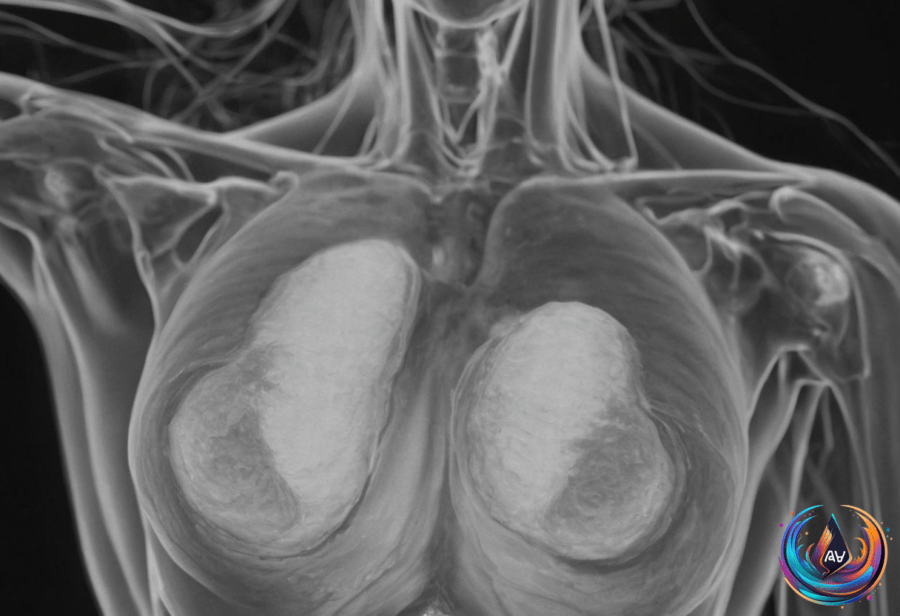
Researchers at NYU Langone Health and NYU Perlmutter Cancer Center have developed an artificial intelligence tool that estimates a woman’s risk of developing breast cancer over the next five years. Called NYU-DRP, the deep-learning model studies 3D mammograms collected across multiple screenings instead of relying on a single examination.
The approach uses longitudinal digital breast tomosynthesis, or longitudinal DBT. That means the model examines the 3D mammogram record a woman builds through repeated annual screenings, along with her age and breast density. The goal is to find patterns in how breast tissue changes over time and use those patterns to estimate two- to five-year breast cancer risk.
Why the 3D record matters
Imaging-based breast cancer risk models have mainly relied on full-field digital mammography, known as FFDM. DBT has become a predominant screening method in the United States, but researchers have not explored its use for long-term risk prediction to the same extent.
NYU-DRP was designed to address that gap. Rather than treating every screening as an isolated snapshot, the model analyzes multiple DBT examinations from the same woman. This gives it access to a record of breast tissue across time, which is central to the model’s risk estimate.
The study’s objective was to develop and evaluate a deep-learning model that uses longitudinal DBT examinations to predict long-term breast cancer risk. The researchers compared NYU-DRP with a model based on a single DBT examination, the Mirai model using same-day FFDM, and the Tyrer-Cuzick clinical risk model.
The retrospective analysis covered 313,335 DBT examinations from 161,077 women. Their mean age was 58.5 years, and the examinations took place between January 2016 and August 2020 at a single health institution. NYU-DRP itself was created from 313,531 yearly 3D mammograms from 161,165 women without breast cancer who had examinations at NYU Langone hospitals between 2016 and 2020.
How the model performed
Researchers measured performance with the AUC, time-dependent concordance index, and integrated Brier score. In an independent test set containing 34,570 examinations, the longitudinal DRP model achieved a five-year AUC of 0.721, with a 95% confidence interval of 0.698–0.744.
That result exceeded the performance of the single-timepoint DBT model, which recorded a five-year AUC of 0.707, with a 95% confidence interval of 0.683–0.730. It also surpassed the Mirai model, which reached 0.687, with a 95% confidence interval of 0.663–0.710. Both comparisons had a p value below .001.
The three models correctly ranked women at higher risk 72 percent, 70 percent, and 68 percent of the time, respectively. Those figures correspond to the longitudinal DRP model, the single-timepoint DBT model, and the Mirai model.
The paper also reports results from a matched case-control cohort of 432 women. In that group, the DRP model achieved a five-year AUC of 0.676, with a 95% confidence interval of 0.626–0.726.
These results show how an AI model can use existing 3D mammograms to estimate future breast cancer risk. The system does not depend only on information from the latest scan; it uses the accumulated imaging record, patient age, and breast density as part of its prediction.
What the study adds
Yanqi Xu, PhD, described the value of using the full imaging history: “Our study shows how AI models like NYU-DRP can be used to reliably determine a woman’s future risk of breast cancer based on existing 3D mammograms, which hold information on how the breast tissue has changed across multiple screenings over time.”
The findings connect a growing screening record with longer-term risk prediction. As women receive repeated DBT examinations, those images create the longitudinal record NYU-DRP is built to analyze.
The validation study was accepted on August 3, 2026, and published online in the American Journal of Roentgenology on August 12, 2026. It was published on September 10, 2026. The work involved NYU Langone Health, NYU Perlmutter Cancer Center, and NYU Grossman School of Medicine.
For researchers, the study demonstrates the value of using longitudinal DBT rather than relying only on one image or on same-day FFDM. For patients and clinicians, its central finding is that repeated 3D mammograms contain information that can support estimates of breast cancer risk over the following five years.