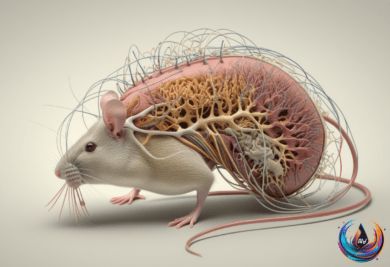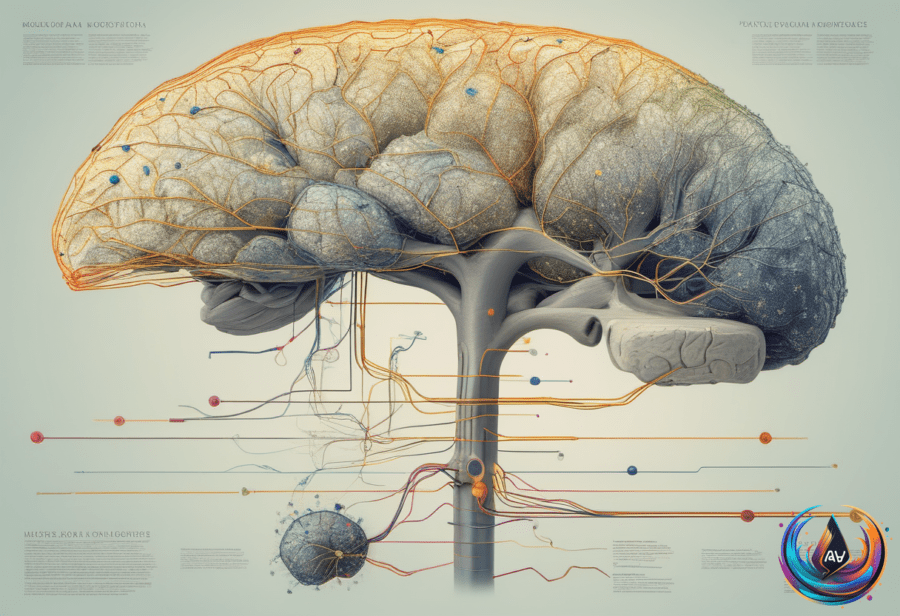
Memory refuses to stay put. Recent research suggests memories can survive major changes to the brain, including the loss of more than half the neural connections that help store them. That finding challenges the idea that long-term memories depend on one fixed, unchanging network.
The clearest evidence comes from mice that hibernate. During hibernation, the animals’ brains undergo massive remodelling, yet memories remain intact even after more than half of the synapses within their engram neurons disappear.
Engram neurons are linked to the physical traces of memory in the brain. In the mice, those neurons sat in the hippocampus, a region involved in memory, while the synapses connecting them changed during the dormant state.
Memory survives a disappearing network
The result matters because it separates memory from the survival of every individual connection. If more than half of the synapses within the relevant engram neurons can vanish without erasing the memory, the brain may store information across shifting neural systems rather than inside one permanent wiring pattern.
Researchers found that clustered synapses on engram neurons are crucial for retaining memory. Other synapses, described as non-clustered, were wiped out during hibernation but reappeared within a day after the animals returned from that state.
That recovery gives the process an unusual shape: some connections appear to protect the memory, while others can disappear and return without destroying it. The brain remodels its network, then restores parts of the original arrangement. Memory, in other words, may have more structural backup than neuroscience expected.
“Despite massive brain remodelling during hibernation, the memories were retained,” said Kazumasa Tanaka of the Okinawa Institute of Science and Technology. The sentence is less a slogan than a problem statement — the brain changed dramatically, but the information did not leave with it.
Steve Ramirez of Boston University put the implication more plainly: “Memories may be harder to break than we thought.” That does not mean every memory survives every form of brain damage, and the findings do not establish that human memories behave in exactly the same way as those of hibernating mice. They show that memory can persist through a major loss of connections in this model.
A wider question about the human brain
The findings also sit beside an observation about Alzheimer’s disease. Women appear cognitively normal for almost three years longer than men after their brains start to develop Alzheimer’s disease.
That difference does not explain why memories survive hibernation, nor does it prove that women retain memories through Alzheimer’s in the same way. It does add to a broader research question: how can cognition remain stable when the brain has already begun changing?
George Dragoi of Yale University said the hibernation result “tells us something about how our mammalian brains may work.” The key point is not that the brain keeps every connection untouched, but that it may preserve memory through patterns distributed across networks that can shift, contract, and rebuild.
Priyanka Rao-Ruiz of Vrije University Amsterdam called the work “a remarkable step forward because it addresses a long-standing puzzle in memory research: how the brain retains long-term memories.” The puzzle remains open, but the old picture of memory as a fragile file stored in one fixed circuit is looking less convincing.
For now, the evidence points to a brain that treats memory as a durable pattern rather than a single piece of wiring. Hibernation erases many connections, the animals wake, and the memories remain. Biology has once again declined to use the filing system humans designed for it.
Based on