Robots are leaving controlled demonstrations and entering homes, factories, warehouses, and everyday workspaces. Humyn Labs wants to give the companies building those machines the real-world data they need, and a new $47 million funding round gives the Bengaluru startup room to scale that mission.
Humyn Labs raised $47 million in Series A financing to help U.S. artificial intelligence and robotics companies build models that operate in physical environments. The round includes $26 million in equity led by Accel and $21 million in venture debt led by Lighthouse Canton Growth Debt Fund II.
A Global Data Engine for Physical AI
Prosus Ventures, BeeGlobal, Bajaj Finance’s Finserv Intelligence, Bajaj Alts AI Opportunities Fund, Dallas Venture Capital, Lighthouse Canton, and Jump Trading joined the equity financing. Trifecta Capital participated in the venture debt, giving Humyn Labs a larger pool of capital without requiring the entire raise to come from new equity.
The startup collects robotics training data across over 20 countries in Latin America and Asia. Brazil, India, and South Korea serve as its main hubs, while a network of local partners helps identify collection sites and oversee the work.
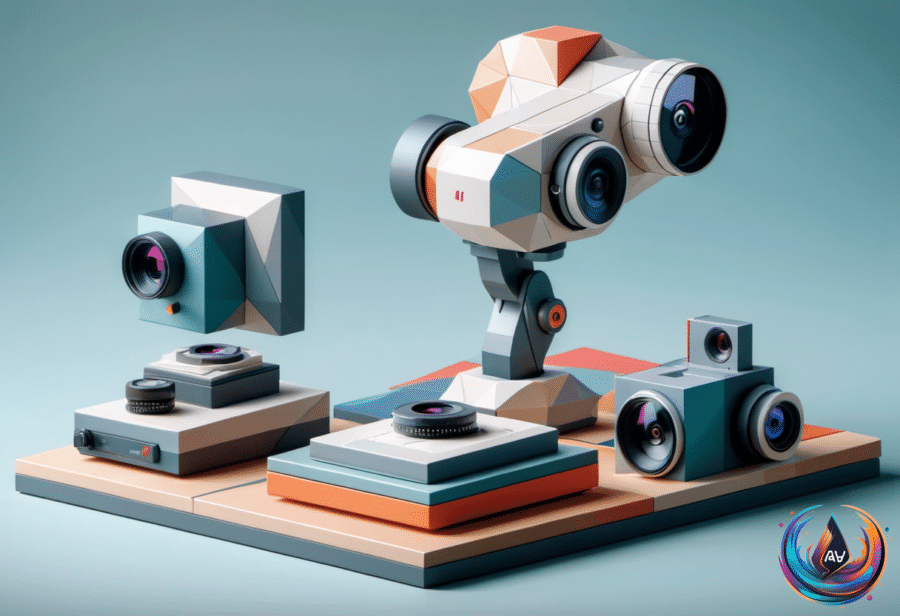
Humyn Labs has built its own two-camera hardware to record people performing everyday tasks. Its software then processes and labels the footage, tracking hand movements, interactions with objects, and other details that can help models understand how physical work unfolds.
That approach matters because robots cannot learn every useful behavior from staged demonstrations alone. Humyn Labs collects data from people doing their usual work or household chores instead of asking them to perform artificial activities. “Scale, diversity, and quality are important aspects, and they need to work in tandem,” co-founder Manish Agarwal said.
The company works with local partners to supervise collection and maintain the quality of the input. Agarwal described the workers as people who are incentivized but still need monitoring and supervision for the right input, a model designed to turn ordinary activity into useful training material.
From Gaming Networks to Robotics Training
Agarwal founded Humyn Labs in February with Ishank Gupta. Agarwal is the former CEO of Indian gaming company Nazara Technologies, while Gupta is a former executive at brewing giant AB InBev. The pair previously founded Kratos Studios, now known as KGeN, which has a network of contributors across emerging markets.
That existing network gives Humyn Labs a foundation for collecting data inside people’s homes across different regions. The company is now applying the same reach to a much larger technology race, as AI labs and robotics developers seek data that reflects the messy variety of physical life.
Humyn Labs says it has 12 paying customers, including frontier AI labs, robotics companies, and developers of world models. Gupta said about 90% of the company’s revenue comes from the U.S., although he declined to name specific customers.
The startup generated $10 million in revenue between April and October. Agarwal said Humyn Labs has another $20 million in signed contracts, plus a further $20 million in deals that have not been finalized.
Those numbers show why the company turned to both equity and debt. Growth created a need for working capital because Humyn Labs pays workers and data collection partners daily or weekly, while its AI lab customers typically take 30 to 60 days to pay. Agarwal said borrowing helps bridge that gap and is less dilutive than selling more equity.
The Race to Make Robots Useful
Humyn Labs’ timing reflects a wider shift in robotics. Genesis AI, another company focused on physical intelligence, recently demonstrated a model operating two off-the-shelf robotic arms. The arms picked up two small cardboard boxes, scanned them, placed them in a larger box, folded it closed, taped it shut, and applied a label.
The second demonstration exposed the challenge. A robot fumbled a box and struggled to peel the tiny adhesive label from printer tape. A Genesis executive suggested that the mistake could become “hiccup data,” showing how failures can add value to a training system instead of simply ending a demo.
Genesis is announcing a $500 million Series A led by Khosla Ventures, Premji Invest, and Eclipse. The company, co-founded by Zhou Xian and president Théophile Gervet in 2024, also announced a $105 million seed round in July 2025.
Genesis follows a vertically integrated strategy: it generates much of its own training data, develops its own generative AI model, and builds a humanoid robot alongside both efforts. More than 100 real workers around the world wear sensor-enabled gloves and headset cameras that capture force data and physical actions. Genesis feeds that dataset into its model, while its robots wear the same sensor-equipped gloves.
“We wanted to ship the best robot, end-to-end product,” Zhou Xian said. He also argued that the main challenge is execution, not another fundamental scientific breakthrough: “No, we have all the recipes. It’s just about execution.”
That execution depends on infrastructure, data coverage, and hardware that survives real work. Genesis says it has built 30 to 40 Eno humanoid robots, with a mass-manufacturing contractor chosen to start work next year in the U.S. Yet Xian said the company’s dexterous hands last only a few weeks of regular work before replacement.
Humyn Labs is attacking the same bottleneck from the data side. Agarwal said the company now has 51 full-time employees, with most based in Bengaluru, supported by local partners across its collection countries. As robots move toward less controlled environments, the ability to capture diverse human actions may become as important as the model itself.
The $47 million round gives Humyn Labs the capital to expand that data engine while demand from U.S. AI and robotics companies climbs. The next generation of physical AI will not learn from perfect demonstrations alone; it will learn from ordinary tasks, varied environments, human mistakes, and the enormous stream of real-world behavior that turns robotic capability into useful work.
Based on
- India’s Humyn Labs raises $47M to feed U.S. robotics companies the data they need — techcrunch.com
- Genesis AI raises $500M to deploy glove-wearing robots | TechCrunch — techcrunch.com
- Valkryn Emerges from Stealth to Build the Battle Lab for Robotic and Autonomous Warfare | Markets Insider — markets.businessinsider.com
- Isomorphic Labs raises $5B as it looks to take drug candidates to clinical trials | TechCrunch — techcrunch.com
- Chinese robots learn from humans in tech hub Shenzhen | AFP.com — afp.com