The robot demo is the easy part. Building one working robot is an engineering feat, but building the thousandth robot at a cost someone will pay is a different challenge. Doing that without a team of specialists exposes the real test for Physical AI.
The gap between demonstrating intelligence and manufacturing it at scale is the battleground. The technology may look like an AI problem from the outside, yet the harder work often involves suppliers, components, assembly, durability, and cost — the unglamorous machinery behind the machine.
Nate Evans, Cofounder at Fictiv & CEO at MiSUMi, put the issue plainly: “Behind almost every headline-grabbing demo in the Physical AI industry sits the same truth: the machine is a prototype, and prototypes are not products.” That distinction matters because a prototype can survive conditions that a production system cannot.
From Custom Hardware to Repeatable Production
A prototype robot might run on a custom actuator machined by hand, a sensor sourced from a boutique supplier, or a battery pack assembled by engineers. Those choices can help prove that a system works, but all of them become a liability at a scale of ten thousand units.
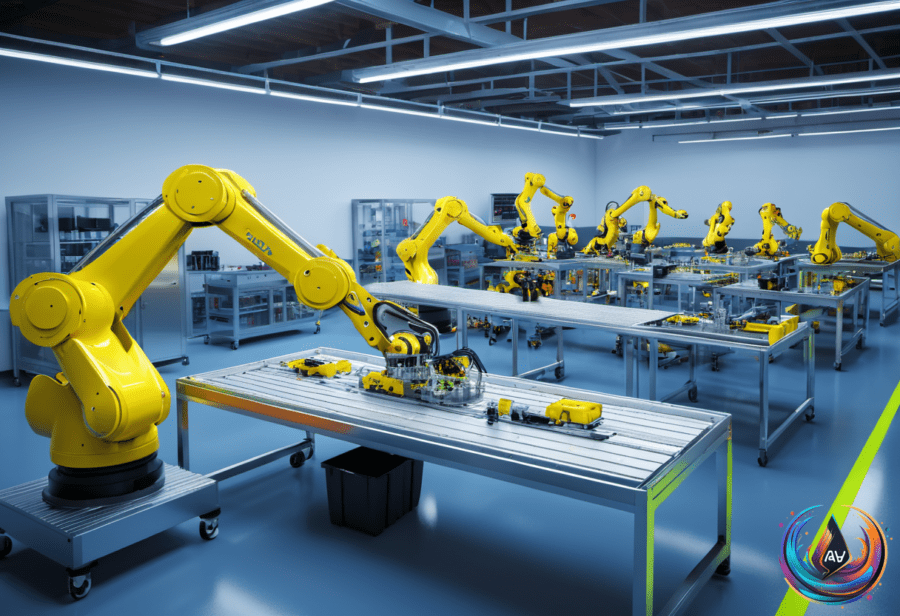
At that volume, suppliers have to be qualified — usually qualified twice over. Components engineered for peak performance in a lab often need re-engineering for tolerance, durability, and cost, while assembly processes must be simplified for production line technicians.
This work is called design for manufacturability. The phrase sounds tidy, as if production will politely cooperate once the design team gives it a name. In practice, it forces every part of the robot to answer a less glamorous question: can this be built repeatedly without specialist intervention?
Physical AI may be less forgiving than other industries because robots rely on dozens or hundreds of components. A weakness in one actuator, sensor, battery pack, or assembly step can undermine the entire machine, turning an impressive prototype into an expensive exercise in repetition.
The Cost Curve Beats the Demo
Hardware businesses are not won on demo day but in the years afterward, on unit economics, supply chain resilience, and the ability to keep machines running in the field. A company with a dependable supply chain and a downward cost curve is likely to out-compete a rival with a more impressive but less scalable robot.
The pattern already exists elsewhere. The panels that dominated the solar power market were not necessarily the most efficient in a lab; they were reliably manufactured at falling cost and growing volume. Electric vehicles delivered the same lesson, with battery supply chains and manufacturing yield mattering as much as engineering breakthroughs.
That history puts pressure on Physical AI companies to treat manufacturing as part of the product, not as an obligation that begins after the technology works. The thousandth robot is a more revealing milestone than the first, because it tests whether the business can reproduce its achievement at a price the market will accept.
Generative AI can speed up engineering but not the physics. It can help move designs forward, yet it cannot remove the need to qualify suppliers, improve manufacturing yield, simplify assembly, or make components survive real operating conditions.
The same concern extends to enterprise AI, where infrastructure bottlenecks stand between working systems and mass deployment. Suman Debnath, director of developer relations and product at Crusoe, is part of that wider conversation about scaling AI beyond demonstrations and into dependable operations.
The dates attached to this discussion — August 26, 2026, and August 31, 2026 — mark a familiar moment in technology: the prototypes are attracting attention, while production decides who remains standing. Physical AI will not be settled by the cleverest demo alone. It will be settled by the company that can keep building the machine after everyone stops applauding.
Based on