Imagine stepping into a museum where every artwork is born from artificial intelligence. That’s exactly what happened on June 20, 2026, when the world’s first museum dedicated solely to AI art, Dataland, opened its doors. Over 10,000 visitors flooded in during the first two weeks. They came to witness a new era of creativity fueled by data, nature, and code.
Dataland: A New Frontier for Art
Dataland isn’t just a gallery. It’s a bold experiment in blending machine intelligence with human imagination. Cofounded by artist Refik Anadol, the museum challenges everything we think about art. Anadol calls this moment “literally a renaissance.” His vision goes beyond traditional art forms.
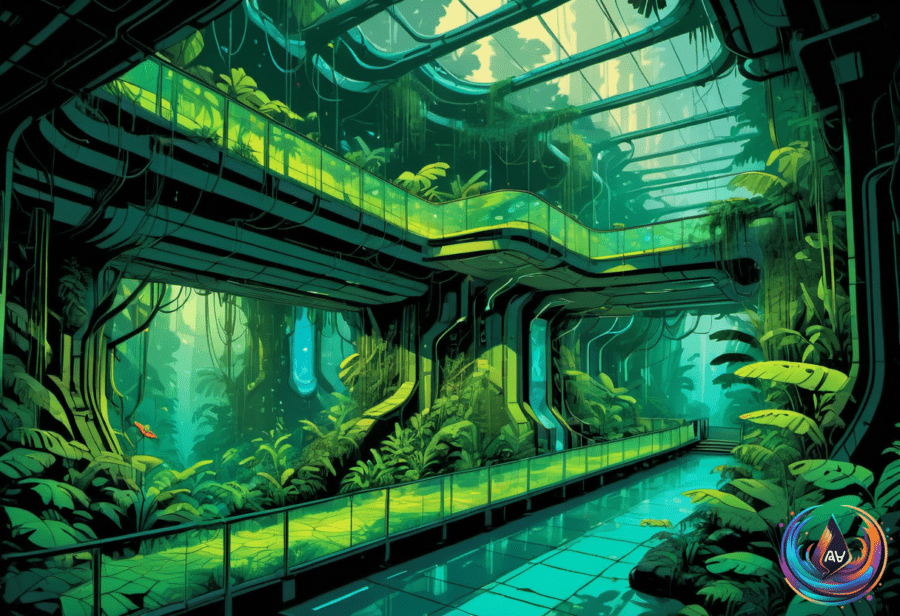
At the heart of Dataland is Anadol’s immersive architectural masterpiece, Machine Dreams: Rainforest. This installation uses AI trained on a massive trove of natural science archives from the Smithsonian and other institutions. Anadol and his team even traveled to the Amazon and other rainforests to gather raw data firsthand. They collected a staggering 5 petabytes of material, turning raw nature into digital memory.
Anadol explains, “Data is a form of memory.” This memory fuels the AI, which then paints, sculpts, and builds dynamic environments inside the museum. It’s a living archive, constantly evolving as the AI digests more information.
Transforming Digital Art Display
Digital art has exploded in popularity. Among high-net-worth collectors, it now ranks third in total spending—right behind painting and sculpture. More than half of art buyers purchased digital pieces in 2024 or 2025. The share of digital art in collections jumped from 3% in 2024 to 13% in 2025. Collectors clearly accept digital art as a serious category.
But there’s a catch. Most digital art displays have been inadequate. Screens don’t show true color. Brightness and resolution are often poor. Motion fails to flow naturally. Until now.
Enter Layer, a company reinventing how digital art looks. They developed Layer Canvas and Layer Grade. These advances set new standards for museum-quality digital art display. Layer Grade demands:
- Wide color spectrum coverage
- Anti-glare treatments for clear viewing
- Accurate color rendering
- High brightness levels
- Powerful GPUs for real-time motion
- High resolution screens
- Native storage for smooth playback
This means digital art at Dataland and beyond will finally shine like it deserves. No more flat or dull screens. Art gains depth, vibrancy, and presence.
Powering Creativity with Cutting-Edge AI
Dataland’s success also rides on powerful AI partnerships. Google DeepMind provided access to experimental low-energy computing resources. Anadol’s relationship with Google dates back to 2016, when he won the Google Artists and Machine Intelligence Residency.
Meanwhile, new AI breakthroughs continue to push boundaries. A company called Subquadratic revealed a model that breaks bottlenecks limiting large language models. Anthropic’s Claude AI shows promise in future coding tasks, hinting at how software development itself could evolve.
Even beyond art, AI impacts science, technology, and healthcare. China’s recent approval of the world’s first invasive brain-computer chip signals strong government backing for brain implants. AI’s reach is growing faster than ever.
The Future of Creativity and AI
Dataland offers a glimpse into how AI reshapes culture. It transforms raw data into mesmerizing experiences. It raises questions about memory, creativity, and what art means in a digital age. Visitors don’t just view art—they become part of an evolving digital ecosystem.
As digital art claims a bigger slice of the market, expect more museums to follow Dataland’s lead. With innovations like Layer Grade and powerful AI models powering new forms of expression, the future of art is alive and buzzing with data.
Refik Anadol sums it up perfectly: “I think we are literally in a renaissance.” This renaissance is coded in petabytes of nature’s memory, displayed on screens that finally do justice to digital masterpieces. The question now is simple—are you ready to step inside?
Based on
- A New Experiential Gallery Just Might Change Your Mind About AI Art — wired.com
- Digital art finally gets the display standards it deserves | VentureBeat — venturebeat.com
- I Built a Self-Improving AI, and So Can You | WIRED — wired.com
- EmTech AI 2026: The Rise of the AI Platform | MIT Technology Review — technologyreview.com