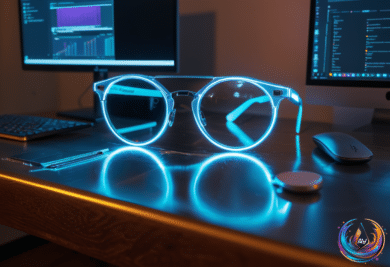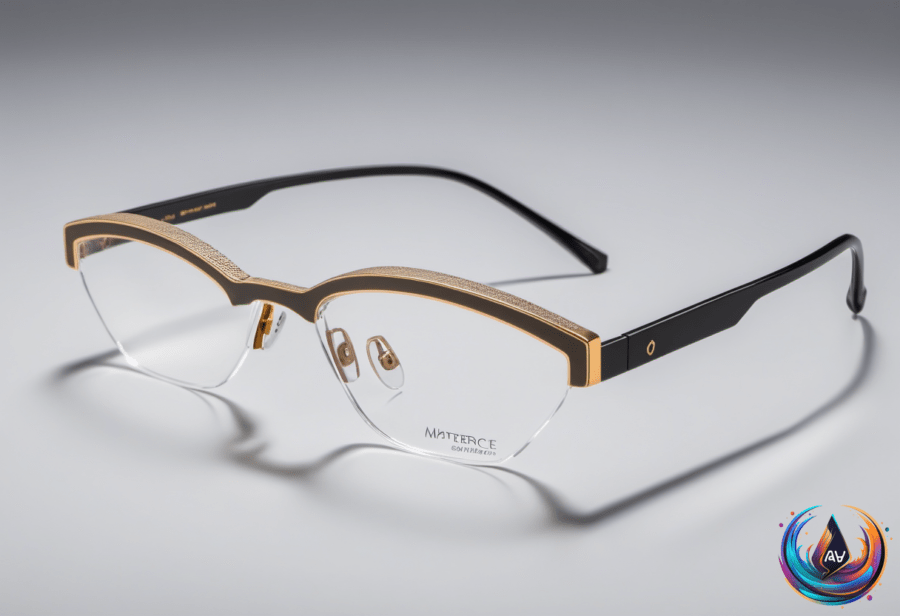
Lumus and Quanta Computer are joining forces on a part of augmented reality glasses that can decide whether the products feel practical or bulky: the waveguide. Lumus announced the licensing agreement on September 1, 2026, giving Quanta the right to produce two waveguide lines for AR glasses, the Z-30 2.0 and the A-Lens family.
The deal connects an optical technology developer based in Ness Ziona, Israel, with one of Taiwan’s biggest electronics manufacturers. Quanta Computer is headquartered in Taoyuan, Taiwan, was founded in 1988, and has traded on the Taiwan Stock Exchange since 1999. In fiscal year 2025, the company reported consolidated revenues of approximately US$68 billion and employed close to 80,000 people.
Two waveguide designs target different glasses needs
The Z-30 2.0 delivers a 30-degree field of view in a thinner and lighter design. The A-Lens family focuses on lower-cost production, with designs that are approximately half the weight and thickness of previous generations. Those details point to two practical goals for AR glasses: making the hardware easier to wear and making production more accessible.
Waveguides move images from a display into the wearer’s view while keeping the optical system inside the lens. Their size and weight affect the shape, balance, and comfort of the finished glasses, so a thinner design can change more than the lens itself. The agreement covers both the Z-30 2.0 and A-Lens designs, giving Quanta two options for different product lines.
Lumus’ current product range shows how its designs cover several use cases. The Z-Lens combines a 50-degree field of view with a 1.3-millimeter waveguide, a 1024-by-1024-pixel display resolution, and a 12-gram optical engine. It also supports direct bonding to prescription lenses.
The Maximus is a 50-degree engine used in military and medical devices. It measures 1.7 millimeters thick and weighs 20 grams. The Vision is a 1080p top-down display for enterprise and medical customers, and Lenovo selected it for the ThinkReality A6.
A manufacturing relationship built over nearly a decade
The new license builds on collaboration that began with Quanta’s investment in Lumus in 2016. That relationship already includes waveguide production in Taiwan, where Quanta has achieved yields above 95 percent. Lumus says more than 200,000 waveguides have shipped to consumer, military, and medical markets.
That production history gives the agreement a clear foundation. Quanta is not starting from an untested manufacturing relationship, and Lumus is adding a licensed production partner with experience making its waveguides. The Z-30 2.0 and A-Lens lines now join a wider group of Lumus products aimed at consumer, enterprise, medical, and military applications.
The agreement does not identify a specific glasses maker or announce a finished AR glasses product. Its focus is the production of the optical components. Still, producing thinner and lighter waveguides at lower cost addresses two barriers that have shaped AR glasses development: the challenge of fitting display hardware into a wearable form and the cost of making that hardware.
Patent activity shows a crowded AI glasses field
The Quanta agreement comes as companies compete for control of the technologies behind AI smart glasses. PatentVest released a report on August 27, 2026, analyzing patent activity in the category, and its figures show a field with several large portfolios.
Meta holds approximately 1,900 patent families in the category, the largest validated portfolio listed in the report. Apple holds an estimated 1,550 patent families in AI capabilities related to smart glasses. Microsoft’s AR-rendering portfolio includes 409 patent families, while Samsung’s legitimate glasses-system portfolio is closer to 550 validated families.
EssilorLuxottica holds an estimated 530 validated patent families. The company is also the manufacturing partner for Ray-Ban Meta. Samsung Display holds upstream OLED-panel manufacturing intellectual property, adding another part of the display supply chain to the wider patent picture.
The filing timelines show that companies have not all followed the same path. Meta, Google, Snap, Xiaomi, and XREAL reached their highest single-year filing count in 2022. Microsoft’s filing activity peaked in 2017 and has cooled since.
These numbers do not describe finished products by themselves. They show where companies have built claimed technology around AI capabilities, AR rendering, glasses systems, displays, and related hardware. The patent landscape and the Lumus-Quanta agreement together show that AI glasses depend on both software and compact physical components.
For Lumus, the next step is production of the Z-30 2.0 and A-Lens designs through Quanta. For the broader market, the important question is whether thinner waveguides, lower production costs, and established manufacturing can help turn AI-enabled glasses from a technology category into products people can wear every day.
Based on