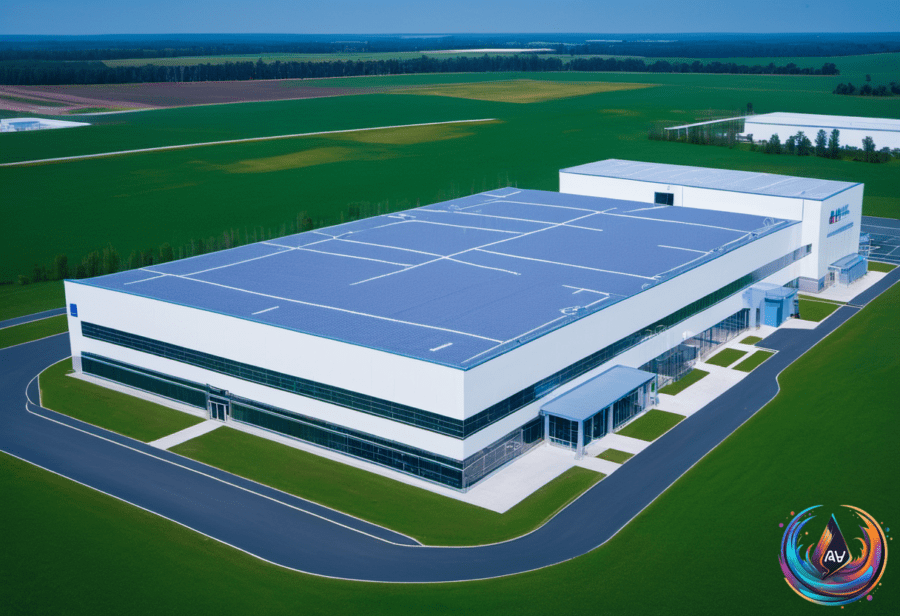
Micron is making a massive move in Japan. The tech giant just broke ground on a $9.6 billion expansion in Hiroshima. This is no ordinary upgrade. It’s a bold bet on the future of AI memory chips. Micron is diving deep into high-bandwidth memory (HBM) production to meet soaring AI demand.
Hiroshima: The Heart of Micron’s Memory Ambition
Micron’s Hiroshima factory isn’t new to innovation. The site first came under Micron’s control back in 2013 after acquiring Elpida Memory Inc, a bankrupt Japanese DRAM maker. Since then, it has been a key hub in memory chip production. In fact, Micron’s first HBM wafer was made right there.
Now, the company is supercharging this facility with a roughly ¥1.5 trillion investment—that’s about $9.6 billion. Construction will kick off in May 2026. Shipments of these advanced HBM chips are expected to roll out by 2028. This will push Micron into the thick of the AI chip race.
Why High-Bandwidth Memory? Why Now?
AI workloads are hungry for faster, more efficient memory. HBM fits the bill perfectly. It lets processors access huge amounts of data at blazing speeds. This makes AI models run smoother and faster.
Micron wants to catch up to the industry leader, SK Hynix. This expansion is a clear signal the company sees HBM as the key to competing in the AI-driven future.
Kota Nosaka, a voice from within Micron, highlighted the factory’s strengths: “The Hiroshima factory’s strength lies in its ability to quickly deliver cutting-edge and high-performance products to customers.” He also noted that “roughly 80% of chip materials the Hiroshima factory needs now comes from Japan.” This local supply chain is a huge advantage.
Japan’s Government Joins the Race
The Japanese government is backing Micron’s bold push with serious cash. The Ministry of Economy, Trade and Industry has committed up to ¥500 billion toward capital costs. Overall, government subsidies for this project range from 500 to 536 billion yen.
When combined with previous support, Japan’s total assistance for Micron’s operations now approaches roughly ¥775 billion. That’s nearly $3.2 billion in subsidies specifically aimed at boosting Hiroshima’s expansion.
Ryosei Akazawa, speaking for Japan’s government, made it clear: “Should other overseas chipmakers seek to build factories in Japan, the country is ready to do all that it can to help.” Japan wants to reclaim its historic spot as a memory chip powerhouse.
The Future Unfolds
Sanjay Mehrotra, Micron’s CEO, captured the spirit of this endeavor perfectly: “When American boldness meets Japanese craftsmanship, you do not get a compromise. You get the best in the world.”
This expansion signals more than just growth for Micron. It’s a strategic leap to seize AI’s exploding memory market. With construction starting in 2026 and shipments by 2028, the countdown is on.
The Hiroshima factory will soon be a beacon of innovation and resilience. Micron aims to challenge SK Hynix’s dominance and push Japan back into the global memory chip spotlight. The AI revolution is demanding new technology—Micron and Japan are answering the call with massive investment and unwavering focus.
Keep your eyes on Hiroshima. This new facility could reshape the memory chip landscape and accelerate the AI future we’re all racing toward.
Based on
- Micron breaks ground on $9bn Hiroshima expansion to chase AI memory demand — thenextweb.com
- Micron breaks ground on US$9bil Japan plant expansion | FMT — freemalaysiatoday.com
- Micron breaks ground on ¥1.5T factory expansion in Japan to chase AI chip demand — cryptobriefing.com
- Micron plans $9.6bn HBM fab at Hiroshima site – report – DCD — datacenterdynamics.com
- Micron breaks ground on $9 billion western Japan plant expansion — biztoc.com