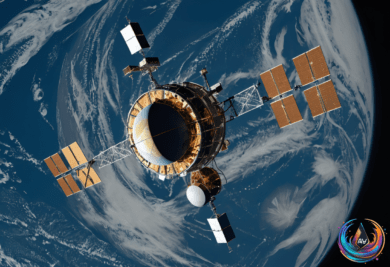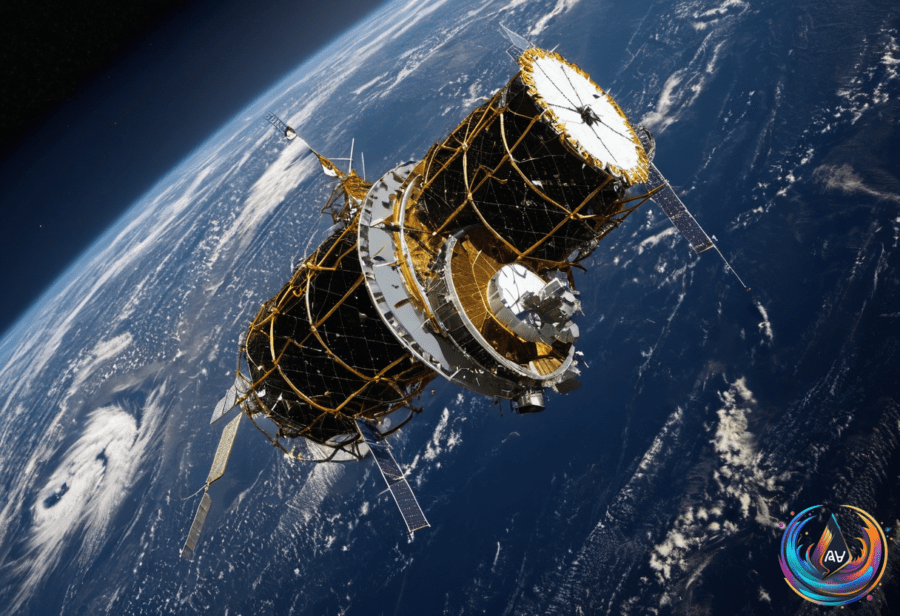
The United States has publicly confirmed that it deployed weapons in Earth’s orbit, marking the first time the country has acknowledged putting space-based weapons in place. The US Space Force and Air Force Secretary Troy Meink announced the move on September 14, 2026.
The disclosure signals a new stage in America’s military presence beyond Earth. The US now has on-orbit space control weapons capable of defending the joint force, Meink said, while also describing the systems as tools designed to counter hostile actions against the country and its allies.
“The United States now has on-orbit space control weapons capable of defending the joint force,” Meink said. He added, “Today, we continue to ensure we remain ready to meet the challenges of evolving threats, wherever they exist.”
Two weapons systems now operate in space
The US says it has moved from an initial contract to flight-ready hardware for the Space-Based Interceptor programme. That programme is one of two weapons systems the country has deployed in space, alongside the Space-Based Air-Moving Target Indication constellation.
The announcement does not describe the specific design or operation of either system. It does establish that the US possesses space control weapons intended for military use in orbit, with missions that can support both defensive and offensive goals.
The US Space Force states that space control capabilities can be employed for offensive and defensive purposes at the direction of combatant commands. That wording gives commanders the ability to use these systems as part of wider military operations, rather than limiting them to protection alone.
Meink framed the deployment as part of a broader effort to protect America’s ability to operate in space. “It is critically important that we maintain our dominance, not only in the air but in space,” he said. “We need to make sure that when we are threatened, we can take care of that.”
A more crowded and contested orbit
The announcement comes as Earth’s orbit grows more crowded with satellites and debris. SpaceX operates 11,000 Starlink satellites, adding to an orbital environment already filled with equipment that supports military and economic activity.
Weaponization makes that environment harder to manage. More military systems in orbit can add capabilities for defense, but they also place more weapons and possible targets among satellites and debris. The US Space Force has described space control as necessary to keep the country operating freely in that setting.
“The space environment is critical for military and economic security, and we need to make sure that the US can operate freely there,” Meink said.
The US has been developing space and counterspace capabilities as part of a military modernization strategy. Russia and China are following similar paths, developing and operating space and counterspace capabilities as part of their own military modernization strategies.
Russia and China shape the military space race
Russia views space as a warfighting domain and believes space supremacy will be a decisive factor in future conflicts. Russia has likely intercepted communications from European satellites since its invasion of Ukraine in 2022, adding a direct security concern for satellite operators and governments.
Russia also launched a satellite in 2024 that it believed may be capable of attacking other probes. These actions and beliefs form part of the security environment surrounding the new US deployment, even though the US announcement did not identify a specific target or threat.
China develops and operates space and counterspace capabilities as part of a military modernization strategy. Together, the activities of Russia, China, and the United States show how orbital systems have become tied to military planning and future conflict.
The US acknowledgment also places the Space Force’s work in a clearer public setting. On May 28, 2026, a US Space Force Guardian monitored a space effects command and control display. That date offers another view of the organization’s focus on managing military effects in space, while the September announcement confirms that weapons now form part of that effort.
Donald Trump is associated with the Golden Dome missile defence programme, and General Chance Saltzman serves as the US Space Force chief of operations. Meink’s announcement connects this wider defense direction with weapons already deployed in orbit.
The central change is simple: the United States has moved beyond developing space control weapons and now says two systems are in space. The disclosure does not remove uncertainty from an orbital environment filled with satellites, debris, and competing military capabilities, but it makes the US position clear.
America now openly claims the ability to defend its joint force from orbit, while keeping offensive use available to combatant commands. That shift makes space not only a place for communications and other services, but also an active military domain.
Based on
- For the first time, the US military confirms it has deployed weapons in orbit — arstechnica.com
- US admits for the first time it has deployed weapons in space | The Independent — independent.co.uk
- US has deployed a space weapon, air force secretary says — bbc.com
- U.S. has deployed first space-based weapon, Air Force secretary says – The Washington Post — washingtonpost.com
- Weapons deployed in orbit by the U.S.: Space Force — ctvnews.ca