NVIDIA is turning AI infrastructure into a full-scale manufacturing push. On October 21, 2026, the company announced plans with six supply chain partners to expand capacity across substrates, advanced packaging, testing, and optical engines.
The goal reaches beyond producing more chips. NVIDIA is building the manufacturing foundation for AI factories, then introducing tools designed to make those factories faster to deploy and easier to simulate. Jensen Huang, founder and CEO of NVIDIA, captured the pressure behind the plan: “We are in the midst of the largest infrastructure buildout in human history. Demand is extraordinary. Capacity is the constraint.”
Six Partners Expand the Hardware Pipeline
NVIDIA plans to expand global manufacturing capacity with Amkor Technology, IBIDEN, King Yuan Electronics, Samsung Electro-Mechanics, Siliconware Precision Industries, and Unimicron Technology Corporation. Together, these partnerships cover critical stages of AI hardware production, from substrate manufacturing to package testing and optical engine assembly.
NVIDIA plans to increase substrate capacity for its products by 2.5x over the next three years. That expansion includes new facilities, upgraded operations, and dedicated production across Japan, South Korea, and Taiwan.
- IBIDEN’s Ono Plant in Japan is supported by agreements with NVIDIA, with capacity expected to reach three times current levels by the first quarter of 2028.
- Samsung Electro-Mechanics is joining NVIDIA’s substrate supply chain through existing operations in South Korea, facility upgrades, and new factories in Sejong and Busan.
- By 2028, production allocated to NVIDIA is projected to account for a significant portion of Samsung Electro-Mechanics’ total annual package substrate production capacity.
- Unimicron Technology Corporation is expanding KF substrate manufacturing in Taiwan, with capacity additions expected to begin in the second quarter of 2027 and reach full capacity by mid-2028.
Advanced packaging is also moving into a larger phase. NVIDIA and Amkor Technology plan to expand advanced packaging capacity in South Korea, targeting a greater than 300% increase in interposer wafer capacity by the end of 2028.
Testing capacity will grow across several regions. NVIDIA expects its total semiconductor testing capacity to double from 2026 to 2027 through buildouts in the United States, Taiwan, and Singapore. NVIDIA’s $1.1 billion capacity reservation advance to KYEC will support new testing facilities and equipment in the United States, with high-volume production targeted for April 2027, while expanded testing operations in Singapore are expected to begin high-volume production in February 2027.
Optical Engines and Modular AI Factories
Optical connectivity is another major part of the expansion. NVIDIA and SPIL, or Siliconware Precision Industries, plan to expand manufacturing capacity in Taiwan for optical engines used in co-packaged optics. That work supports a 15x increase by mid-2027, followed by another doubling by the end of 2028.
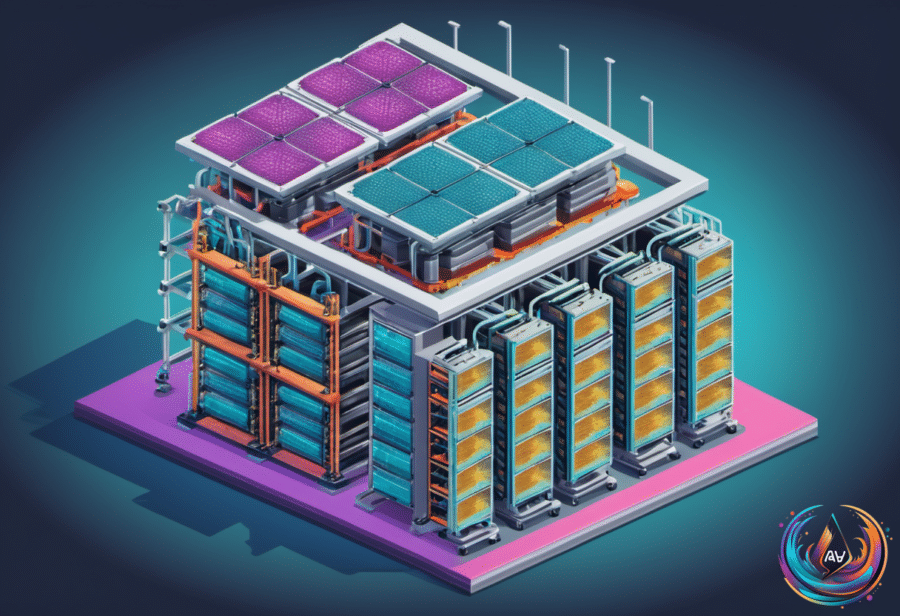
Then comes DSX POD, NVIDIA’s reference design for complete Vera Rubin AI factories built inside modular containers. The design reduces deployment time from six months to as little as 14 days, changing the pace at which new AI infrastructure can move from planning to operation.
NVIDIA is working with multiple partners, including Dell Technologies, GIGABYTE, Lenovo, and others, to deliver DSX POD AI factories worldwide in early 2027. Huang framed the purpose in a single line: “An AI factory creates value when it starts producing tokens — not when construction is complete.”
That focus on time connects the manufacturing expansion with the factory design. More substrates, packages, testing capacity, and optical engines can support more systems, while a modular design can cut the wait before those systems begin producing tokens.
Software Turns Manufacturing Data Into Speed
NVIDIA is also expanding the software layer behind chip design and factory operations. The company introduced cuPotential, a CUDA-X library that accelerates atomic interactions modeling. In early-access testing, cuPotential accelerated workflows by an additional 2-3x.
CUDA-X libraries, including cuPotential, cuEST, and cuDSS, are used by semiconductor leaders such as Synopsys, Cadence, COMSOL, Voltai, and ChipAgents. Their uses span materials simulation, chip design and verification, semiconductor simulations, chip packaging simulation, and AI models for chip design.
NVIDIA’s open source libraries NanoVDB and PhysicsNeMo accelerate chipmaking simulations and physical system modeling. NanoVDB is expected to accelerate wafer-etch modeling by up to 30x, and Lam Research is integrating it into its process modeling platform. Siemens uses NVIDIA libraries for chip pattern refinement.
Inspection and testing are also receiving a computational boost. NVIDIA’s NPP library accelerates image processing for chip inspection, with KLA achieving performance levels 50x faster than earlier CPU versions. Teradyne uses NVIDIA NPP, RAPIDS cuDF, and CuPy to deliver approximately 85x faster probe-maintenance inference.
Applied Materials uses NVIDIA Omniverse and CUDA-X libraries to enable up to 35x faster chamber simulations and fab digital twins. FANUC and Foxconn are connecting their robot models to NVIDIA Omniverse Blueprint for factory digital twins, linking physical production equipment with simulated factory environments.
NVIDIA’s announcement points to a coordinated push across the entire AI infrastructure chain. Manufacturing capacity is expanding in parallel with simulation software, testing systems, optical components, and modular factory designs, creating a path from raw production capability to operational AI facilities.
The next milestones are already marked: high-volume testing in Singapore in February 2027, U.S. testing production in April 2027, optical engine expansion by mid-2027, Unimicron capacity additions in the second quarter of 2027, and major substrate and packaging targets through 2028. NVIDIA is not only preparing more hardware; it is reshaping how quickly the AI factories built around that hardware can arrive.
Based on
- NVIDIA Expands Supply Chain Capacity With Six Manufacturing Partners — unite.ai
- NVIDIA and Supply Chain Partners Expand Capacity to Accelerate AI Infrastructure Buildout | Markets Insider — markets.businessinsider.com
- NVIDIA Introduces DSX POD AI Factories to Accelerate Europe’s Infrastructure Deployment | Markets Insider — markets.businessinsider.com
- NVIDIA and Semiconductor Leaders Advance AI Across Chip Design and Manufacturing for AI-Defined Fabs | Markets Insider — markets.businessinsider.com