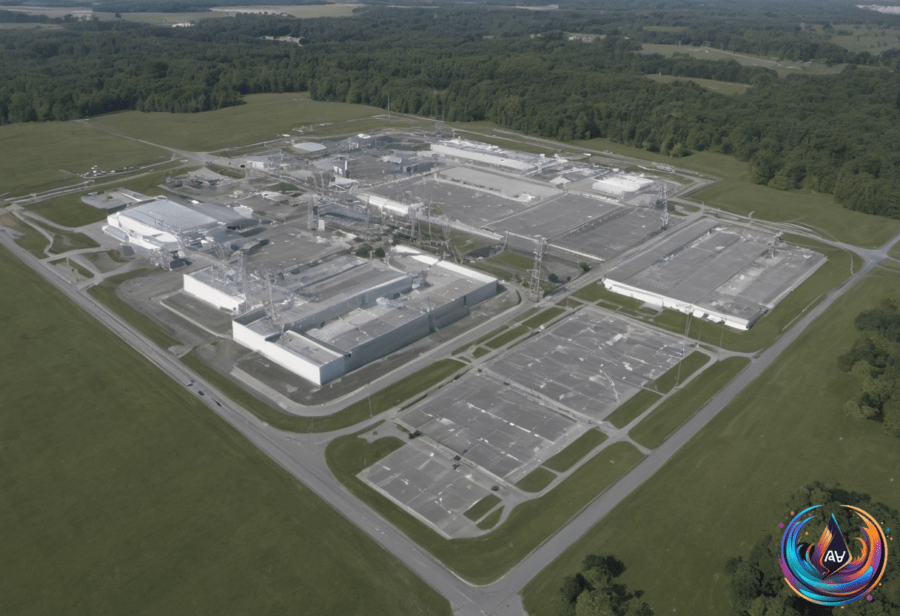
Nvidia is putting $1.5 billion behind Ohio. On August 17, 2026, the company announced an investment in SB Energy, along with up to $105 billion in credit for a new OpenAI data center at the PORTS-Pike Technology Campus in Pike City, Ohio.
SB Energy, linked to SoftBank and OpenAI, will build and manage the facility through a 20-year lease to OpenAI. Nvidia will provide the computing capacity, which is expected to come online in phases in 2028—because apparently an AI factory now needs the planning horizon of a small city.
The initial buildout will support 4.25 gigawatts of computing capacity, with an option to add another 3.75 gigawatts. That would bring the potential maximum to 8 gigawatts, giving OpenAI a substantial new base for deploying its systems and adding more capacity over time.
A Data Center Built Around Its Own Power Supply
The computing plan depends on a much larger energy project. SB Energy and SoftBank will build power sources supporting 10 gigawatts of energy and invest at least $4.2 billion in regional grid infrastructure.
The site will also host a natural gas power plant with 9.2 gigawatts of capacity. The plant is expected to cost $33 billion, while the cost of natural gas power plants has risen 66% over the last two years—a detail that makes the word “infrastructure” sound less like a solution and more like an invoice.
The PORTS-Pike campus carries its own historical weight. The site previously enriched uranium for the U.S. nuclear arsenal and for U.S. Navy submarines; it is now being positioned as a source of computing power for OpenAI.
OpenAI said the data center will support 35,000 new construction jobs through 2032 and create 2,500 long-term positions. Those figures cover both the immediate buildout and the staff needed after the construction crews leave, assuming the project reaches the scale described.
Nvidia’s Financing Role Keeps Expanding
The announced credit commitment follows earlier discussions between Nvidia and OpenAI over a backstop of up to $250 billion for a 10-gigawatt data center at the Ohio location. Nvidia was set to cut that guarantee to less than $120 billion for the buildout, placing the new $105 billion financing support inside a much larger and shifting funding plan.
Nvidia is also working with six large asset managers to build financing platforms designed to deploy $500 billion in third-party capital for data center projects. The company is therefore doing more than selling the processors that fill these facilities—it is helping assemble the financial machinery required to keep building them.
SoftBank’s financial relationship with Nvidia has also changed. SoftBank had previously held $5.8 billion worth of Nvidia stock, which it sold in November, even as its linked company SB Energy takes a central role in the Ohio project.
Jensen Huang, Nvidia’s CEO, said, “We are securing long-lived infrastructure for NVIDIA compute so OpenAI can deploy the most productive AI factories that can be upgraded repeatedly with each new generation delivering more intelligence and better economics.” The statement captures the project’s core pitch: build the physical platform now, then refresh the hardware as Nvidia produces new generations.
OpenAI President Greg Brockman offered a shorter version of the same argument: “Compute is really becoming the new oil, the new limited resource of the AI age.” The comparison is familiar, but the Ohio plan shows what it means in practice—power plants, grid spending, construction jobs, long leases, and tens of billions of dollars before the software gets to do anything useful.
Based on