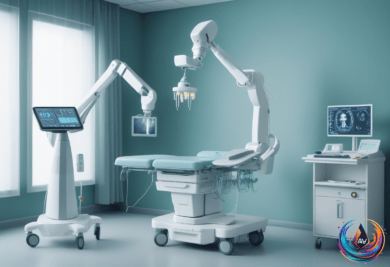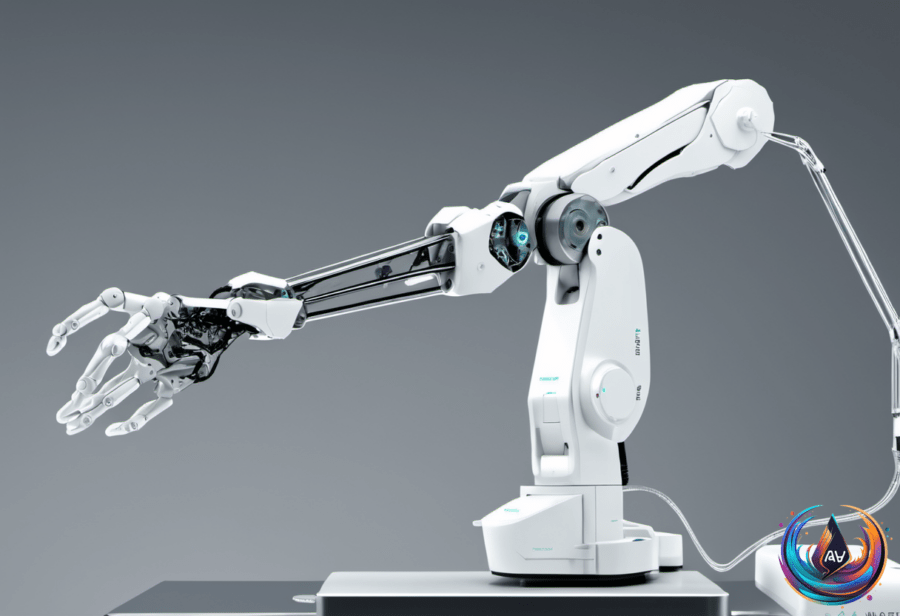
NVIDIA launched Cosmos-H-Dreams, a real-time generative simulator for surgical robotics. It runs efficiently on a single RTX PRO 6000 GPU. This is surgical simulation with a new level of immediacy and control.
Cosmos-H-Dreams specializes in the da Vinci Research Kit’s tabletop suturing tasks. It predicts future surgical video based on initial scenes and robot actions. The model distills into a causal student version able to operate closed-loop environments. Control can come from humans or AI policies.
This simulator is part of a broader wave of AI and simulation breakthroughs announced in late July 2026. NVIDIA also expanded its Agent Toolkit with new PhysicsNeMo and CUDA-X libraries. These tools boost physics-based simulations, from quantum chemistry to electromagnetic fields, with speedups up to 50x.
Industry partners are already adopting NVIDIA’s AI suite. Cadence, Synopsys, Siemens, and Samsung rely on these tools for chip design and physical analysis. For example, Silvaco harnessed 32 NVIDIA GPUs to complete a massive 3.2-billion-mesh-node 3D optical simulation in under four hours. Samsung achieved 20x better computational lithography performance using NVIDIA cuLitho.
On another front, the RealSynCol dataset offers 28,130 annotated frames for training deep learning models in endoscopy. This data includes ground truth depth maps, optical flow, surface normals, and 3D meshes. It’s backed by European and US biomedical institutions, aiming to improve 3D reconstruction in medical imaging.
NVIDIA’s CEO Jensen Huang put it plainly: “The physical AI era will be built in simulation first.” His company’s Omniverse libraries now integrate with the Agent Toolkit to bring AI-driven sensor simulation, physics, and asset validation into common 3D development workflows. Software makers SideFX and PTC are embedding these libraries for scene inspection and physics validation.
Startups like Palatial and Lightwheel use Omniverse capabilities to automate asset creation and generate physically accurate 3D models from text prompts. ForgeCAD and Moonlake AI explore agent-driven 3D workflows, pushing automation in content creation.
New hardware announcements include RTX Spark systems coming this fall from ASUS, Dell, HP, Lenovo, Microsoft Surface, and MSI. DGX Station orders are open from multiple vendors. This hardware supports the intense compute demands of these AI simulations and models.
Meanwhile, ACE Robotics stole the spotlight with its Kairos World Model. It topped four global embodied AI benchmarks, including RoboTwin 2.0 and DreamGen, setting new state-of-the-art records. This model highlights the rapid progress in AI-driven robotics beyond medical applications.
Timothy Costa, a key AI figure, summed the moment well: “Engineering has reached an inflection point. AI can now work with tools of physics, simulation and design.” The race to simulate real-world complexity—and control it with AI—is accelerating. Surgical robotics just got a serious upgrade.
Based on
- NVIDIA Cosmos-H-Dreams: Bringing Real-Time Generative Simulation to Surgical Robotics — huggingface.co
- ACE Robotics Unveils Kairos World Model with Record Performance on Four Global Benchmarks | AP News — apnews.com
- NVIDIA Expands NVIDIA Agent Toolkit With NVIDIA PhysicsNeMo and CUDA-X Libraries to Transform How the World Engineers, Designs and Builds | Markets Insider — markets.businessinsider.com
- NVIDIA Agent Toolkit Expands With New Omniverse Libraries, Putting AI Agents to Work Building Simulation-Ready Worlds | Markets Insider — markets.businessinsider.com
- A high-fidelity synthetic colon dataset for 3D reconstruction applications | Scientific Data — nature.com