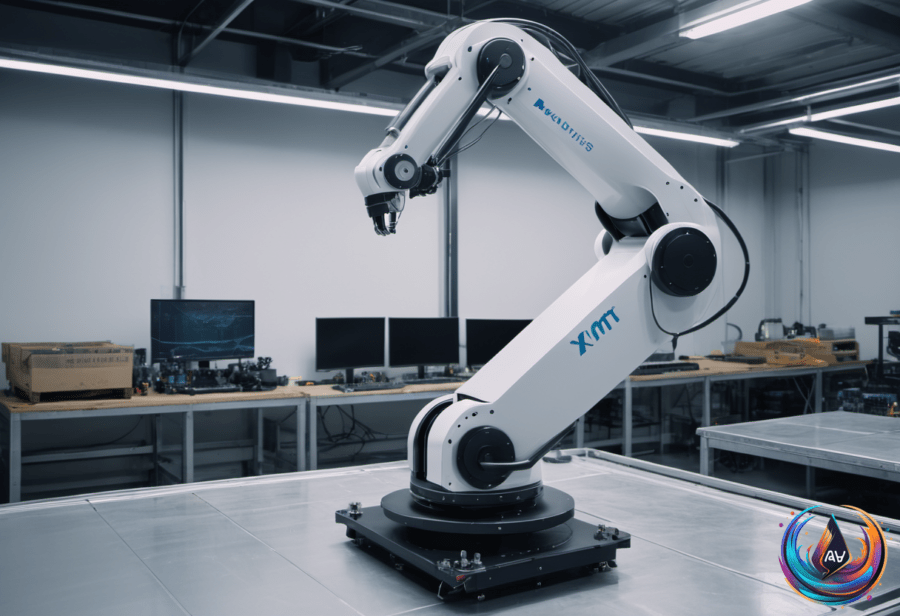
Physical AI is moving beyond impressive demonstrations and toward machines that must sense, reason, and act in real operating environments. On September 8, 2026, Arm launched Arm Total Design for Physical AI alongside a new robotics framework designed to create common standards across automated systems.
The initiative brings together more than 80 partner organisations from software, hardware, and AI. Its initial participants include AWS, ECARX, Hugging Face, Liquid AI, NXP, PlusAI, PSYONIC, QNX, Qwen, Siemens, and Unitree Robotics.
That broad mix reflects the challenge physical AI faces. These systems combine AI models, runtime software, compute silicon, sensors, and actuators, so hardware manufacturers and software developers must make many parts work together. Standardised baselines can reduce integration risk, optimise compute workloads, and help teams move from proof-of-concept testing to deployment at scale.
A shared language for robotic capability
Arm has introduced the Robotics Capability Framework as a collaborative starting point for a shared technical vocabulary. The framework categorises robotic systems across progressing tiers of operational sophistication, mapping machines from reactive setups to context-aware, cognitive, and self-improving systems.
Each capability tier connects real-world use cases with machine behaviours, outputs, and hardware constraints. The criteria also set parameters for system latency, compute placement, memory allocation, power constraints, determinism, and safety standards.
Arm chief architect Richard Grisenthwaite described the problem in an architectural manifesto: robotics lacks a common method to describe, compare, and communicate system capabilities. The framework aims to give developers, manufacturers, and other participants a clearer way to discuss what a system can do and what it needs to operate.
That structure matters because a robot’s intelligence depends on more than its AI model. Its sensors, processors, memory, power system, software, and physical mechanisms all shape its performance. A shared capability scale can connect those pieces before a system reaches the factory floor, road, warehouse, or other operational setting.
The market extends far beyond humanoids
Physical industries account for trillions of dollars in economic activity, creating an estimated $200 billion annual compute opportunity by the 2030s. The overall physical AI market could reach $60-$100 billion by 2030, but humanoids account for only $2-3 billion of the current $18 billion physical AI market.
Growth is being pushed by labor shortages, changing work preferences, rising needs for operational resilience, and pressure to improve productivity. Physical AI currently works best in structured environments with some variability, including factory robotics, autonomous vehicles, inspection, and logistics drones.
Dr. Albert Meige, Director of Blue Shift at Arthur D. Little, captured the gap between attention and practical value in the institute’s report I, Robot:
“When it comes to physical AI, humanoids are the moonshot attracting attention, capital, and talent. However real-world value lags their hype. Instead, benefits are coming from specialized physical AI systems designed for specific, high-value tasks in industrial and operational environments.” — Dr. Albert Meige
Arthur D. Little’s market view also shows how different strengths are shaping the field. China is ahead in manufacturing and supplier scale, while the US leads in frontier AI and investment capital. Europe and Japan are strong in industrial systems automation but weaker in frontier AI models.
Body, Mind, and the learning challenge
Value in physical AI will be generated across a three-layer technology stack: Body, Mind, and Learning Loop. The Body includes the physical systems and equipment that interact with the world. The Mind covers the AI models and computing that support decisions, while the Learning Loop represents the systems that improve through operational data and experience.
China installed more robots during 2025 than the rest of the world combined. The US is currently ahead in frontier AI models for the Mind layer, but the Learning Loop remains the least mature part of the stack. That imbalance helps explain why standards, data, and deployment practices matter as much as model performance.
Hitachi expands its Physical AI operations suite
Hitachi announced the expansion of HMAX on September 3, 2026, adding to a suite of solutions for social infrastructure that incorporates Physical AI. The announcement came one day before the Hitachi Social Innovation Forum 2026 JAPAN, held September 3-4, 2026, in Tokyo, where the HMAX solutions will be showcased.
HMAX Data Center supports the autonomous operation and maintenance of data center infrastructure. HMAX Cyber provides operational resilience, protecting systems from cyberattacks and supporting business continuity. HMAX Data Fabric contextualizes field data and tacit knowledge into knowledge graphs for AI use, while HMAX AI Operations manages monitoring and operations through AI by connecting operational knowledge and data.
Together, the solutions support the full lifecycle of data center operations, including monitoring, correlation analysis, incident countermeasures, and operational improvement. That focus places Physical AI inside ongoing infrastructure work rather than limiting it to a single machine or demonstration.
Hitachi’s scale provides context for the expansion. For the fiscal year ending March 31, 2026, revenues totaled 10,586.7 billion yen. The company had 606 subsidiaries and approximately 290,000 employees worldwide.
Arm’s framework and Hitachi’s HMAX expansion point to the same practical issue: Physical AI must connect models, machines, data, and operations. The next stage will depend on systems that can perform specific tasks reliably, fit clear hardware and safety requirements, and improve through the Learning Loop.
Based on
- Arm launches Total Design for Physical AI and robotics framework — artificialintelligence-news.com
- Humanoids Dominate the Headlines, but Specialized Physical AI Captures Value in $18 Billion Market, Arthur D. Little’s Blue Shift Finds | AFP.com — afp.com
- Hitachi Expands HMAX to Accelerate the Deployment of Physical AI | AFP.com — afp.com