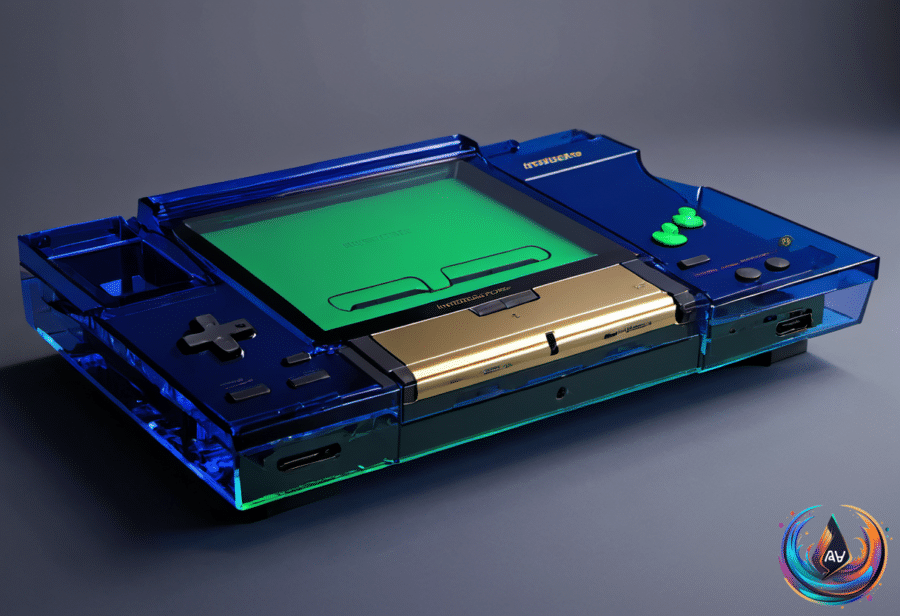
Rare consoles turn ordinary hardware into collector bait. Limited editions, sweepstakes rewards and specific game bundles can far exceed their launch prices, especially when production records and documented sales confirm how few remain. Some never reached stores at all, including the Nintendo PlayStation prototype acquired by the National Videogame Museum.
The Toys “R” Us-exclusive Nintendo 64 edition is a particularly clean example of scarcity meeting nostalgia. Its metallic gold console came with matching controllers, Hey You, Pikachu! and the Voice Recognition Unit required to play it. Video Game Authority’s December 2025 census listed only nine examples of the variant.
A gold console graded 80 out of 100, or NM near-mint, by VGA sold for $3,250 in January 2026 with two matching controllers. Ungraded loose consoles tracked by PriceCharting have sold for $140 to $425, while boxed examples reached $1,750 to $3,000 in 2026. The box, as usual, does a surprising amount of the financial heavy lifting.
One sealed example graded VGA 80+ sold for $10,000 in May 2025, and another reached $16,250 in August 2026. Heritage reported 22 sealed examples in VGA’s April census, with only one graded higher than the example sold in May 2025. For collectors, condition is not a footnote; it is the market.
Sweepstakes prizes and machines that vanished early
In 2000, Sony gave away a Midnight Blue edition of the original PlayStation through a North American sweepstakes. Only 100 consoles were available, alongside 1,000 DualShock controllers, while Japan offered another 100 consoles through a contest marking the anticipated sale of 10 million PlayStation units domestically.
The reported total across both promotions was 200 consoles. PriceCharting records an eBay sale for a 10 Million model PlayStation at $10,326.32 in October 2024, alongside reported private sales of $9,000 in 2021 and $3,000 in 2017. Its guide estimates a complete-in-box example at about $9,663, while new and graded-new examples reach $25,000 and above.
Panasonic’s Q took a different route to rarity by combining GameCube hardware with a DVD player in a Japan-exclusive system. It launched on December 14, 2001, for ¥39,800, or about $325 at the time, but Panasonic stopped production by December 2003. The price had only fallen to ¥34,800, compared with ¥13,800 for the standard GameCube.
Working systems sold for $800 to $2,200 in 2026, depending on condition, accessories and modifications. Current guide estimates place a loose Q at about $1,645, a boxed complete set around $2,200 and a sealed ungraded system at about $4,569; one sealed VGA 80 example sold for $7,512 in December 2024.
Most hardware becomes obsolete before it becomes useless
Rarity is only one reason old consoles retain interest. Microsoft rolled out nine distinct Xbox variations across four generations, from the original Xbox and Xbox 360 through Xbox One and Xbox Series systems. Xbox Live launched in late 2002 for $50 a year, and Microsoft said the service passed 300,000 subscribers within four months, nearly 50 percent ahead of the PlayStation 2’s network adapters; by mid-2005, it had two million subscribers.
The Xbox 360 launched in 2005 with a $400 Premium model carrying a wireless controller and detachable 20GB hard drive, plus a $300 Core model with a wired controller and no hard drive. The 2007 Elite added a matte black finish, 120GB storage and an HDMI port, while the 2010 360 Slim introduced a new cooling system and up to 320GB of storage after the original model’s Red Ring of Death problems. The 360 E arrived in June 2013.
The Xbox One launched on November 22, 2013, after Microsoft reversed its plan to require Kinect 2.0. Its $499 package became a $400 console in 2014 without the camera, while retaining a 500GB hard drive and built-in Blu-ray player. The $399 Xbox One S arrived in 2016 with 4K support, 4K Blu-ray, 4K streaming, 1080p upscaling and a body 40 percent smaller than the original; the $499 Xbox One X followed in 2017 with native 4K gameplay and HDR.
The Xbox Series X launched for $500 in the 2020 holiday season after its 2019 unveiling, promising native 4K gaming at up to 120FPS and eventual 8K support. The $300 Series S lacks a disc drive, maxes out at 1440p and upscales games instead of delivering true 4K. After price increases, the Series S starts at $500 for 512GB, while the Series X costs $750 for a digital 1TB console or $800 with a disc drive. Microsoft also marked the original console’s 25th anniversary with a translucent green Series X.
Old hardware rarely becomes truly useless. Components usually work until they break, but motherboards can lose compatibility after more than seven years, GPUs can fall out of favor every three to five years, and modern websites can overwhelm ancient CPUs with ads and animated elements. A simple case or cooling device can last a decade or more; the software environment is less sentimental.
Tetris proves the point from the other direction. Alexey Pajitnov created it on the Soviet Elektronika 60 in 1984-1985 using text-based graphics, then watched the concept spread across more than 200 official releases, countless ports and bootleg versions. Its 1989 Game Boy release sold more than 35 million copies outside mobile versions, introduced “Theme A” music and remains Pajitnov’s favorite version.
The Tetris Company, created by Pajitnov and Henk Rogers in 1996, now manages branding and licensing through the Tetris Guideline. Tetris DX arrived in 1998 with Sprint mode, The New Tetris added four-player competition and piece holding in 1999, Tetris DS introduced online play in 2006, and later releases included Puyo Puyo Tetris, Tetris Effect, Tetris 99 and 2024’s Tetris Forever. Hardware may age, but a good idea keeps finding new shelves.
Based on