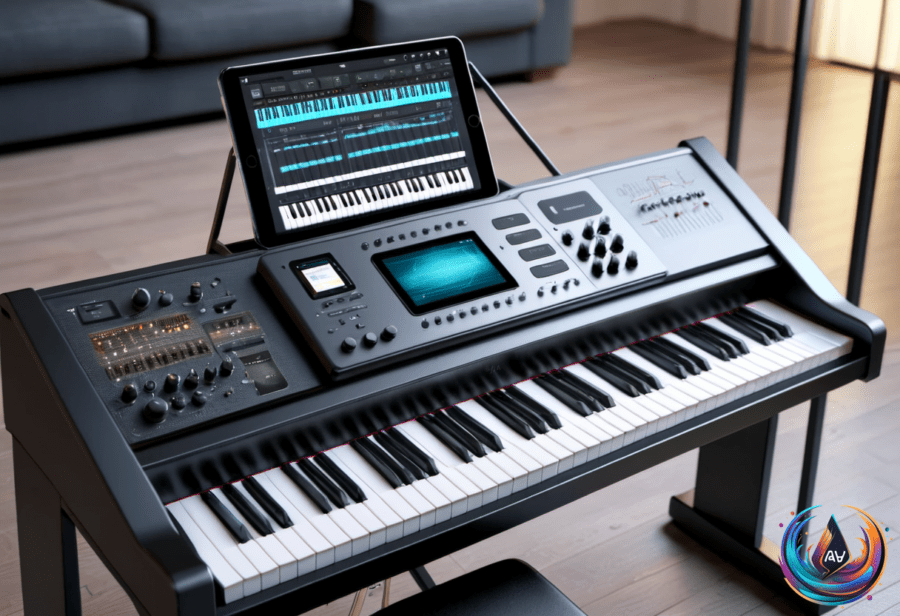
A digital piano that connects to the internet is still a rare sight, but Roland is changing that with the new FP-40. The $750 instrument brings built-in Wi-Fi to the piano, linking it with teaching software and creating a more connected way to practice.
Roland just unveiled the FP-40, and the piano is available to purchase right now in both black and white. Its Wi-Fi connection links to a home network like any other gadget, giving the instrument access to teaching tools, related software, and future feature upgrades.
A Piano Built Around Connected Practice
Wi-Fi is incredibly rare in pianos, which makes the FP-40 stand out before a player even touches the keys. Roland’s primary use for the connection is teaching apps and related software, placing guidance and practice feedback alongside the instrument itself.
Roland is also releasing a new teaching app called Piano Sphere. The app offers guidance, real-time feedback, and a library of songs and courses, giving players several ways to build their skills through the same connected setup.
Users will need a smartphone or tablet to control many aspects of Piano Sphere. That setup turns the piano into part of a larger practice system, with the instrument handling the playing experience and the mobile device controlling many app features.
The piano automatically records playing history, giving the practice system a record of a player’s activity. It also notices when a player is struggling and flashes a button to offer assistance, bringing help into the session at the moment it is needed.
Using Wi-Fi should reduce lag when practicing, helping the piano and teaching software work together with less delay. Both the app and piano software will update automatically, while the instrument will receive regular software updates with upgraded features.
Traditional Piano Feel Meets New Hardware
The FP-40 does not rely on connectivity alone. It features Roland’s proprietary Piano Reality Sound Engine, combining the company’s sound technology with a keyboard designed to deliver a more realistic playing response.
The instrument includes fully weighted hammer action keys with a triple-sensor system. That combination is built for players who want the feel of an acoustic-style keyboard while using a digital piano with software features and network access.
Roland also added a new speaker system that enhances depth in the low register. That gives the FP-40 a stronger foundation for lower notes, adding another hardware change to the connected piano’s feature list.
The piano includes a Bluetooth receiver for streaming music, so the instrument can also serve as a way to play music through its speaker system. Wi-Fi supports teaching and updates, while Bluetooth adds another path for audio.
Why the FP-40 Matters
The FP-40 brings several separate ideas into one instrument: a weighted keyboard, a proprietary sound engine, a new speaker system, Bluetooth music streaming, and built-in Wi-Fi. The result is a digital piano designed to combine playing, learning, and software support in one product.
Piano Sphere gives that connection its clearest purpose. Players can access guidance, real-time feedback, songs, and courses, while the piano tracks playing history and responds when someone is struggling. A smartphone or tablet becomes the control point for many of those features, but the FP-40 remains at the center of the experience.
Regular software updates could also keep the instrument moving after purchase. The app and piano software will update automatically, and upgraded features will arrive through ongoing software support rather than stopping with the original purchase.
That approach makes the FP-40 more than a piano with a network connection. It becomes an instrument that can connect to lessons, remember practice activity, offer assistance, and gain upgraded features over time.
At $750, the FP-40 is available right now in black and white, giving buyers two finishes and a digital piano built around connected learning. Roland’s move also raises a bigger question for the category: if Wi-Fi remains rare in pianos today, how long will it stay unusual once players experience teaching software, automatic updates, and responsive practice tools from the instrument itself?
Based on