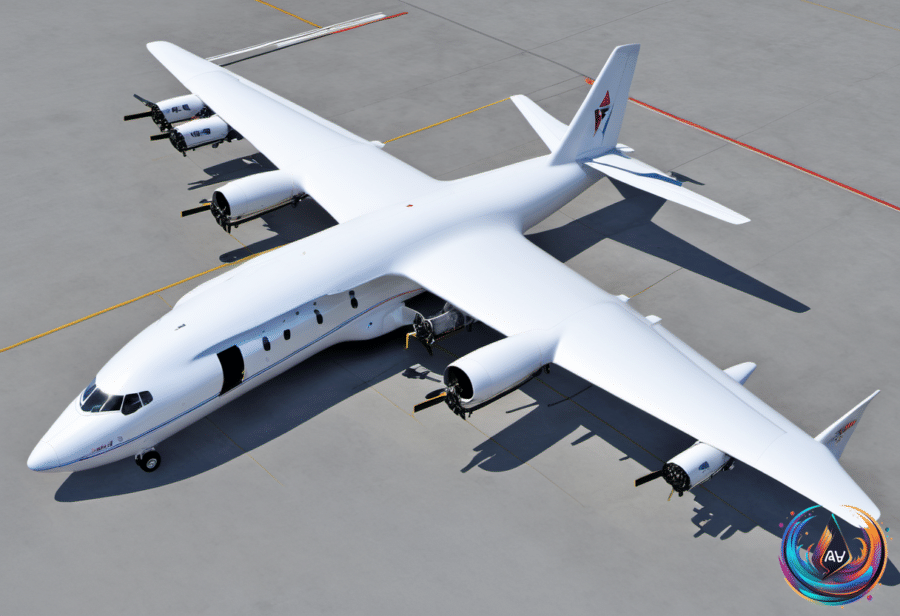
Skyways has started production of its autonomous Skyreach cargo aircraft in Austin, Texas, marking a new stage for a program that began as the V3 Block 2. The company announced the production aircraft on November 9, 2026, and plans to begin flights for existing defense and commercial customers in December 2026.
Skyreach is built for cargo missions that need long range without a large crewed aircraft. Skyways says the aircraft can fly more than 1,300 miles with 10 pounds of cargo, while a 50-pound load supports more than 780 miles. New customers can also reserve capacity as the company moves from testing toward customer operations.
From V3 Prototype to Production Aircraft
The aircraft is the production platform behind a $37 million STRATFI award from AFWERX, the Department of the Air Force’s innovation arm, in June 2025. That award funded the V3 program’s transition from prototype toward full-rate production. Since then, Skyways has finalized the production design and advanced flight-qualification testing.
Skyreach follows V2, an earlier version with a 30-pound useful load and a 500-mile maximum range. The V3 program used the same autonomy stack, carrying that foundation into a platform with a longer stated range, greater useful load and a production-focused design.
The range figures come with specific operating conditions. Skyways ties them to level cruise at 70 knots true airspeed, a 2,000-foot density altitude, no wind and a 45-minute fuel reserve. Cargo and fuel share the aircraft’s 360-pound maximum gross takeoff weight, so the 1,300-mile figure describes a light-load mission rather than a maximum-payload flight.
Hybrid Power and Flexible Cargo Missions
Skyways lists useful load, which includes fuel and payload, at more than 100 pounds. The aircraft has an 86-pound fuel capacity and a 7-cubic-foot cargo bay, while maximum endurance is listed above 18 hours. Those figures give operators room to balance cargo weight, fuel and mission distance instead of treating range as a single fixed number.
Skyreach uses eight electric motors for vertical lift and a two-stroke heavy-fuel cruise engine with an integrated generator. During flight, the generator recharges the lift battery and powers the avionics, sensors and payloads. The setup also allows refueling without ground-side battery charging or battery swaps.
The aircraft can use Jet A, Jet A-1, JP-5 and JP-8. That fuel compatibility supports the same aircraft across different operating needs, while the hybrid system keeps the vertical-lift battery supplied during a mission.
Skyways designed the cargo bay to change between flights. Operators can configure it for standard cargo, temperature-controlled blood, plasma and biologics, radar or optical sensors, and communications equipment. The bay provides up to 2.5 kilowatts of power for payloads and uses a top-loading, bottom-release layout for autonomous airdrops and tethered cargo delivery.
That layout also fits the company’s plans for shipboard and austere environments. Skyways says the aircraft is intended to operate in winds up to 40 knots and temperatures from minus 5 to 120 degrees Fahrenheit.
Autonomy, Supervision and Deployment Plans
Skyreach’s onboard autonomy handles flight navigation, mission execution and emergency maneuvers. SkyNav Mission Control covers route planning, flight execution and live supervision of aircraft, hubs and operators.
SkyNav presents a one-operator-to-many-aircraft model. Direct routes can be repeated across a fleet, allowing the same mission pattern to support multiple aircraft instead of requiring a separate operator for every flight.
Skyways Chief Executive Charles Acknin said the company aims to deploy more than 1,000 autonomous aircraft for defense and commercial customers within five years. The company also estimates Skyreach’s cost at roughly one-tenth that of a helicopter.
The production start puts those plans against a clear near-term milestone: flights for existing defense and commercial customers are scheduled for December 2026. The aircraft’s stated range, modular cargo bay, hybrid power system and autonomous flight controls are now moving from a development program into customer-focused operations.
Based on
- Skyways Starts Production of Its Autonomous Skyreach Cargo Aircraft — unite.ai
- Self-flying cargo planes are coming. Can they be safe with no one aboard? | Scientific American — scientificamerican.com
- Nasa is making a plane that can fly like nothing before | The Independent — independent.co.uk
- Aviation | The Verge — theverge.com