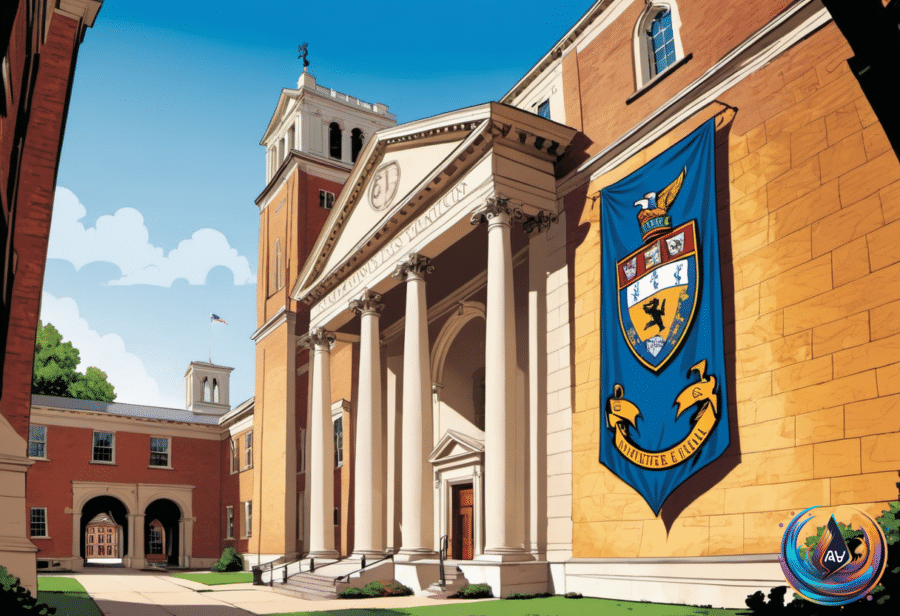
Stanford put a fabricated student on campus banners. The university used AI to swap a student out of a photograph and replace him with a Black woman who did not exist, then displayed the edited image in “Welcome Home” banners around campus.
The photograph shows three students: the fake Black student, a young Asian woman, and a white man. Two are real. One was manufactured for the image, which gives the banner a polished welcome and a rather awkward relationship with reality.
The banners were once “all over campus,” but Stanford is now taking them down. That action follows confirmation from a Stanford spokesperson that AI edited the images and that the work violated the university’s AI policies.
A Direct Violation of Stanford’s Own Rules
Stanford’s policy is not vague about this kind of image manipulation. “The use of AI in producing or altering images of Stanford people, events, research, facilities, or achievements is strictly prohibited,” a Stanford spokesperson said.
The banner falls directly inside that prohibition. It altered an image of Stanford people for a university campaign, using AI to create a person who was not present in the original photograph. The issue is not a hidden technical detail or an obscure edge case; the finished image appeared on banners intended to represent campus life.
That distinction matters because the university already had a rule covering the conduct. Stanford did not need to guess whether image generation was acceptable, nor did it lack a policy for deciding what happened after the editing was discovered. The policy prohibited producing or altering images tied to Stanford people, events, research, facilities, or achievements.
Rules only carry weight when the institution applying them follows them. In this case, the university’s own statement confirms that the banners crossed the line Stanford had already drawn.
Representation Cannot Be Manufactured Without Consequences
The edited image also raises a precise problem about representation. The banner did not merely adjust a background or clean up a minor visual flaw; it replaced a student with a Black woman who did not exist.
That choice makes the image’s message impossible to separate from its construction. The banner presents a group of students as part of a university welcome, but one member of that group was created through AI rather than photographed in the represented scene.
Billy Ramirez captured the tension in a short reaction: “I love this school, but I don’t love when they do things like this.” His other comment was even more pointed: “It is Silicon Valley.”
That line lands because the incident involves a familiar Silicon Valley temptation: treat a technical capability as permission to use it. AI can alter an image, but the fact that it can do so does not answer whether the altered image belongs in a university’s public materials.
Stanford’s response is now visible in the removal of the banners. The university has confirmed the violation, and the images are being taken down after appearing across campus. The practical cleanup is simple; the credibility problem is not.
The episode leaves Stanford with a basic lesson already written into its own policy. Images of Stanford people and campus life cannot be manufactured or altered with AI, even when the result is intended to look welcoming. A banner meant to represent students should not need an invented one.