The agent era has already started. Autonomous AI agents are active participants in sensitive business operations across most enterprises, even as organizations continue to treat them like a future project rather than a present workforce. That mismatch is becoming harder to ignore.
By 2027, 74% of companies are expected to use agents in some capacity, according to a recent Deloitte study. The number matters, but the larger shift is already underway: businesses are moving from asking whether agents belong in operations to managing what happens after they arrive.
In a growing number of organizations, non-human identities already outnumber human employees. That fact changes the shape of the management problem. A company is no longer coordinating only people, software, and data; it is also coordinating autonomous participants that can take part in sensitive work.
Agents Are Not Temporary Contractors
Rajat Bhargava, CEO and cofounder of JumpCloud, described the situation in direct terms: “Most enterprises have already crossed a threshold they haven’t fully acknowledged: Autonomous AI agents are now active participants in their most sensitive business operations.” The important phrase is not “AI agents.” It is “active participants.”
That distinction removes the comfortable distance between experimentation and operations. An agent involved in business work is not merely a tool waiting for a person to click a button. It occupies a role inside a workflow, and that role requires clear management, defined tasks, and a way to understand how multiple agents work together.
The rise of non-human identities also makes the old employee-centered model incomplete. When these identities outnumber human employees, treating each agent as an occasional software feature creates a basic design failure. The organization has to account for agents as ongoing participants in its operating model — not as digital guests who politely leave when the pilot ends.
Management Must Catch Up With Deployment
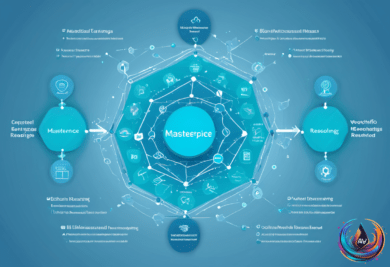
Multi-agent workflows are recommended for effective management and task execution because one agent does not need to handle every part of a process. Work can be organized across multiple agents, with each one taking part in a defined task rather than forcing a single system to carry the entire operation.
That approach also creates a clearer way to think about responsibility. A workflow built from several agents requires an organization to understand what each participant does, how the tasks connect, and where the overall process begins and ends. The technology may be autonomous, but the design cannot be vague.
This is where the current enthusiasm around adoption meets the less glamorous work of business operations. Forecasts can count how many companies will use agents, but adoption alone does not explain whether those companies have designed sensible workflows around them. A system can be active before its management model is ready. That is the uncomfortable part.
Lauren Hanford, VP, Product Operations, Sonar, and Bernard Marr, Contributor, are also named in the discussion around this shift, which reflects how broadly the agent question now reaches across business and technology conversations. The central issue remains the same: organizations need to design for agents that participate from day one.
By August 28, 2026, the direction is clear even if every company has not acknowledged it. The expected 74% adoption rate by 2027 is a forecast, while autonomous agents already operating in sensitive business functions are a present condition.
The next phase will not be defined by announcing that agents have arrived. They are already here. It will be defined by whether businesses build multi-agent workflows that match their responsibilities, their tasks, and their place in daily operations.
Based on