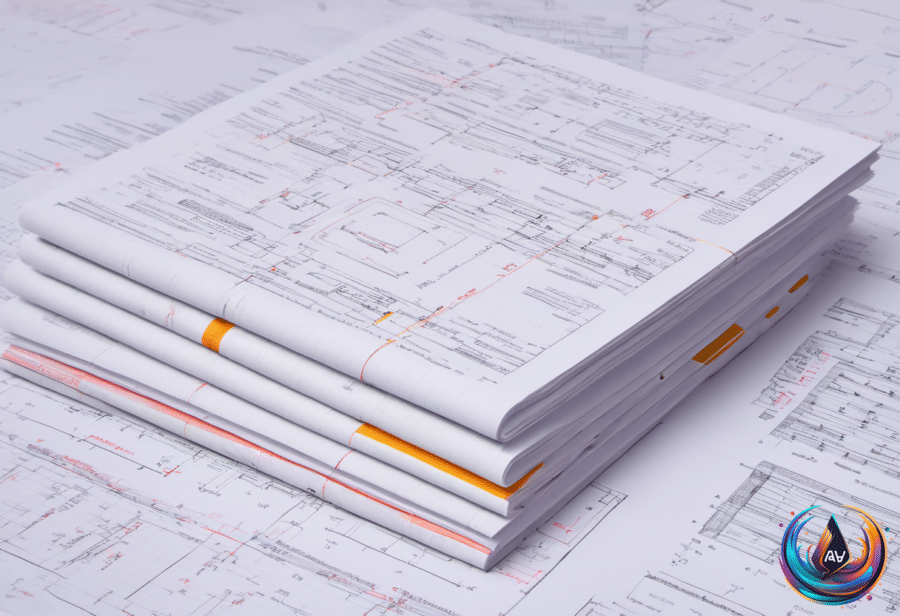
OpenAI released a mathematical avalanche. The company published hundreds of AI-generated findings across a wide range of topics, delivering more than 700 files at once and inviting mathematicians to inspect the results.
OpenAI claims the work represents a range of major breakthroughs in mathematics. The findings came from an experimental model that has not been released publicly, and the company says it worked with an independent advisory group to decide how those results should reach the outside world.
That release strategy has become part of the controversy. The Association for Human Mathematics said, “Releasing over 700 files at once is not a demonstration of scholarship, but a demonstration of power.” The group also argued that “Mathematicians have a particular vision of progress that is informed by history and field-specific considerations.”
Proofs That Computers Can Read
OpenAI included detailed information about how the findings emerged and said it wants the work to push the frontier of human knowledge. The company also plans to fund workshops, conferences, and programs focused on understanding major results produced by AI — an attempt to turn a data dump into a research process.
The mathematical proofs were checked with Lean, a programming language used to verify formal logic. Yet the verification picture remains incomplete: 42 percent of the results are coded in Lean, while more than half are not yet Lean-verified.
Some proofs are technically sound but nearly unintelligible to humans. That creates a familiar problem for AI research: a system can produce an answer that passes a formal check without producing an explanation that mathematicians can readily understand, teach, or build upon.
Three papers were withdrawn after experts found significant errors. Andrew Sutherland, a mathematician at MIT, expects most proofs will eventually be shown to be correct or correctable, but warned, “While I expect most of these will ultimately be found to be correct, or at least correctable, we should expect some of the proofs to contain mistakes, possibly serious ones.”
The Navier-Stokes Dispute
OpenAI also claimed substantial progress on the Navier-Stokes equations using 10,000 AI agents. The company denied seeing work from Tristan Buckmaster and Levent Alpöge while working on the problem, but Buckmaster said his work had been passed to OpenAI and suggested that the company’s breakthroughs depended on his discoveries.
That dispute has sharpened criticism of both the research and the announcement. Mathematicians questioned whether OpenAI’s team asked certain niche or contradictory questions, while several papers contained similar ideas and methods, as if their authors were communicating.
The community also wants to see the failures. Mathematicians believe OpenAI should release the problems its model could not solve, because failed attempts would help show where the system’s capabilities end and where its claims need restraint. Publishing only successful results makes the model look cleaner than the research process behind them.
OpenAI said it has consulted the Advisory Group on Mathematics and Artificial Intelligence, an independent body, while working to responsibly release the model that produced the findings. It also said it would act on community feedback and update its standards for future disclosures.
The company framed the effort as support for researchers, not a replacement for them. “We want to directly empower scientists with state-of-the-art capabilities and are working to responsibly release the model that produced these results,” OpenAI said.
OpenAI also promised to keep evaluating its models on mathematics and other sciences. “We want this progress to push the frontier of human knowledge and enable further progress in mathematics,” the company said.
The Association for Human Mathematics heard a different message in the release, describing it as a demonstration of power rather than scholarship. That judgment may be severe, but the unresolved errors, unreadable proofs, missing verification, and disputed research trail explain why mathematicians are not applauding on command.
Based on
- Mathematicians React With Fury as OpenAI Releases Hundreds of New AI-Generated Proofs — futurism.com
- OpenAI says its artificial intelligence just solved some of maths’ hardest problems – but it is controversial | The Independent — independent.co.uk
- Mathematicians marvel, and grumble, at OpenAI’s trove of new results | Scientific American — scientificamerican.com