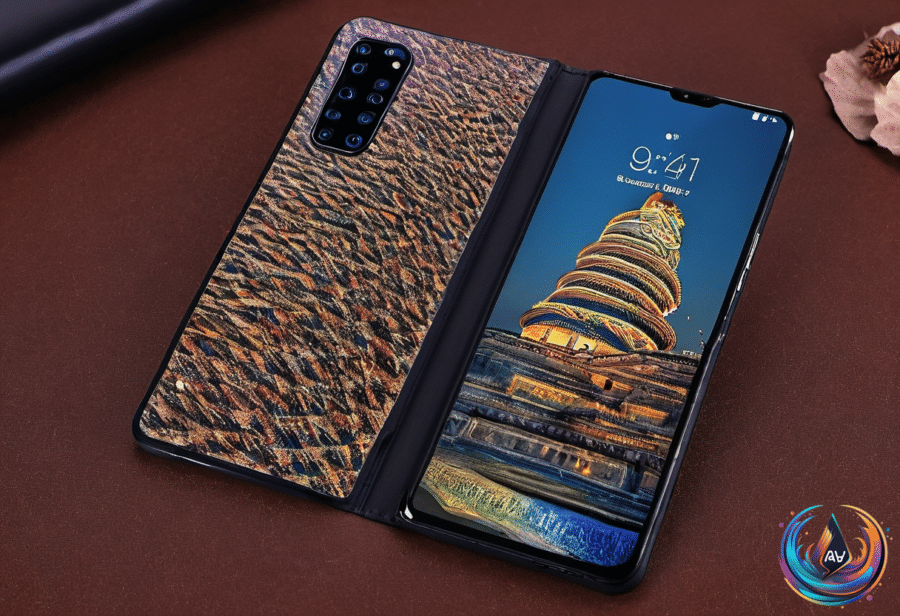
Can you protect a foldable phone with a screen protector? Yes—but the answer changes depending on which screen you mean. The outer display can take a protector, while the inner display demands a completely different approach.
Foldables are more delicate than standard phones, so protecting them makes sense. The danger comes from treating a foldable like a regular slab-phone display, especially when adding a protector to the screen that bends hundreds of thousands of times.
Protect the Outer Screen, Leave the Inner Screen Alone
The outer screen of a foldable phone is a regular smartphone display covered by a hard piece of glass. Modern smartphones use chemically strengthened glass, such as Gorilla Glass or Apple’s Ceramic Shield, so adding a screen protector to that outer panel is fine.
The inner display is different because the physics of folding prevents it from using regular, rigid glass. Instead, it relies on many flexible layers designed to survive between 200,000 and 500,000 folds during manufacturer testing.
Foldable phones usually arrive with a built-in protector over the inner display. Samsung foldable phones such as the Galaxy Z Fold8 use a protector made of TPU, while the recently announced iPhone Duo also includes a protector above its display layers.
That factory-applied layer is part of the phone’s protection system. Samsung highly recommends leaving the protective layers on the inner screen alone, and the company warned consumers not to remove the protector after the first Galaxy Fold.
Applying an unofficial protector to the inner display can damage the entire screen. Only use a protector or stylus that the manufacturer specifically lists as compatible with that model.
Samsung and Apple offer replacements for the internal screen protector, but they have the right tools to install them. That difference matters because an inner-screen replacement is not the same job as placing a protector on a standard phone.
Dust Is a Bigger Threat Than Scratches
Scratches are not the biggest enemy of a foldable phone. Dust is. The hinge remains fragile and can suffer damage from small particles of dust or sand, while particles inside the phone can scratch the display when they rub against it.
The latest Galaxy Z Fold devices, including the Galaxy Z Fold8 and Fold8 Ultra, have an IP48 rating. The first digit describes protection against solid objects: 4 means objects 1mm thick or larger cannot enter, while 6 indicates a dust-tight device.
Samsung’s Galaxy Z Fold8 carries an IP48 rating, which protects against short periods of water immersion and particles larger than 1mm. Apple’s iPhone Duo carries an IP68 rating, meaning it is dust-tight and resistant to dunks in water.
Those ratings do not make careless handling safe. A case that covers the hinge offers a better defense than placing an unofficial protector on the inner display, especially because dust and sand can reach moving parts and shorten hinge life.
Closing the phone on cards, coins, or keys can scratch or puncture the inner display. Dropping a foldable is another common mistake, and pressing too hard on the inner screen can add more damage.
Before closing a foldable, clear away foreign objects and check for dirt. That simple habit matters more than counting every fold each day.
How Long Can a Foldable Last?
Foldables do not have one specific lifespan. Manufacturers test their hinges and screens across a range of 200,000 to 500,000 folds, but moving parts experience more wear as they move.
Samsung claimed that the Galaxy Z Fold7’s display remained functional after 500,000 folds in laboratory testing. The Galaxy Z Fold7 OLED panel completed that test during a 13-day Bureau Veritas test at 77 degrees Fahrenheit.
That total equals more than 10 years of use at around 100 folds per day, or more than six years at over 200 folds per day. The test covered the foldable OLED panel, not every hinge component or other part of the phone.
That limit matters because a screen can pass a fold test while another component still needs attention. Samsung’s original claim of 200,000 folds for the first Galaxy Fold fell short in past testing, while the Galaxy Z Fold6 broke after about a year and the Galaxy Z Fold4 was used for nearly three years.
A modern foldable can serve for years when handled properly. Keep foreign objects away from the inner screen, avoid pressure, protect the hinge with a suitable case, and leave factory-applied protective layers in place.
If the hinge becomes harder to move, stops opening normally, or starts making new grinding noises, do not force another fold. Pay attention to the warning signs instead.
The Cost of Getting It Wrong
Inner-screen damage can turn a small protection decision into a major repair. Samsung’s Galaxy Z Fold8 inner-screen module replacement costs $579, making an unofficial protector a risky choice.
The safest rule is simple: protect the outer screen if you want extra coverage, but do not add anything to the inner display unless the manufacturer lists it as compatible. For foldables, careful cleaning and hinge protection can do more than another layer of film.
Based on