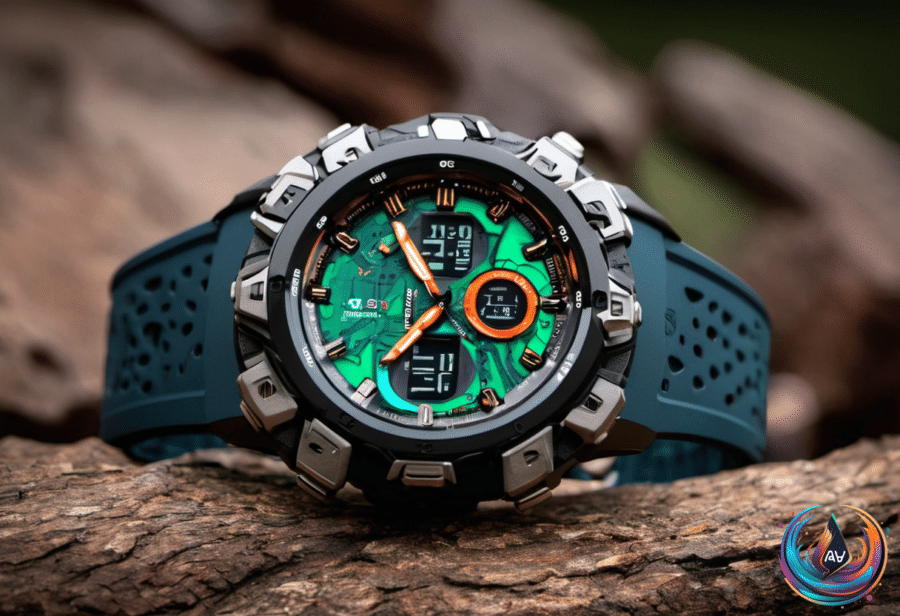
The Una Watch takes a different approach to the sports watch market. It combines GPS tracking, fitness sensors, open-source hardware, and a design that lets owners reach every component with a standard tool.
That package now costs $199, after the price dropped from the $350 Kickstarter offer. The lower price puts the watch below most Garmin watches, giving Una a clear point of difference beyond its fitness and navigation features.
The Una Watch was covered on Sep 23, 2026, at 3:01 PM UTC. Its appeal rests on a simple idea: a sports watch should not become unusable just because one part needs attention or replacement.
A sports watch built to be opened
Una describes the watch as modular, repairable, and open-source. The open-source design includes the SDK, housing, and circuit boards, while every component remains accessible with a standard tool. That gives the hardware a level of openness that is unusual for a fitness watch.
The modular design matters because the battery is replaceable. It has a capacity of 280mAh and charges through USB-C, with up to 10 days of battery life. Those details connect the watch’s repair-focused design with a practical feature: the battery does not have to define the entire life of the device.
There is no need to treat the watch as a sealed object. Owners can access its components, and the open-source parts offer a look at how the device is put together. The result is a product built around access rather than replacement.
GPS, fitness, and navigation features
The Una Watch includes dual-frequency GPS for navigation and location tracking. It also provides 24/7 heart rate tracking, giving the watch a way to monitor heart activity throughout the day and during exercise.
Its outdoor sensors cover more than GPS. A barometric altimeter tracks changes connected with elevation, while a six-axis accelerometer and gyroscope measure movement and orientation. The watch also includes a three-axis magnetometer, adding another sensor for direction and motion data.
Together, those features give the Una Watch a broad set of sports and navigation tools. GPS handles location, the barometric altimeter supports elevation information, and the motion sensors provide data about how the watch moves. Heart rate tracking adds a fitness feature that operates around the clock.
The display is a 1.2-inch MIP LCD. The listed battery life reaches up to 10 days, although that figure sits alongside the watch’s full set of tracking and sensor features rather than describing a separate use case.
The important limitation
The Una Watch is only IPX5 splash- and showerproof. It is not fully waterproof, so the water rating is a key part of the buying decision.
That limitation sits beside an otherwise broad feature list. The watch has dual-frequency GPS, heart rate tracking, an altimeter, motion sensors, a magnetometer, and a replaceable battery, but its protection against water does not match the expectations some buyers may have for a sports watch.
The distinction is clear: Una built the watch for access and repair, not as a fully waterproof device. Anyone considering it needs to weigh those priorities together rather than looking only at the $199 price or the 10-day battery claim.
Why the $199 price matters
The price change gives the Una Watch a stronger starting point than its Kickstarter offer. At $199, it costs less than most Garmin watches now, while still offering GPS, fitness tracking, navigation sensors, and an open-source design.
That does not make the watch a direct match for every Garmin feature or use case, because the available facts do not establish feature-by-feature comparisons. It does make the Una Watch easy to understand: it is a lower-priced GPS sports watch that puts repairability at the center.
The most unusual part is not one sensor or the battery figure on its own. It is the combination of a replaceable 280mAh battery, accessible components, open-source hardware, and an SDK inside a watch that costs $199.
Una’s first step is clear. The watch offers the core tools expected from a GPS sports device, but its strongest message is that owners should be able to open, understand, and repair the hardware they bought.
Based on