Small tech problems rarely need dramatic solutions. A CR2032 battery may need a basic test, an iPhone may need a few settings changed, and a suspicious gadget may need five minutes of internet searching before you buy it. None of this requires a lab coat, though the industry keeps behaving as if every charger deserves a keynote.
Test the battery before blaming the device
The CR2032 is a 3V lithium coin cell used in Samsung’s SmartTag2, some smart home sensors, AirTag and other small devices. Depending on the device and how often it is used, one battery can last well over a year; Apple says an AirTag battery lasts more than a year, while Samsung rates the SmartTag2 for up to 500 days in normal mode.
Before testing, inspect the battery. Crusty residue, rust-colored patches, swelling or leakage are reasons to skip the test and replace it. Corrosion on the device’s contacts can also cause trouble even when the battery itself is good.
A multimeter offers the clearest basic check. Set it to the 20V range, touch the red probe to the positive side and the black probe to the negative side. A negative reading simply means you reversed the probes. A fresh CR2032 typically reads around 3V, while a reading closer to 2.5V is a good reason to bring in a replacement.
That reading is useful, but it is not a complete health report. A multimeter draws almost no current, so a battery can look fine on the display and still struggle when a key fob or tracker needs power. There is no single pass-or-fail reading for every device, so try a fresh CR2032 before declaring the hardware faulty.
A dedicated coin-cell tester is another option, with some models costing around $10. Basic multimeters can cost less than $20 and help with other batteries or low-voltage electronics, but buying either tool to diagnose one suspect $3 battery is a harder sell. A small red or yellow LED provides a cheaper check than a blue or white one because it usually needs less voltage to light up; if it glows, the battery can supply some current, and that is all it proves. A dark LED does not prove the battery is dead.
AirTag owners can check Find My before opening anything: select Items, tap the AirTag and replace the battery if the app says “Low Battery” or shows a depleted battery icon. Some CR2032 batteries have bitterant coatings that can prevent proper contact, even when brand new, so Apple recommends packaging marked “Compatible with Apple AirTag.” After removal, keep the cell away from children, tape its terminals and take it to a battery collection facility. If one is swallowed, seek emergency medical care immediately; serious internal injuries can occur in as little as two hours.
Chargers, white labels and better battery habits
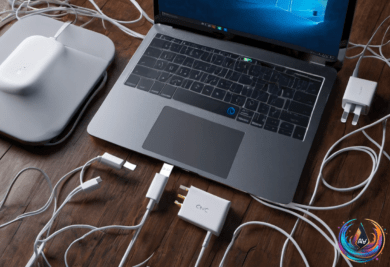
Anker’s PowerIQ, or PIQ, identifies connected devices and adjusts output based on the voltage best suited to the battery. In theory, that lets a charger deliver power without sending too much and damaging the device, though fast charging still carries a risk of reducing battery life over time. PowerIQ does not guarantee faster charging: a device that accepts only 12W gains nothing from a charger capable of delivering 100W.
PD is the most common charging standard, while QC is also used in Android devices. The latest versions of PD and QC 4.0 are partly cross-compatible, and PIQ 4.0 works with QC and PD 3.0. Newer PIQ chargers support fast charging across essentially any device, while newer Anker chargers can show temperature and wattage in real time through integrated displays. Useful information, finally—assuming watching numbers makes the battery charge faster.
Buying the device itself requires similar skepticism. Device manufacturing comes from a small cluster of Asian factories, and very few companies make all their own hardware. White label manufacturing is legitimate, but an Original Device Manufacturer can sell the same product to several brands with different packaging and logos.
Engadget’s camera guru Steve Dent found the same gimbal camera under three names: Ordro’s UHD-M5, AgfaPhoto Realimove MC3X and Minolta Showtime MN5KG100, with identical pictures on their Amazon listings. J-Style offers rapid white label service for rings, including custom packaging and logo placement; the J-Style X1 appears under the Fittr, Qalo and Insix names, while the Reebok/F50 smart ring looks similar to J-Style’s X6.
Amazon listings can expose the pattern. YJYK, Nhemeylp, Spurkey, Moremore and Flywin use the same promotional image for fitness trackers with 1.1-inch AMOLED touchscreens, 25 sport modes and the same sensor functions, all running the Keep Health companion app. Check independent reviews and Reddit instead of relying on an AI overview or customer recommendations alone. If a product has no reviews beyond its own listing, that lack of scrutiny is a useful warning.
Brand licensing adds another layer. Reebok-branded products include exercise equipment from RFE International, eyewear from Mondottica, a smart ring from The Original Fit Factory, smart glasses from Lucyd and a smartwatch from CE Brands/Vitalist. Motorola, now Lenovo’s mobile brand, has licensed its name for watches since it stopped making its own wearables nearly a decade ago. Zombie Brands such as Kodak can be even less clear, with the name divided among multiple companies after bankruptcy auctions.
Finally, iPhone owners can reduce battery drain without closing apps. Turn off Background App Refresh where it is not needed, restrict location access to “only when using,” keep Wi-Fi on, use auto-brightness, disable Always-On Display and enable Dark Mode on an OLED screen. Limit Frame Rate drops ProMotion from 120 Hz to 60 Hz; Adaptive Power adjusts brightness and background data, while Low Power Mode makes similar changes with a larger performance cost.
Optimized Charging stops at 80 percent until a full charge is needed, and a manual limit can prevent the battery from reaching 100 percent. Keeping the charge between 20 percent and 80 percent can extend battery life before the other settings do their work. Boring advice, perhaps—but batteries have never cared about drama.
Based on