A $59.72 pocket synth has escaped its original limits and turned into a community-built experiment platform. At the same time, a new 49-key instrument is pushing a popular digital synth line toward a more serious performance setup.
The M-Vave FM-1 and Arturia MiniFreak 49 represent two very different directions for electronic instruments: one opens a tiny device to custom software, while the other expands an existing design with bigger controls, more keys, and a richer stage-ready interface. Together, they show how much room remains for hardware to surprise us.
From bargain synth to community platform
The M-Vave FM-1 was initially billed as a pocket cousin of the famous Yamaha DX7 synthesizer. At release, it was a cool device that did what it said on the box, but not much else. That changed when tinkerers began looking beyond the stock software.
In July, intrepid users on Reddit’s r/synthdiy board started reverse-engineering the FM-1’s stock firmware to expand its abilities. By September, custom firmware began appearing, and by October there were already more community firmware projects available to install than one article could cover. Yes, it plays Doom.
The hardware invites this kind of experimentation. The FM-1 has 27 physical piano keys and a modest 1.54-inch TFT display, a compact combination that can support musical projects and plenty of strange experiments beyond synthesis. A device that began as an impulse purchase now has the shape of a pocket studio, game machine, and software playground.
On October 17, M-Vave announced FM 1 Open, a software package that encourages FM-1 owners to develop custom firmware for the synth-turned-whatever-else-you-can-imagine. The package includes an SDK described as a browser-based workbench, version 15 of the stock firmware, and an open platform that users can flash and build on.
The application source is published under GPLv3, and M-Vave includes an in-browser emulator for testing custom firmware before flashing actual hardware. That gives developers a safer place to experiment, but the platform has a clear boundary: the underlying synth engine that powers the stock FM-1 package remains a closed binary. The application layer is what is open.
Powerful experiments need careful flashing
Custom firmware brings real risks. The JieLi chip powering the FM-1 keeps firmware in a single flash bank, so an interrupted update can leave the device in a difficult-to-recover state. As long as the flashing process completes without interruption, the device should be fine, but there is always a risk of bricking it if something goes wrong.
Flashing also wipes all information on the device. Saved projects and settings will disappear, so back them up before loading a new firmware package. The browser needs permission to write to the FM-1, and the installation process depends on WebUSB and Web MIDI support.
That rules out Firefox. Use a Chromium-based browser, select the FM-1 from the list of available models where applicable, and use the package’s web-writer to flash the firmware.
Firmware version matters just as much. The unit involved in the test was running stock v14, while community guides repeatedly warn users to update to stock v15 before installing custom firmware. An attempt to flash Doom directly onto v14 failed about 80 percent through, though it still wrote something. The synth worked, but it no longer spoke the same language as the installers.
M-Vave included a recovery path in the FM1 Workbench. Its “force-flash” tool restored the unit to stock v15 in about 10 seconds, turning a frightening failure into a manageable lesson: always check the current firmware version.
Community advice also warns against flashing one custom firmware directly over another. To reduce bricking risks, users suggest rolling back to official stock firmware v15 through M-VAVE’s official updater before installing another custom build. Another option is TransitFM1, a lightweight bridge firmware by Quixotic7 with crash-guarded boot stubs and stock V15 identity emulation for safer transitions between custom builds.
Arturia takes the Freak line to full size
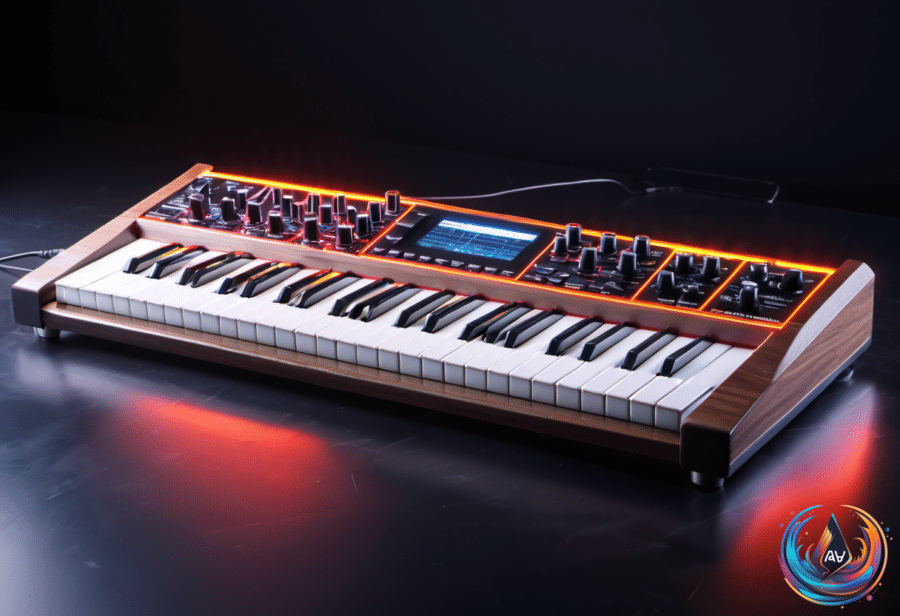
Arturia is taking a different route with the MiniFreak 49, adding a larger physical interface to the Freak line. Under the hood, it is almost identical to the current MiniFreak, but its playing surface changes the experience.
The MiniFreak 49 has 49 full-sized, semi-weighted keys with mono aftertouch. That is a major shift from the MiniFreak’s 37 minikeys and the MicroFreak’s 25 “key” touchplate. It also replaces the touchstrips found on the other Freak instruments with proper aluminum pitch and mod wheels.
The new model adds a larger LCD, dedicated controls for its two sound engines, and a new XYZ touchpad. The touchpad replaces the mod matrix’s intuitive but slow knob-based interface, adding performance features and speeding up preset browsing.
Its sound engine offers over 30 digital oscillator types, each with analog filters, plus audio-rate filter FM for even freakier sounds. The MiniFreak 49 also has 256MB of storage for user samples and wavetables, a feature added to the original MiniFreak in a firmware update last month.
The MiniFreak 49 is available now with an MSRP of $849, though the street price is likely to be lower. That puts it far beyond the FM-1’s $59.72 price, but the two instruments are chasing different thrills: one turns low-cost hardware into an open experiment, while the other builds a fuller performance instrument around a proven digital synth.
One device invites owners to rewrite what a pocket synth can do. The other gives players more space to control complex sounds. The next wave of electronic instruments may come from both directions at once: open platforms that welcome unexpected ideas and polished hardware that makes those ideas easier to perform.
Based on
- From impulse purchase to pocket studio: The M-Vave FM-1 — arstechnica.com
- Switch 2 jailbreak gives hackers new ways to run homebrew and mod games | Ars OpenForum — arstechnica.com
- This emulator reimagines Nintendo’s Virtual Boy with a full color display | Ars OpenForum — arstechnica.com
- Arturia’s MiniFreak 49 makes its Freak synths more professional | The Verge — theverge.com