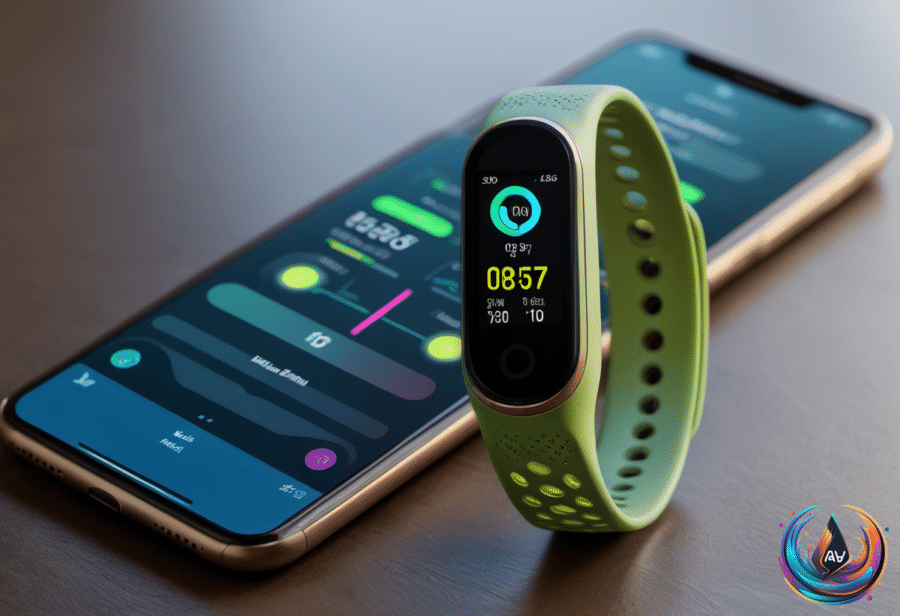
The screenless fitness tracker battle has reached a thrilling new stage. Fitbit Air brings Google’s health platform into direct competition with Whoop, a company that launched its first tracker in 2015 and raised $575 million in March at a $10 billion valuation.
Whoop now faces pressure from Garmin, Luna, Hume, Amazfit and Google, which teased something like the Air on March 31, the same day as Whoop’s funding announcement. The big question is simple: should you choose Fitbit Air’s approachable health tracking or Whoop’s deeper focus on strain, recovery and serious training?
Two Screenless Trackers, Two Very Different Priorities
The Whoop MG is one of Whoop’s newest devices, making it a strong comparison with Fitbit Air. Both trackers do a great job recording activities, sleep and vitals, and both companies offer companion apps packed with information. Each app also includes an AI assistant that can log meals, answer questions, offer advice and build a wellness or workout plan.
The biggest difference appears when you explore the data. Whoop captures heart rate at a higher sampling frequency, and its app focuses on details such as strain and recovery. That depth makes Whoop better suited to people who take health, wellness and fitness seriously, but the app can feel overwhelming at first.
Fitbit Air takes a friendlier route through Google Health. The app is more user-friendly for the average person, giving everyday users a clear way to check sleep, vitals, walks and workouts without forcing them into a wall of training metrics.
Battery life creates another clear split. Fitbit Air is slimmer than Whoop bands, but that design affects endurance: Google rates the Air for up to seven days. Newer Whoop models, including Whoop 5.0 and Whoop MG, are rated for 14+ days.
Whoop also offers a wireless battery pack that slides onto the band while charging, so you never have to remove the tracker as long as the pack stays topped up. That convenience adds bulk to the wrist, creating a tradeoff between uninterrupted use and a slimmer design.
Subscriptions Decide the Real Winner
Both devices require a subscription to unlock the most from their data, but their membership models work in different ways. Fitbit Air includes a three-month trial of Google Health Premium, after which you can cancel or continue for $10 per month or $100 per year on top of the $100 hardware cost.
Without a subscription, Fitbit Air still provides basic health insights and activity tracking, including sleep tracking. You lose AI-driven personal assistance, guidance, training plans, workouts and deeper sleep insights, but that free level may be enough if you only want a daily health check.
If you already pay for Google AI Pro or Ultra, Google Health Premium comes as one of the perks. That changes the value equation for people who already use those plans, since the premium health features do not require another separate payment.
Whoop takes a stricter approach: you cannot use its tracker without a membership. The hardware comes with the plan. Whoop says, “Whoop One will be sold on WHOOP 5.0 hardware in the US, MX, CA, EU and UK,” and “WHOOP One in these regions will be sold at $199/ year.”
Outside those regions, “Whoop One memberships are provided with a certified pre-owned 4.0 sensor and Onyx Superknit Band.” That may concern anyone who does not want a pre-owned product. A Whoop membership starts at about $149 for the first year, rises to $199 after the first year, or costs $25 per month for people already paying monthly. The highest tier reaches $359 annually.
Fitbit Air’s Missing Feature Is Coming Behind a Paywall
Fitbit Air received a warm reception, but one feature from Google’s wider wearable lineup was missing: sleep breathing quality monitoring. Google announced the feature among three new Health Guardian tools in September, while Fitbit Air initially promised only blood pressure and insulin resistance trends.
Google has now confirmed that sleep breathing quality will come to Fitbit Air, but access requires Health Premium. The feature costs $9.99 a month through that subscription, adding another reason to weigh the monthly cost before buying the tracker.
That paywall does not erase Fitbit Air’s appeal. The tracker remains the easier choice for everyday users and casual fitness buffs, especially those who want basic sleep tracking and activity insights without committing to a premium membership from day one.
Whoop is the stronger match for serious athletes who want granular recovery and strain data, longer battery life and a membership built into the ownership experience. Fitbit Air fits people who want a slimmer tracker, a more welcoming app and the freedom to use basic features without a subscription.
The decision comes down to how much guidance you want from your wearable. If you want to check whether you got a good night’s sleep, review your vitals and log daily movement, Fitbit Air can stand on its own. If you want every workout, recovery signal and training pattern organized around performance, Whoop makes the more powerful case.
Screenless trackers are no longer niche gadgets. With Google and Whoop pushing the category forward, the wrist is becoming less about showing information and more about collecting it, interpreting it and turning it into the next decision about your health.
Based on