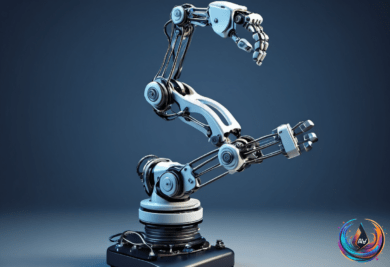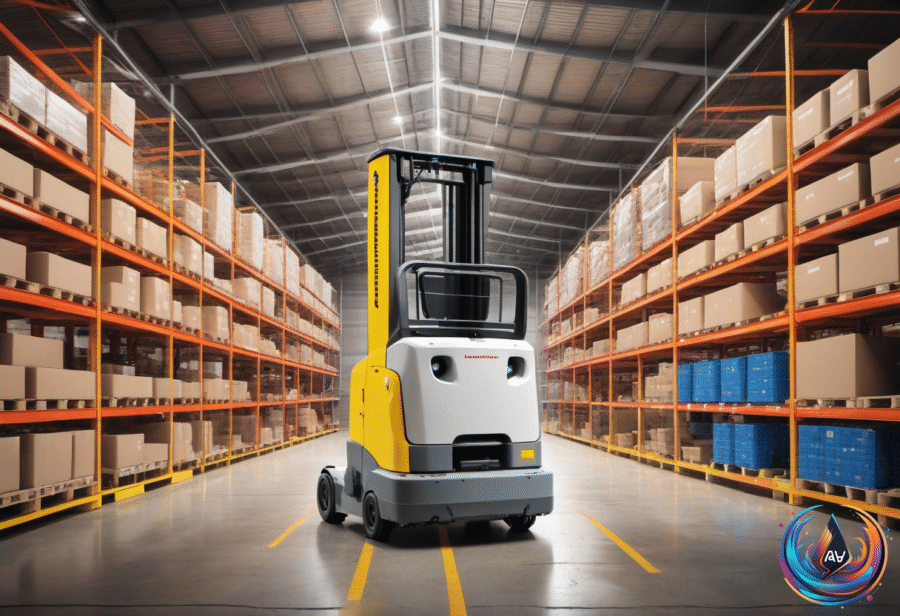
Two startups are putting fresh funding behind AI systems for work that depends on physical design, factory operations, and logistics. Hestus raised $7.4 million to build a model for mechanical engineering, while Destro AI emerged from stealth with an $8 million seed round for an intelligence layer that helps logistics robots and human workers operate together.
The announcements, dated October 2, 2026 and September 30, 2026, point to two different paths for applied AI. Hestus is building software for engineers who create manufacturable products. Destro is applying AI to warehouse and shipping operations, where people, carts, trucks, and robots must move in a coordinated way.
Hestus Builds Around Mechanical Engineering
Hestus’s $7.4 million seed round will support a purpose-built model for mechanical engineering. The company’s total funding now stands at $8.9 million, including an earlier $1.5 million pre-seed round. Sohrab Haghighat, Hestus’s CEO, said the company wants its technology to connect an engineer’s intent with a design that can be manufactured.
“We are building AI that can translate engineering intent into manufacturable design, freeing engineers to focus on the creative decisions that move products forward,” Haghighat said.
The company already has more than 5,000 engineers using its tools across various projects. Its product includes an autocomplete-style assistant inside Autodesk Fusion, giving engineers AI support within a mechanical design environment. Hestus also has a SolidWorks alpha signup, extending its product reach to another engineering software platform.
Hestus plans to expand its engineering team, including machine learning engineers and software developers. That hiring plan matches the company’s focus on building a model for a specialized field rather than offering a general-purpose assistant. Mechanical engineering work depends on design intent and manufacturability, and Hestus is shaping its product around those needs.
Destro Connects People, Robots, and Trucks
Destro AI is taking a different approach. The company is not a robotics company, but it has built an AI intelligence layer for logistics robots. Its system, called Destro’s Vision operating system, runs with robots built by Miva Robotics and directs the work around them.
Destro began with a pilot at one Yusen Logistics facility in the Pacific northwest. Yusen Logistics is a South Korean shipping company that uses fixed automation and is piloting new technology. The first pilot used three cart-moving robots, with human workers unloading goods into carts while the robots found full loads and brought them to their destinations.
That setup gives Destro’s software responsibility for more than robot movement. The system directs the human, the cart, and the trucks, making the operation less labor intensive and more systematic. Richard Brunelle, director of automation at Yusen Logistics, described the result in simple terms: “Everything is now systematic.”
Yusen Logistics has built a fully autonomous facility in the UK and is planning a similar facility in the U.S. Destro is expanding its pilot to a full deployment of 26 robots and launching another pilot with 17 robots in Southern California.
For Yusen, the value rests on whether the technology improves the operation for customers. Brunelle said, “If it can make the operation more efficient, consistent, and flexible, that’s ultimately going to benefit our customers.”
Funding Follows Specialized AI Systems
Destro’s $8 million seed round was led by Base10 Partners and Bonfire Ventures, with additional investment from CoFound Partners. Manthan Pawar, Destro’s founder, remains confident that the platform will add value and benefit from investment in AI research.
Pawar also described the company’s focus as grounded in direct knowledge of customer problems. “Our mindset is, we know our customers’ problems so damn well, and we are actually on path to be cash flow positive at the end of this year,” he said.
Destro’s approach depends on the connection between software and the physical equipment doing the work. Pawar said, “That harness is just so complex and value-added that without that harness, these workflows are completely impossible, right?” The comment captures the role Destro wants to play: not building every robot, but supplying the intelligence that coordinates a larger operation.
That strategy also shapes the company’s view of new robot designs. Brunelle has not yet found a good use case for bipedal humanoid robots, but he is evaluating a wheeled humanoid pilot. The focus remains on whether a system can fit a real logistics workflow and produce a clear operational benefit.
Hestus and Destro are working in different settings, but both are building AI around specific tasks instead of treating AI as a standalone feature. Hestus is placing an assistant inside engineering software, while Destro is connecting people and machines across logistics operations. Their funding will help both companies expand those focused systems into wider use.
Based on