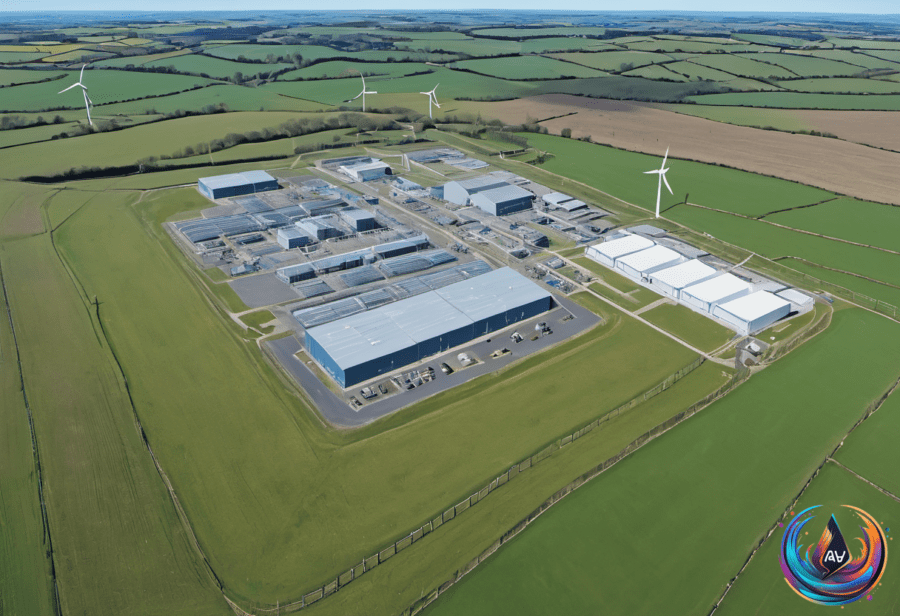
The UK government plans to build five massive AI growth zones featuring datacentres of 500MW or more. These will dwarf any existing facilities in the country. The goal is to establish regional hubs where companies can construct huge datacentre complexes to power AI workloads.
One zone is in Lanarkshire, east of Glasgow. Another is North Tyneside, near Newcastle, known as the Stargate UK site. Applicants had to prove they could deliver 500MW datacentres by 2030, showing technical feasibility, investment, and new jobs.
Lanarkshire’s project is supposed to run on an enormous on-site renewable energy setup. The developer, DataVita, claimed it would build the UK’s largest onshore windfarm within four years to power the site. Yet, both DataVita and the government admit the datacentre will still connect to the national grid.
DataVita currently holds only about a tenth of the land needed for the renewable infrastructure. The gap between promise and reality here is glaring. Local critics in Scotland call the plans “smoke and mirrors,” fearing the project will fall short of its green energy claims and job creation promises.
The government says the Lanarkshire datacentre will create 3,400 jobs. A Scottish charity disputes this, suggesting the real number will be much lower. Such discrepancies fuel skepticism about the project’s true benefits.
The Stargate UK project in North Tyneside has its own troubles. It surfaced shortly before Donald Trump’s UK visit last year, apparently pushed by political motives. OpenAI and Nscale, initially tied to Stargate, have not participated in the application process.
Local authorities doubt Stargate UK has enough grid capacity or infrastructure to support the planned datacentre. This raises serious questions about feasibility. Stargate’s future looks uncertain amid these technical and political headwinds.
The government’s AI growth zones are bold on paper. They promise huge datacentres powered by renewables and thousands of jobs. But land shortages, grid limits, absent partners, and political timing suggest these plans risk being more hype than substance.
At best, these projects reveal the challenges of scaling AI infrastructure in the UK. At worst, they expose how political ambitions can outpace technical reality. Either way, the government’s AI zones are far from guaranteed winners.
Based on