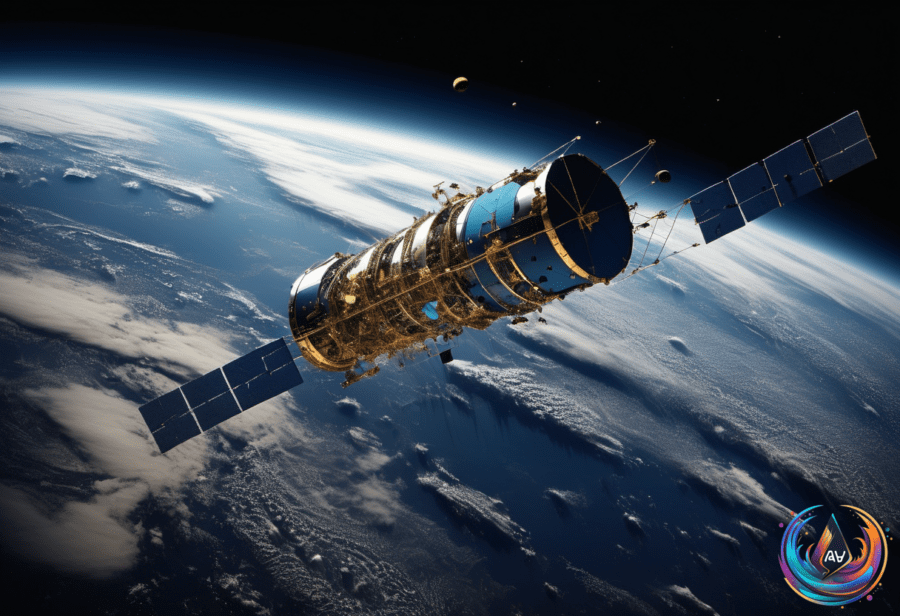
SpaceX’s orbital data center plan points toward a powerful new frontier for artificial intelligence—and a waste problem that could spread across the atmosphere. About 40,000 satellites would definitely deorbit and burn up, turning valuable metals and advanced computing hardware into a diffuse environmental concern.
The proposal connects the explosive demand for AI computing with a destination far above Earth. Each AI1 satellite is estimated to contain 72 GPUs, using specifically modified Nvidia Vera Rubin NVL72 racks. That hardware could deliver enormous computing capacity in orbit, but the satellites would also carry a large concentration of materials that may never return to the ground in recoverable form.
Thousands of Satellites, One Expanding Waste Stream
About 200,000 satellites would be decommissioned each year, and about 40,000 would definitely deorbit and burn up in the atmosphere. When that happens, the materials from those satellites would largely disperse throughout the atmosphere, turning a resource into a diffuse contaminant instead of leaving it available for reuse.
Aluminum creates one of the biggest unanswered questions. The aluminum from deorbiting satellites would cause an unknown amount of ozone depletion over decades, adding a long-term environmental risk to the short-term promise of orbital computing. The full effect remains unknown, but the material would not simply vanish when a satellite burns up.
The potential resource loss becomes clearer when the contents of each AI1 satellite are counted. Using conservative assumptions, each satellite would export every year:
- 1,000 tons of copper
- 170 kilograms of gold
- Almost 2 tons of silver
- Over 20 tons each of bismuth and titanium
- Over 2 tons of palladium
- 76 kilograms of thallium
Those figures describe more than an unusual recycling challenge. The amount of palladium and thallium lost each year would equal around 1 percent of global annual production for each element, placing orbital satellite disposal inside a resource debate that reaches far beyond the space industry.
Asteroids Reveal the Scale of What Gets Lost
The lost materials also have a striking comparison in space. The platinum content in the lost elements could be found in an asteroid 16 to 43 meters in diameter, while 180 kilograms of cobalt could be recovered from an asteroid about 3 to 6 meters across.
Other metals would require far larger objects. A 140–190-meter asteroid would contain the same amount of copper, and a 225–300-meter asteroid would hold an equivalent amount of silver and barium. Matching the amount of tin would require a 530-meter asteroid.
These comparisons turn satellite disposal into a question about resource strategy. Every deorbit would remove materials that took major geological processes to form, then disperse them through Earth’s atmosphere. For AI infrastructure, the challenge is not only how to place more GPUs in orbit, but also how to avoid creating a one-way pipeline for metals that cannot be recovered.
SpaceX suggested one possible answer: mining materials such as aluminum and titanium on the Moon for satellite manufacturing. The company said, “We intend to establish lunar‑based manufacturing capabilities, including factories to produce large‑scale AI compute satellites[…] We expect to use raw materials from the Moon to construct most of the mass of the satellites and ship chips and other lower mass elements from Earth.”
Orbital Computing Opens a New Insurance Market
The same orbital data center ambitions also create a new challenge for insurers. SpaceX is proposing orbital data centers, while Google is exploring Project Suncatcher and Starcloud has flown an Nvidia H100 GPU in orbit. Those efforts point toward a growing market around AI hardware beyond Earth.
Patton Kline, Marsh U.S. aviation and space practice leader, described the opportunity in direct terms: “If you’re an insurer and you’re just writing terrestrial assets, and you’re not looking at space as kind of the next frontier for insurance underwriting, you’re going to miss out on a big growth story.”
Current annual premiums for space coverage are roughly $500 million to $750 million, giving insurers an existing market as orbital computing develops. The risks would include satellite deorbiting, hardware losses, and the environmental consequences of materials entering the atmosphere.
Andreas Berger, group CEO of SwissRe, is among the named figures connected to this insurance landscape, while Elon Musk leads SpaceX and Jeff Bezos founded Blue Origin. The wider space technology race now links launch plans, AI chips, lunar manufacturing, environmental risk, and financial protection in one fast-moving system.
Orbital data centers could expand access to computing power, but their success will depend on what happens after the hardware reaches the end of its life. If tens of thousands of satellites burn up each year, space-based AI will need to account for both the computing it creates and the materials it leaves behind.
Based on