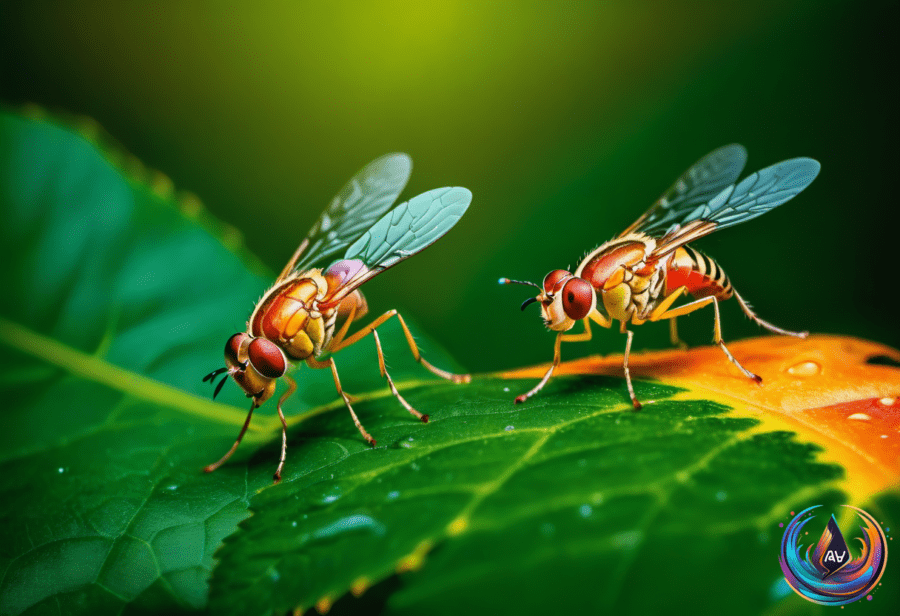
What if memories could be unlocked with just a tiny hint? Fruit flies prove that forgotten memories aren’t gone forever. They can actually recover lost aversive memories—those that make them avoid something bad—just by using reminders. The catch? These reminders must match the original experience’s context perfectly.
Memory Vanishes But Can Come Back
Fruit flies form aversive memories fast, but these memories fade in hours. After 24 hours, the memory becomes undetectable. Yet, all is not lost. Scientists found that re-exposing flies to the exact odor they learned to avoid, in the same training chamber, can bring those memories back. Just two or three one-minute trials of this reminder can recover the forgotten memory.
This recovery is picky. If anything changes in the environment during the reminder—like the lighting or the texture underfoot—the memory fails to return. For example, shifting the lighting conditions or removing an electric grid used in training blocks recovery. But temperature shifts? Those don’t stop the memory from coming back. The context has to look and feel right, not just be warm or cold.
The Brain Circuits Behind Memory Recovery
Digging deeper, the secret lies in specific brain cells called Kenyon cells within the mushroom body—a key learning center in fruit flies. These cells must send signals during the reminder for memory recovery to occur. Blocking their output during the reminder session wipes out any chance of recalling the memory.
Protein synthesis within these cells also plays a crucial role. If protein synthesis is blocked during or right after training, the flies cannot recover the memory later. This shows that memory recovery isn’t just a replay. It depends on active biological processes within the brain’s neural circuits.
And here’s a fascinating twist: just one pair of dopaminergic neurons supports this recovery. Dopaminergic neurons are often linked to reward and punishment processing. Their involvement highlights how precise and efficient the fly’s tiny brain is at managing memory.
Context Is Key to Unlocking the Past
Why does context matter so much? Fruit flies rely on environmental cues to navigate and survive. As Vanessa Ruta, a neuroscientist, says, “Odors are invisible, and often they’re carried along by turbulent airflow.” Flies need to link smells to their surroundings to remember where dangers lie.
Scientists have even built simple virtual reality setups to study how flies react to smells. Ruta notes, “It’s actually not a very complicated virtual reality system, but it is actually extremely powerful.” This approach helps recreate the exact context needed for memory recovery.
The precision of these memory circuits is mind-blowing. It’s not just about sensing an odor. The brain demands the right light, the right surface texture, and the right environment to bring a memory back. This shows how memories are deeply tied to where and how they were formed.
What This Means Beyond Fruit Flies
Memory is a complex puzzle across species. Fruit flies offer a window into how brains store and retrieve memories with strict context rules. Understanding this could help us develop new ways to unlock forgotten memories in other animals and even humans.
Meanwhile, other insect studies reveal surprising traits. For example, 74 out of 96 bee species tested show magnetic properties. Larger, social, and cavity-nesting bees tend to be more magnetic than their solitary or ground-nesting cousins. This magnetism probably predates bees themselves, hinting at deep evolutionary roots.
Even beyond fruit flies, insects harness complex sensory tools to survive. Their tiny brains and bodies pack incredible adaptability and precision. The discoveries in fly memory recovery add one more piece to the vast puzzle of how brains make sense of the world.
In the future, tapping these mechanisms could inspire smarter AI systems or innovative therapies for memory loss. Fruit flies remind us that sometimes, the smallest creatures hold the biggest secrets.
Based on
- How fruit flies chase invisible ribbons of smell to get to their source — arstechnica.com
- Can bees sense magnetic fields? | Scientific American — scientificamerican.com
- Are flies following a strategy when they keep hitting windows? Part 3 | New Scientist — newscientist.com
- Creating true and false memories from forgotten information in Drosophila | Nature Neuroscience — nature.com