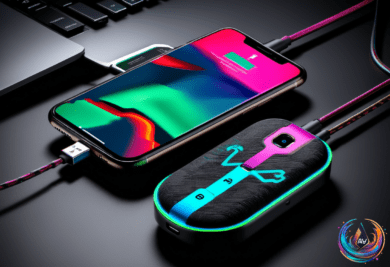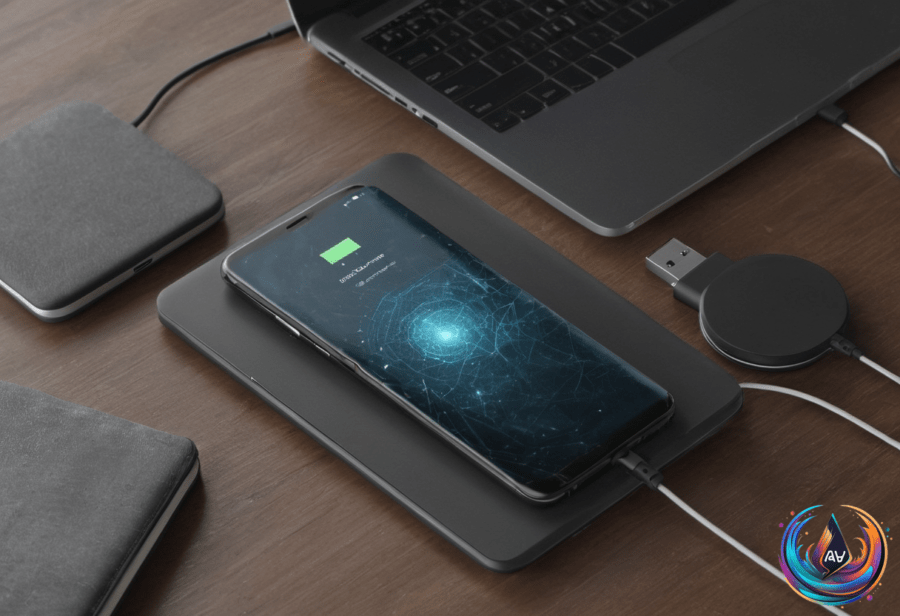
The cable still wins. Wired charging delivers power with better speed and efficiency, while wireless charging trades some of that performance for convenience.
Wireless charging uses an electromagnetic induction field to send power into a phone. Charging systems approved by the Wireless Power Consortium’s Qi2 standard can be up to 30 percent less efficient at getting power into a device than a cable, and the energy that misses the battery becomes heat.
That heat warms both the charger and the phone. Over time, wireless charging heat can reduce battery capacity by up to 12 percent over two years, or by up to 25 percent in hot environments. Convenience remains useful, but batteries are not known for appreciating sauna conditions.
Speed, heat, and the charger you actually use
The speed gap becomes obvious with newer hardware. Apple’s iPhone 18 Pro reaches up to 50 percent battery life in 15 minutes with a 60W-capable adapter and USB-C cable, while the same process takes 30 minutes with a Qi2 wireless charger.
Older smartphones cap wireless charging at up to 15W, and charging on an old 10W system takes longer than charging with a current 25W fast charger. The wattage printed on the charger is not magic, either: a 25W charger connected to an old 5W power brick delivers only a slow 5W charge.
Alignment also matters. If a device sits incorrectly on the charging pad, less energy reaches the phone and more becomes heat. Some cases are made for wireless charging, but not all of them are, so removing the case may be necessary.
Wired charging is better for battery health when speed and efficiency matter. That does not make wireless charging a mistake; it makes it a tool with a trade-off. The Wireless Power Consortium says 88 percent of smartphone users are satisfied with their Qi2 wireless charging device, which suggests convenience is doing a lot of work—and users are happy to let it.
How to charge without overthinking it
Smartphones have built-in power management and can safely remain connected to power overnight. Lithium-ion batteries can handle 1,000 to 2,000 charge cycles, but battery performance degrades as those cycles accumulate, so keeping the battery around 20 to 80 percent is the better habit.
Samsung and Apple offer built-in charging management designed to keep batteries within that “20 to 80” zone. Jonny Evans puts the practical balance plainly: “The short answer to both is yes, but for most people, the optimal balance between convenience and better battery life is to use wireless charging for battery top-ups during the day and leave wired charging for overnight power-ups.”
That approach separates convenience from sustained charging. Use wireless power when avoiding a cable matters, then use a wired connection when speed, efficiency, and lower heat matter more.
MagSafe is not one thing
MagSafe creates extra confusion because Apple uses the name for two different charging systems. On MacBooks, MagSafe is a proprietary wired standard that requires a dedicated cable; bringing the connector near the charging port lets magnets snap it into place.
MagSafe dates back to 2006, when Apple unveiled it as a magnetic power connector for the MacBook Pro. Apple dropped the feature in favor of USB-C in 2015, then brought it back to the MacBook lineup. Modern MacBooks can charge through USB-C ports at the same speeds as MagSafe, but they need a compatible USB-C cable.
Apple bundles a USB-C to MagSafe cable with every MacBook. USB-C cables can also charge multiple devices and connect external peripherals, giving them a broader role than MagSafe’s dedicated connection. MagSafe remains tidy, but flexibility has its own appeal.
MagSafe on iPhones is different: it is a wireless magnetic charging system. It peaks at 15W for the iPhone 17e, iPhone 15, and older models, and reaches up to 25W for newer models. The iPhone 18 Pro can charge at up to 60W with a compatible charger and USB-C cable.
Apple does not bundle a MagSafe charger with iPhones, so buyers must purchase one separately. The system can also support magnetic accessories such as wallets, stands, and car mounts, which gives it value beyond charging.
The bottom line is plain: wired charging is the better choice for battery health, while wireless charging earns its place through convenience. Use Qi2 or MagSafe for top-ups, keep the phone aligned, manage heat, and leave the cable to handle the serious charging.
Based on