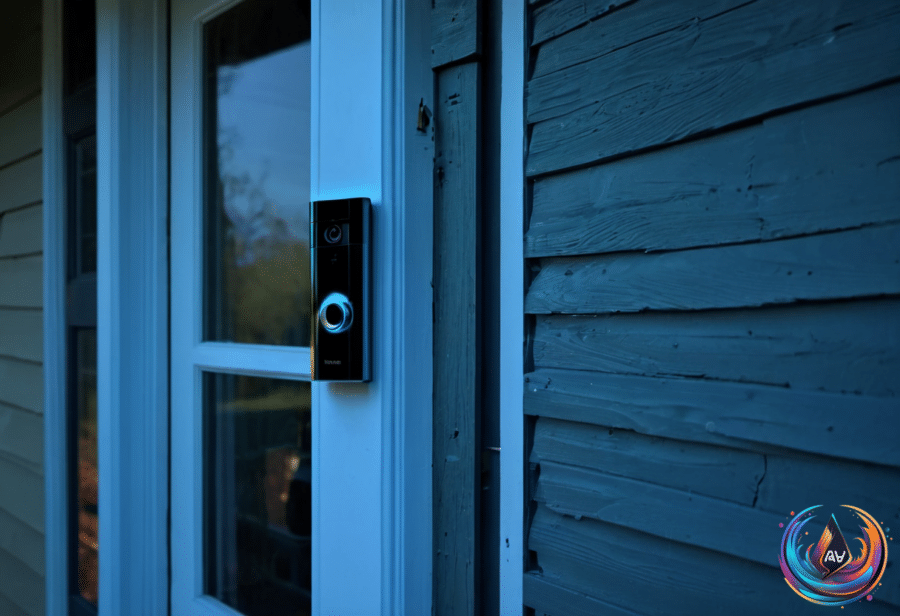
A Ring camera can still guard your porch, watch your pets and act as a live intercom without a monthly fee. The big question is not whether the camera works without a subscription, but whether you need recorded footage and advanced alerts when something happens.
Ring’s free features cover many everyday situations, from checking who is at the door to speaking with someone through the app. The lineup still offers plenty of solid use cases, but the limits become clear when you need footage for future reference or want smarter motion notifications.
What Ring Cameras Still Do Without a Subscription
Patrolling your porch or pets doesn’t require a monthly fee. Ring cameras can operate as a live intercom through the Two-Way Talk and Live Feed features, giving owners a way to see and speak with people near the camera.
Even when you are home and waiting for someone, you can check exactly who is at the door and talk to them through the app before getting up to answer. Parents can also use an indoor Ring camera to keep an eye on young ones from another room, making the free tier a useful choice for that kind of monitoring.
Indoor cameras work for pet owners, too. Using a phone, you can watch pets while you are out for the day or ask, “who’s a good dog?” through Two-Way Talk. People who travel often can check for activity inside or outside the house and keep an eye on incoming packages without paying each month.
Ring allows customers to receive and respond to motion alerts for free. Viewing recorded video requires a Ring Protect subscription, as do Smart Alerts that distinguish between people, vehicles and packages. The company offers three subscription tiers, starting at $4.99/month, for people who want access to those added features.
That difference matters most after an incident. If you need to review saved footage after a package disappears, the free plan may not be enough. With porch pirates on the rise, a Ring Protect plan makes sense for anyone who has had items stolen and wants access to the recording.
Motion Detection Has Limits, Subscription or Not
A live view can show someone who never triggers a motion alert. Ring says the standard maximum motion detection range for its devices is about 30 feet (9 meters), but maximum distances are not guaranteed, and the company does not state a single per-model maximum for every current doorbell on its general motion settings page.
Detection depends on more than what the camera can see. The sensor, camera angle, direction of movement and software settings all affect whether the device records an event. A person moving toward or away from the camera may produce a different result from someone crossing the view from side to side.
Large objects can also change the result. A car passing by may trigger an alert from farther away than a person, while moving trees, sunlight, reflections and shadows can create unwanted alerts. Paying for a subscription does not make the physical motion detection range bigger.
Other doorbells show why distance numbers need context. eufy says its Video Doorbell can detect horizontal motion up to 15 feet away and vertical motion up to 5 feet away. Arlo lists 13 feet for its second-generation Video Doorbell and 16 feet for its Essential wired and wire-free models.
TELUS says its doorbell motion sensor works best within 8 feet. Even at its most sensitive setting, the sensor requires continuous movement for seven seconds or more to trigger a clip. Motion detection type matters as well: passive infrared, or PIR, responds more strongly to side-to-side movement, while Pixel Difference Analysis compares one video frame with the next.
Ring recommends mounting its video doorbells 48 inches off the ground. If a 4K Ring doorbell misses visitors, owners can adjust Motion Sensitivity and set the detection range up to its maximum limit. Ring also allows up to three customizable motion zones per device, so owners can choose which parts of the camera’s view should detect motion.
Privacy, Security and the Smart Home Around Ring
Ring cameras still raise privacy concerns. The Familiar Faces feature, which debuted last year, uses AI to recognize friends, neighbors or relatives at the door. A recent lawsuit suggested that Ring and Amazon collected facial recognition information without the knowledge of many people who walked past a Ring camera.
The lawsuit followed backlash over this year’s Super Bowl commercial, which presented the AI-assisted Search Party feature as a way to find lost dogs. The controversy came months after Ring partnered with Flock Safety in 2025, a deal that originally permitted law enforcement to request footage from Ring owners. Following reactions to the pet-focused commercial, that deal was dismantled days after the Super Bowl.
Amazon’s Ring also introduced the TAKE software update, short for Throw Away the Key Encryption. The update asserts that “Ring videos are protected with unique, rotating encryption keys,” giving owners control over who can access footage. Ring compares the system to a pair of house keys: only the owner decides who gets a spare.
There is another part of security that a subscription cannot solve: internet outages. Some smart-home accessories maintain their last state when the internet goes down, while others stop working. That may be an inconvenience for a soundbar or light panel, but it can become a crisis when a device supports health or security.
Local hubs can keep many automations running as long as they still have power. HomePods and Apple TVs can act as Apple home hubs for remote access and local automations, while Matter-enabled speakers and displays can execute offline commands. In practice, Amazon and Google do not fully exploit offline commands.
The strongest hubs often connect local devices through Thread, Zigbee or Z-Wave instead of Wi-Fi. These low-power, low-bandwidth mesh standards work well for lights, locks and sensors, and their mesh design helps accessories farther from the hub stay connected. Thread is preferable in some setups because Wi-Fi accessories can act as Thread border routers, while the Philips Hue Bridge offers a Zigbee-based example.
If internet outages happen often, cellular backup is a must for a smart security system. Some cameras can record to local hub storage even when they need internet access for alerts or advanced functions. Smart thermostats can also keep following their last schedule as long as the HVAC system has power.
Ring without a subscription is not a stripped-down failure. It is a choice that covers live viewing, two-way conversation, motion alerts, children, pets and package checks. The monthly plan becomes valuable when saved video, Smart Alerts or evidence after a theft matter more than keeping the bill at zero.
Based on
- Why your Ring camera is still useful without a subscription — engadget.com
- At What Distance Does A Video Doorbell Stop Detecting Motion? — engadget.com
- How To Keep Your Smart Home Running Even If The Internet Goes Down — engadget.com
- Router And Modem Or Gateway: What’s Actually In Your Home Network? — engadget.com