Zipline is raising $1.5 billion at a $21.5 billion post-money valuation as it prepares for a much larger role in U.S. delivery. The company says the money will support American manufacturing, new hiring and a nationwide drone-delivery network.
The financing, announced on November 5, 2026, was led by Paradigm, WCM Investment Management and Layer Global. Valor Equity Partners, Fidelity Management & Research Company, Uber, Tiger Global, J.P. Morgan, ARK Invest and Salesforce Ventures also took part.
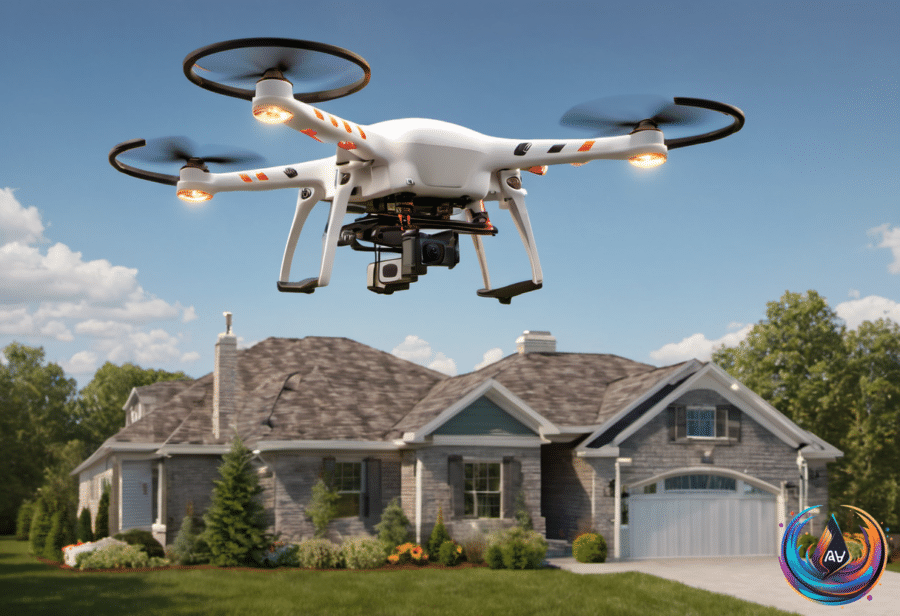
The funding arrives as Zipline pushes two promises at once: faster deliveries for businesses and quieter flights for neighborhoods. That second promise matters because drone companies are finding that getting approval to fly is only one part of the challenge. Convincing homeowners to accept buzzing aircraft overhead may prove just as difficult.
A bigger delivery network takes shape
Zipline and Walmart are working together to launch 300 additional sites under a new national, multi-year agreement that could expand further. Uber, which also participated in the financing, is targeting one million deliveries a day with Zipline by 2029, according to Zipline.
The company says hundreds of businesses already generate revenue through Zipline orders, while dozens of new businesses join its network each week. Existing partners are expanding their relationships to include hundreds or thousands of new locations, and Wonder is building storefronts and kitchens designed specifically for Zipline deliveries.
Zipline reported more than one million deliveries in the Dallas–Fort Worth metroplex during 2026. Its median October order arrived 19 minutes after checkout, compared with 30 minutes or more for traditional delivery. Among restaurants with quick preparation times, the median bakery order arrived in 10 minutes.
The company also says drone delivery is creating new demand rather than taking orders from other platforms. At a group of its longest-tenured restaurants, Zipline’s share of delivery revenue rose from 10.8% to 34.9% between March and October. Those restaurants recorded a 26% increase in delivery gross merchandise value, with 80% of that growth coming from Zipline orders.
Zipline says only 5% of U.S. restaurant orders are for delivery, and most delivery customers live within a couple of miles because costs and travel times become less attractive over longer distances. Its service expands the number of customers businesses can reach without adding traffic.
The quieter-drone race
On October 27, 2026, Zipline announced sound-optimized dynamic flying, an acoustics upgrade deployed across its fleet. Instead of following static, pre-planned paths, each drone uses weather sensors to measure wind at takeoff, then combines that information with a custom sound model to choose a quieter transition to on-wing flight.
Zipline’s fixed-wing design helps make that possible. Once the drone reaches cruising speed and altitude, it can turn off all but one motor. Its flight paths balance wind, altitude and speed, allowing gravity and wind to handle some of the work that motorized propellers would otherwise do.
The drone might dip its nose to gain speed, like a bike coasting downhill, or tilt upward to slow without using its motors as a brake. Zipline says this approach lets the aircraft glide more like a bird instead of relying on noisy propellers.
Based on internal modeling, Zipline reported 68% lower overall sound exposure per flight and 24% lower peak volume than its 2025 fleet. The fleetwide upgrade also cut average flight times by 53 seconds and energy use per flight by 21%.
Other companies are taking different approaches. Alphabet’s Wing uses low-pitch propellers and flies higher above homes before lowering packages on a tether. DoorDash’s new delivery drone uses six slow-spinning propellers designed to produce less noise.
Quieter does not mean silent, though, and that distinction is becoming harder to ignore as flight numbers grow.
Why neighborhoods are pushing back
Amazon last week abandoned plans for a drone delivery hub in Westborough, Massachusetts, after residents and lawmakers raised concerns about noise, safety and privacy. Amazon withdrew its application but left open the possibility of returning.
The dispute reflects a wider problem. Rick and Marcia LeCompte, who live in Baton Rouge, Louisiana, loved watching Cooper’s hawks visit a sweetgum tree in their yard. This October, the hawks were gone, and Marcia LeCompte believed the birds had been scared away by flying robots that had bothered the couple since early September.
Amazon Prime Air began flying MK30 drones from a distribution center 3.2 kilometers, or 2 miles, from their home last August. At first, neighbors noticed only a few drones flying high. Within weeks, they felt as if drones were everywhere, often flying much lower.
The high-pitched rotor noise became the main complaint. Cristina Boone, who lives in the same neighborhood, said, “Outside the house on a Saturday between 9 and 10 a.m., I counted a drone every 48 seconds.” Neighbors also raised concerns about flights over playgrounds, schools and a local cemetery, along with a forced landing on the median of a busy highway and cameras carried by the drones.
The FAA’s Environmental Assessment said, “operations would occur between 6 a.m. and 10:30 p.m., with 100 of the 1,000 daily delivery operations (10%) occurring during the period from 6 a.m. to 7 a.m. and 10 p.m. to 10:30 p.m.”
David Ison, a specialist in Emerging Aviation Technologies and Land Use Compatibility at the Washington State Department of Transportation, said, “the public outreach piece has probably been more of an afterthought than it should have been.” He added, “I think what companies assumed is everybody would be cheering that they could get things delivered by drone in half an hour.”
For now, the Baton Rouge skies have calmed. The LeComptes’ councilman said Amazon responded to the outcry by rerouting 70 percent of flights elsewhere, although drones cannot fly over highways, which may send flights over other residential areas. As of late October, LeCompte saw “two or three a day” over her home, but counted eight in 20 minutes during a trip to the bank.
“Sorry for those folks, but I thank Amazon for clearing our sky,” she said.
Growth depends on public acceptance
Drone delivery companies, including Amazon Prime Air, Alphabet’s Wing Aviation, Zipline, Manna Aero, Doordash Air and Matternet, are planning large expansions. Wing aims to operate 270 U.S. drone hubs by the end of 2027. Amazon Prime Air, which currently delivers in about 85 U.S. municipalities, says it plans to serve 500 by the end of 2026.
Zipline and Uber have announced a goal of one million drone deliveries a day by the end of 2029. Meituan launched its latest “low-altitude delivery network” in September in Shanghai, while JD Logistics continues to expand drone service in rural China.
Those plans face local opposition in places from suburban Detroit, Richardson, Texas, Glendale, Arizona, East Cobb, Georgia, Maplewood, Missouri, and Westborough, Massachusetts, as well as communities in China, France and Australia. On September 28, 15 U.S. states and Harris County Texas sued the FAA over proposed changes to environmental assessment rules for drone sites.
Drone designs are not identical, and that affects the concerns they create. Amazon’s MK30 weighs almost 36 kilograms, or 80 pounds. Wing’s largest drone weighs less than 11 kilograms, or 25 pounds, with its payload included. Wing and Zipline lower packages by tether, allowing their aircraft to stay higher than Amazon’s drones, which must fly low enough to release the package without damage.
“There are safety, noise and visual pollution issues with all these platforms,” Ison said. The central question may be whether quieter flights can persuade communities that drone delivery belongs above their homes. As Ison put it, “That is a murky area that is going to have to be worked out in court.”
Based on