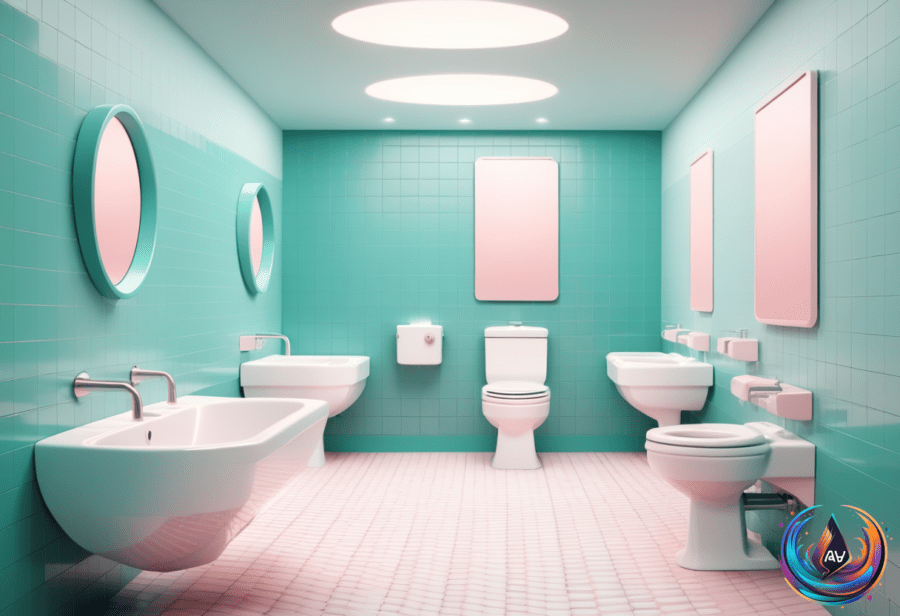
A museum is taking shape in an unexpected place: the public restroom. For three years, Jake Welch has been 3D scanning restrooms and uploading them to The Restroom Archive, a museum-style repository of 3D scans from restrooms around the world.
Visit the Archive, and the site serves a random 3D scan of a public restroom, along with its location and a brief description. One scan captures Hurricane, Utah’s Gypsy Emporium Antique Mall, recorded on April 11, 2026. Another visit may reveal a different restroom, turning the experience into a digital tour guided by chance.
It Started With a Joke
Welch, a freelance designer in NYC, began scanning restrooms after discovering Polycam, a smartphone photogrammetry app used to create 3D models. The project did not begin as a formal preservation effort. “It started as a joke,” Welch said.
That joke became a three-year archive. Welch has scanned multiple restrooms during road trips, building a collection that records spaces people usually enter, use, and leave without a second thought. The Archive now presents those scans as objects in a museum-style repository, giving each restroom a location and a short description.
Welch described the start of the process in more detail: “I kind of started to scan the restaurant as a joke.” The result is a growing digital record shaped by travel, smartphones, and the unusual decision to treat restrooms as places worth documenting.
Every Scan Reveals a Different Challenge
The renders come from smartphone photogrammetry apps like Polycam, but creating a 3D restroom scan does not produce a perfect digital copy every time. The process can leave seams in the image, create problems with reflective surfaces, or make objects such as shoes or arms appear unattached.
Those flaws remain part of the scanning process. A scan can show the structure of a restroom while also exposing the limits of turning smartphone images into a connected 3D model. Reflective surfaces add difficulty, and moving or partially captured objects can produce results that look disconnected from the surrounding space.
Most Android and iOS smartphones can handle scanning a bathroom. Welch prefers his iPhone with lidar, a sensor that measures distance through lasers. “If it’s a pro model, it has lidar, which uses lasers in your phone to measure distance,” he said.
That difference matters because the Archive depends on capturing physical spaces from many angles. A smartphone makes the process accessible, while lidar gives Welch a preferred tool for measuring the restroom and building its 3D representation.
Road Trips Turn Restrooms Into Regional Records
Welch’s scans also gave him a way to notice regional differences in American restrooms. His travels connected the collection to the places where the scans happened, from Utah to New York, and the spaces did not all feel the same.
“Most of my restrooms in Utah are quite spacious, or maybe a little bit more commercial because there’s a lot of chain restaurants in Utah. Here in New York, all the restrooms are really small, really impromptu,” Welch said.
That contrast gives the Archive more than a collection of isolated rooms. Each scan carries a location, a design, and the regional character Welch noticed during road trips. The Gypsy Emporium Antique Mall scan in Hurricane, Utah, dated April 11, 2026, shows how a specific place can become part of the collection through a single recording.
The Archive also shows how a simple smartphone experiment can develop into a focused form of digital preservation. Welch is not only scanning rooms; he is assembling a museum-style repository in which each random selection offers another view of the restrooms people encounter across different locations.
The Next Step Could Bring Higher Fidelity
Welch has considered using Gaussian splats, a newer technique for making 3D models, to create scans with more detail. The idea came from people commenting on his videos, who suggested the technique as a way to improve the visual quality of the Archive.
“I’ve had a lot of people in the comments in some of my videos saying that I should use Gaussian splats, which are a newer technique for making 3D models, and they’re a lot higher fidelity,” Welch said.
That possibility points toward the Archive’s next phase. The project began with a joke and a smartphone app, but its future may involve new methods for representing the same rooms with greater fidelity. For now, The Restroom Archive keeps adding scans, locations, descriptions, and the imperfect details that make each digital restroom distinct.
What started with Polycam has become an ongoing record of public restrooms shaped by travel, regional differences, and mobile 3D capture. The next random scan is already waiting to show another room.