A mouse optic nerve began growing back in sixteen days. That result helped put Yuancheng (Ryan) Lu, a 34-year-old geneticist at the Whitehead Institute, behind one of the buzziest results in rejuvenation science. It also pushed his work beyond animal studies and toward human clinical trials.
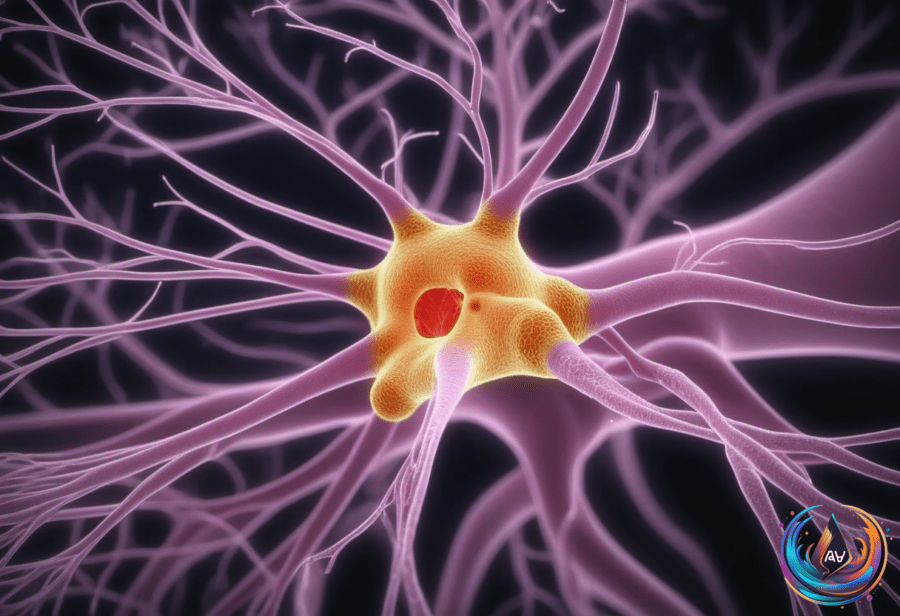
In 2018, Lu used a technique called reprogramming to repair the optic nerves of mice. Sixteen days after treatment, the nerves were growing back, with axons appearing under a microscope as spidery orange filaments. For a field that has spent years promising biological miracles, the image offered something more useful than a slogan: visible evidence of damaged nerve tissue returning.
Lu’s result was published in Nature in 2020, giving the work a formal scientific record. David Sinclair, Lu’s former boss and a longevity scientist, saw the importance early. “He asked me, ‘What do you see here?’ And I said, ‘I see the future.’”
Reprogramming Without the Full Genetic Cocktail
Reprogramming can reverse the molecular age of cells, but its effects need control. Lu found a way to trim the list of genes involved, using OSK while leaving out M, also known as Myc. That change allowed him to control the effect of reprogramming in the work with optic nerves.
The distinction matters because Lu’s OSK work was more a proof of concept than a silver bullet. It showed that age-related damage in the optic nerve could be addressed through genetic therapy in mice, but it did not turn every problem of aging into a solved problem. Biology remains rude enough to resist a single three-letter answer.
Lu has also identified a gene responsible for protecting the retina from damage caused by free radicals. That discovery came in 2023, adding another line of research focused on preserving or restoring vision rather than treating aging as one uniform process.
“Six years ago, you couldn’t talk about rejuvenation. We didn’t use that word—there was pushback. But I think people have accepted the concept that you can really reverse molecular age,” Lu said. His work now sits at the point where that concept meets human testing.
From Mouse Nerves to a Human Trial
In 2023, the genetic therapy Lu created for mice entered human clinical trials. On June 9, 2023, the startup Life Biosciences announced that it had injected the treatment into the eye of a person with glaucoma.
That injection does not erase the distance between a repaired mouse optic nerve and restored human sight. It does establish the next stage for Lu’s approach: a treatment shaped in animal studies moving into a human clinical setting, with glaucoma as the first stated context.
Sinclair described the transition in blunt terms: “It’s remarkable that what he developed as a student is now going into humans.” A poster on X offered a less restrained assessment: “The fountain of youth is here.” The poster had the better marketing department, but the clinical trial is the more important fact.
Lu does not believe humans could live to be 200 because too many things go wrong as we age. That view places a boundary around the promise of his work. The goal is not an immortal body; it is targeted repair of biological damage, including damage tied to age-related vision loss.
The significance of Lu’s research lies in that narrower target. Reprogramming repaired mouse optic nerves, OSK provided a way to control the intervention, and a related discovery addressed retinal protection from free radicals. Now the treatment has reached a human eye—where the real test begins, and where “the future” has to produce more than a compelling microscope image.