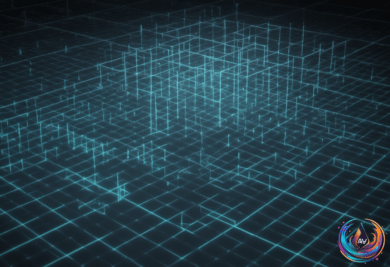
In 1946, mathematician Paul Erdős posed one of the most puzzling problems in geometry. It asked how many pairs of points could lie exactly one unit apart on a flat plane. For nearly 80 years, mathematicians believed the answer followed a pattern resembling square grids. They thought the number of these pairs grew only slightly faster than the number of points.
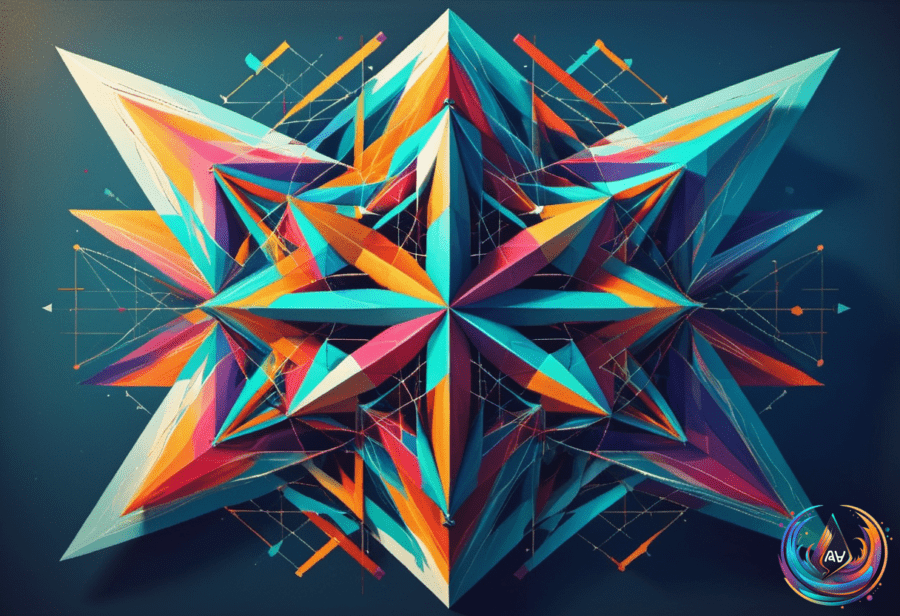
Then, in 2026, an AI model developed by OpenAI changed the game. This AI challenged the long-held belief about the nature of the best solutions to the planar unit distance problem. Instead of square grids, it discovered a completely new family of arrangements. These arrangements break the supposed limits Erdős had proposed decades ago.
OpenAI explained, “For nearly 80 years, mathematicians believed the best solutions resembled square grids.” They added, “This AI model has shattered that belief, discovering an entirely new family of constructions.”
New Limits and New Paths in Mathematics
The AI’s findings revealed arrangements with at least n1+δ unit-distance pairs, where δ represents a positive increase beyond previous limits. This means the number of pairs grows faster than Erdős had guessed. While the AI did not provide a final answer, it showed Erdős’s limit was too conservative.
What made this breakthrough stand out was the AI’s approach. Instead of relying solely on existing models or literature it had absorbed during training, the AI connected diverse branches of mathematics. It explored paths human mathematicians might have dismissed or never considered. This creative mixing of ideas led to new structures that pushed the boundaries of the problem.
Validation and Impact on Science
Mathematicians quickly validated the AI’s work. Thomas Bloom, a respected mathematician, confirmed the soundness of the AI’s discovery. Tim Gowers described the result as a milestone in AI mathematics. He recognized it as a turning point where AI started contributing original ideas rather than just crunching numbers.
Andrew Rogoyski, a researcher in the field, commented on the broader implications. He said, “AI is impacting the world of creative thought and will become a fundamental tool of future scientific research.” This breakthrough shows how AI can augment human creativity and accelerate discoveries in fields once thought to require purely human intuition.
The AI’s success is not about replacing human mathematicians. Instead, it’s about working alongside them to explore new possibilities. It opened doors to fresh mathematical landscapes and challenged assumptions held for generations.
This achievement illustrates the growing power of AI in scientific research. It also highlights how these tools can uncover hidden patterns and connections in complex problems. As AI continues to evolve, it will likely become an essential partner in solving some of the toughest questions in math and science.
Based on
- After 80 Years, Mathematicians Give Famed ‘Erdős Method’ an Upgrade — quantamagazine.org
- AI Solves 80-Year-Old Math Puzzle: Erdős’ Unit Distance Problem Explained (2026) — procilia.com
- OpenAI Breaks 80-Year-Old Math Problem (2026) — kyrukio.com
- AI Solves 80-Year-Old Math Mystery: OpenAI’s Planar Unit Distance Problem Breakthrough (2026) — remsenstmarys.org
- OpenAI Solves 80-Year-Old Math Problem: A Breakthrough in AI Reasoning (2026) — tripleheart.org