AI policy is moving from online arguments into government decisions, while one small robot is revealing how fragile digital companionship can become. On August 17, 2026, the technology story stretches from US policy and China’s AI ambitions to water shortages, aging research, facial recognition, and the future of ice cream.
Recorded on August 13, 2026, the latest developments show technology reshaping public power and private life at the same time. The biggest question is no longer what these systems can do, but who controls them, who gets protected, and what happens when the machines people depend on stop working.
The “Censorship-Industrial Complex” Reaches Policy
The idea of a “censorship-industrial complex” has moved from the fringes of right-wing online discourse into US policy. Its basic theory says that government agencies, academics, civil society groups, and Big Tech platforms worked together under the guise of combating disinformation to suppress conservative and populist speech online.
That shift gives the debate a new force. A claim that once circulated through online political arguments now sits inside a larger fight over speech, platforms, and government influence. The conflict is no longer limited to content moderation rules; it now touches the way the US approaches technology and its partners.
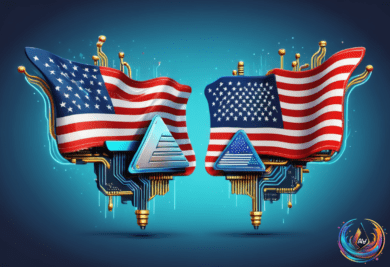
The US plans to force partners to pick sides in the AI race, and a draft letter warns allies against joining China’s rival AI initiative. Beijing is using open-weight AI to expand its governance, while Chinese AI has divided the White House. These moves connect speech policy to a wider struggle over how artificial intelligence should spread across governments and societies.
China, Chips, and Machines That Watch
The technology rivalry also runs through hardware. Memory chipmaker CXMT is now China’s most valuable company, and the US has urged Apple not to buy Chinese memory chips. That pressure places supply chains at the center of the AI contest, where access to components can shape the future as much as software does.
At the same time, Meta has patented facial recognition for AI glasses that could identify people and make highlight reels of dinner parties. The idea turns ordinary social moments into machine-readable footage, raising a direct question about privacy: who controls the record of a gathering when glasses can recognize everyone and assemble the highlights?
Another breakthrough points far beyond Earth. Astronomers have found evidence for a “black hole star” 100,000 times bigger than the Sun, and the object may explain mysterious red spots in the early universe. The discovery adds a startling possibility to the cosmic story: a star and a black hole may exist in a form that helps explain what the young universe looked like.
Closer to home, Flock is tightening its rules following a backlash, and that backlash could become a broader tech rebellion. Amazon is also trying to crush class-action suits before they get started by requiring disputes to be resolved via arbitration. Together, these developments show pressure building around surveillance systems, corporate power, and the rules that decide how people can challenge technology companies.
When Digital Companions Go Dark
Moxie is a 15-inch-tall robot companion that looks a bit like a blue, legless astronaut. For children such as Xander, the device was built to feel like more than a gadget, yet Moxie has had a troubled life because its maker went out of business and its servers were shut down.
That failure exposes the hidden bargain behind connected devices. A robot can sit in a home and build a relationship with a child, but its abilities depend on a company, remote servers, and a business that must keep operating. When those pieces disappear, the physical machine remains while the companion experience fades away.
Moxie’s story lands beside a growing set of experiments in human behavior. The latest online shopping trend involves buying nothing, with “Dopamine sites” recreating shopping rituals without the buying. The experience keeps the structure of browsing and anticipation while removing the purchase itself, showing how technology can reproduce a habit even after the product disappears.
AI, robotics, and unusual flavors are changing how ice cream is made, bringing the same mix of automation and novelty into food. The machines do not only process familiar recipes; they help shape new experiences, just as Moxie tried to turn software into companionship.
Science Pushes Toward Human Limits
Research is also challenging long-held ideas about the body. Scientists found distinct stages of aging across mouse cells, suggesting aging may be a programmed process. In another experiment, scientists created female clones of male mice, opening a striking new direction in reproductive research.
Researchers are trying to understand what happens when heat and cold push human bodies toward their limits due to climate change. That work places physiology inside a changing environment, where survival depends on how bodies respond to conditions that can move toward extremes.
Puerto Rico is rationing water and could have harvested rainwater instead, with up to 30 billion gallons potentially collected annually. The island is also enduring major power struggles, making water and electricity part of the same urgent infrastructure story: available resources matter, but so do the systems that capture, store, and deliver them.
AI’s future may depend on whether it can produce results that people feel in their own lives. Anthropic CEO Dario Amodei put that challenge plainly: “The thing that will work is actually curing cancer.” His statement frames medical progress as the achievement that could win over AI skeptics, turning arguments about possibility into evidence people can see.
From a stranded robot companion to a possible black hole star, the latest technology story is about systems reaching beyond their original boundaries. AI now touches speech, government, chips, privacy, medicine, food, and climate resilience, but every advance brings a new question about control and trust. The next chapter will belong to the technologies that keep working, respect the people around them, and deliver results that matter beyond the screen.
Based on