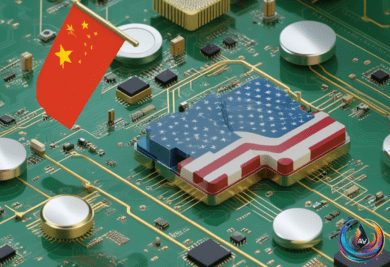
Nvidia faces a leadership revolt. U.S. Treasury Secretary Scott Bessent wants the board to deliver answers on export-control compliance within 10 days and recruit the company’s next chief executive from outside Nvidia.
“They need a dramatic shake-up,” Bessent said on Fox’s Sunday Morning Futures on November 15, 2026. He questioned whether Nvidia pursued potentially illicit chip sales to inflate revenue and earnings, and accused the company of a “culture of noncompliance.”
“I want to keep coming back to what was the culture at Nvidia, and were they pressing these seemingly illicit sales to goose their revenues and their earnings?” Bessent said. He added, “I think we need answers in the next 10 days from the board and from the outside counsel.”
A leadership change with national-security baggage
Jensen Huang announced his resignation as Nvidia’s president, CEO and board member on November 12, effective immediately. The board had opened an independent investigation into national-security concerns raised in news reports, including whether Huang was the “target of a foreign intelligence effort”; Huang wrote on November 8 that he supported the inquiry and would cooperate fully.
Huang also admitted an extramarital affair in a memo to staff. He resigned after revelations about his relationship with Alice Huang, a former executive at Singapore-based Megaspeed whom U.S. intelligence officials suspect of spying for China.
Megaspeed faces allegations that it diverted Nvidia chips to China in violation of U.S. export controls. The company said in December there was “no evidence” of illicit exports, maintained that it takes American export-control laws “extremely seriously,” and said it would work “constructively and transparently” with the U.S. government.
Nvidia named Chief Financial Officer Colette Kress interim CEO while she remains executive vice president and CFO. The board began a permanent search covering internal and external candidates, while Harvey C. Jones, a former Synopsys CEO and executive chairman, became the board’s first chair; Jones said operations, customer commitments and the product roadmap would continue without interruption.
Export controls meet an inconvenient earnings calendar
Bessent said the problems extended beyond Huang and suggested other executives should face scrutiny. “If this were a bank and they hadn’t complied like this, the OCC would be in there right now, and a lot of the executives would be removed,” he said, referring to the Office of the Comptroller of the Currency.
He also questioned Nvidia’s financial disclosures, pointing to a surge in reported Singapore revenue as China sales fell. Nvidia stopped reporting Singapore revenue separately in November 2025, saying a new method based on customers’ headquarters rather than billing addresses better reflected the geographic distribution of sales.
The scrutiny arrives two days before Nvidia is scheduled to report its third-quarter fiscal 2027 results on November 17. Cantor Fitzgerald said Nvidia share holdings had fallen almost 50% over six months, while Nvidia shares shed more than $1.2 trillion in market capitalization. Nothing tests a compliance story like an earnings report waiting in the wings.
Bessent said President Donald Trump had drawn a firm line against sales to China of Nvidia chips more advanced than H200. Trump authorized H200 sales to approved Chinese customers in December after months of lobbying by Huang, under an arrangement in which the U.S. government would receive a 25% cut.
Bessent said he was frustrated that China could receive Nvidia chips above H100s despite Trump’s position. “I am frustrated when President Trump made it very clear China should not receive any Nvidia chips above H100s,” he said, adding that Commerce “has the pen, and you will have to ask them about their internal processes.”
On Friday, Bessent said the Treasury, State and Defense departments, along with the U.S. Trade Representative, had supported adding Megaspeed to an export-control list for months. The Commerce Department controls that decision, and Bessent said its delay frustrated him.
The pressure also reached Congress. On November 12, Senate Finance Ranking Member Ron Wyden and House Ways and Means Ranking Member Richard E. Neal asked Commerce Secretary Howard Lutnick to preserve records from the semiconductor investigation, resulting tariffs, Nvidia’s export-license applications and communications involving Nvidia, Huang or their representatives.
The lawmakers described a system in which Taiwan-manufactured H200 chips would enter the United States for security review and a 25% tariff before re-export to China under Commerce Department licenses. They called the use of Section 232 an apparently unconstitutional export-tax system and raised due-diligence concerns about Chinese buyers, including alleged cutout companies with no physical presence at their listed addresses.
The letter also cited reports that Commerce suspended a separate investigation into Nvidia customer Megaspeed after outreach from Nvidia. Bessent’s demand now puts the board and outside counsel on a 10-day clock, with the company’s next earnings report arriving before that pressure has time to cool.
Based on
- Bessent Gives Nvidia 10 Days to Address Export-Control Questions — unite.ai
- Scott Bessent Says Nvidia Should Look ‘Outside’ the Company for CEO – Business Insider — businessinsider.com
- Bessent calls for ‘dramatic shakeup’ at Nvidia, urges outside CEO — cnbc.com
- Bessent questions Nvidia’s sales and calls for external CEO — axios.com
- Bessent blames Commerce’s Lutnick for not restricting Nvidia chip exports to China | The Independent — independent.co.uk