Artificial intelligence is no longer just a software story. It has become a wager on jobs, markets, buildings, power grids, and the future value of money.
One warning says the technology has advanced so far that “the complete disruption of the economy is all but certain.” Another focuses on the enormous financial structure built around that promise, asking what happens if the expected returns fail to arrive.
The AI Threshold Has Arrived
The capabilities of the latest models appear to have surpassed a threshold of quality in their output and speed for widespread adoption. That shift could push AI from an experimental tool into a core operating system for companies, changing how firms hire, invest, and compete.
Firms that sell expertise by the hour, including senior talent, stand first in line for disruption. Consulting firms and other professional services face the same pressure as businesses use AI to handle work that once required large teams of specialists.
The result could include compressed margins in professional services, lower returns to venture capital, and short-term pressure on home prices as screen-based jobs face disruption. Many economists say the picture of AI job loss remains unclear and may be overblown, but the investment decisions already reflect confidence that automation will transform labor costs.
AI could create an entirely new business model in which firms with very few people become far more successful. Some companies may have no people at all. Startups that embrace AI could grow with less investment, creating what has been described as a quiet deflation in the value of money.
That vision carries a stark warning for established service businesses. “AI will annihilate consulting firms and other professional services,” one claim states, turning a prediction about productivity into a direct challenge to the structure of white-collar work.
The Trillion-Dollar Infrastructure Bet
Speculative tech capital has transformed an AI trend into a foundational pillar of the global economy. Capital expenditure by big tech firms now looks less like ordinary corporate budgeting and more like defense spending by major nation-states.
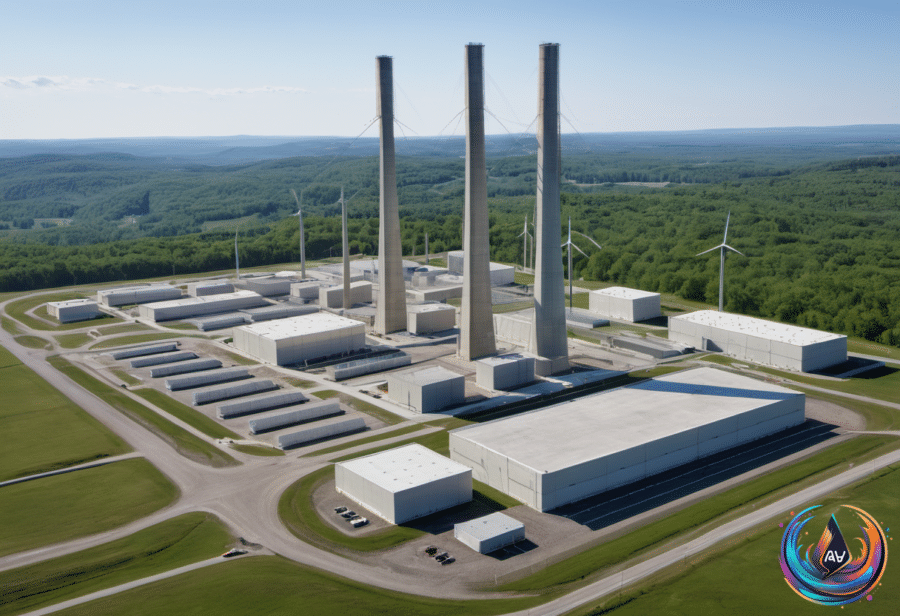
Trillions of dollars are surging into silicon chips, data centers, concrete foundations, nuclear power restarts, and high-voltage power grids. Heavy industry, commercial real estate, utility providers, and green energy developers have tied their long-term growth forecasts to computer power, spreading Silicon Valley’s financial risk into the real world.
Constructing a modern data center requires hundreds of millions of dollars upfront, backed by long-term power contracts and hardware that depreciates faster than luxury sports cars. Nvidia GPUs can depreciate rapidly when faster chips reach the market, leaving operators exposed to a costly race that never pauses.
If enterprise software revenue lands at a tiny fraction of current forecasts, server farms could become overinvestment monuments. Valuations based on exponential growth projections could evaporate overnight, leaving corporations with obsolete hardware and massive infrastructure commitments.
The question is not only whether AI can produce better software or faster analysis. Can the revenue generated by these systems support the buildings, chips, energy contracts, and hardware leases now being financed around them?
When the AI Trade Reaches Retirement Accounts
The modern stock market is top-heavy, with a small number of mega-cap tech firms driving most index returns. Pension funds, retirement systems, mutual funds, and 401(k)s have spent years purchasing these tech giants, so the consequences of a technology correction could reach far beyond Silicon Valley.
An office worker or teacher may not know about GPUs or LLMs, but their financial security depends on tech stock valuations. A correction in Silicon Valley boardrooms could therefore hit retirement portfolios directly, even when account holders never chose individual technology companies.
Over the last three years, companies justified hiring freezes and office expansions by promising that automation would lower labor costs. Executives took out loans against future productivity gains that have yet to materialize, and a senior figure at Microsoft described the entire generative AI model as relying on “the largest theft of labor in human history.”
If software fails to automate administrative workloads at scale, companies will face margin pressure and may cut jobs. That creates a dangerous reversal: businesses could reduce headcount in anticipation of AI savings, then discover that the promised savings cannot support their financial commitments.
Debt Could Turn Software Failure Into a Banking Crisis
Wall Street banks, private equity funds, and non-bank lenders have funded data center construction, energy acquisitions, and hardware leases. Private credit funds have poured billions into leveraged loans for unproven tech ventures, binding the future of AI infrastructure to debt markets.
When an asset class backed by heavy leverage loses revenue potential, the debt may move into regional banks and private credit markets. A collapse in hardware valuations could turn software failure into a banking nightmare, producing liquidity squeezes and frozen credit markets.
The financial consensus assumes digital infrastructure is a bulletproof asset class with zero downside, but history suggests otherwise. The size of the AI buildout makes that assumption more important—and more dangerous—because the bet now reaches companies, lenders, workers, homeowners, and retirement savers at the same time.
AI may still deliver the productivity gains its backers expect. Yet the next phase will test more than model quality. It will test whether the economy can absorb a technology that promises leaner companies while carrying trillions of dollars in infrastructure, market value, and borrowed confidence.
Based on