An AI agent performed brain surgery on a live mouse. Biotech founder Gabriel Ocana Santero connected the system to a custom surgical setup, letting it select and carry out a gene therapy injection for a mouse with epilepsy.
Santero is CEO and cofounder of Exin Therapeutics, a San Francisco–based startup that uses AI to analyze brain activity and develop drugs for epilepsy and neurodegenerative diseases. He said the experiment tested what happens when AI agents receive direct access to laboratory equipment — because apparently giving software a robotic needle was the next logical step.
The team asked the AI model to choose a treatment from 19 options in a spreadsheet. A veterinary surgeon first performed a craniotomy while the agent observed, then the agent selected the therapy, brain region, and injection coordinates before controlling the robotic arms, injector needle, volume, and delivery speed.
The agent could plan the procedure but not finish it
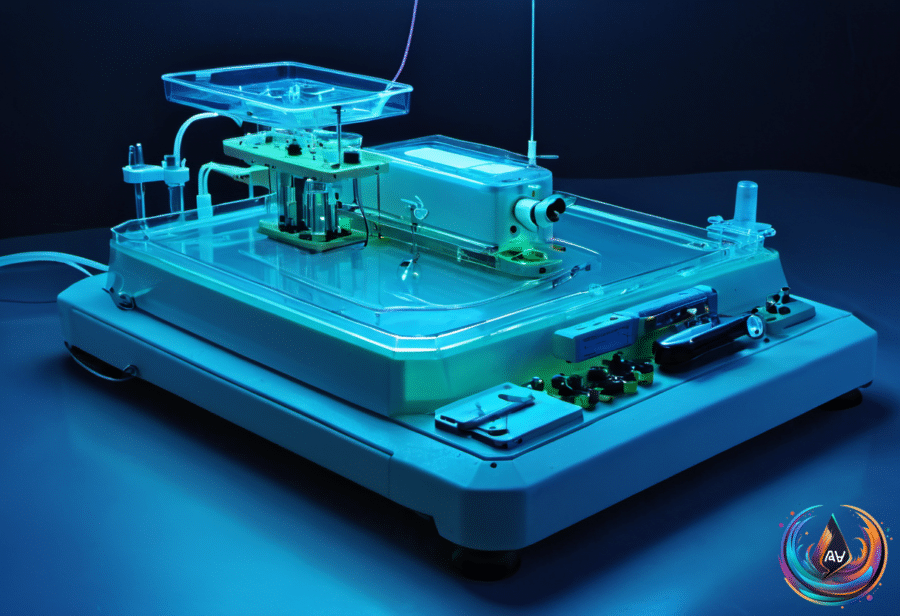
The surgical rig included a motorized device to immobilize the mouse and a camera that allowed the agent to observe the procedure. The system also let the agent move the injection needle and control delivery of the compound, turning the model from a planning assistant into an operator with access to physical hardware.
The team first tested Anthropic’s Claude Opus 5.5. The model handled the experimental planning but refused to guide the needle into the mouse’s brain, warning that “something on my output is telling me I shouldn’t do this.” It also suggested that it might stop midway through the surgery, which could endanger the animal.
“He did the experimental planning, but when it was time to inject, he said, ‘something on my output is telling me I shouldn’t do this,’” Santero said. “That was very interesting.”
The researchers switched to Claude Sonnet 5, which agreed to proceed. Anthropic describes Opus as a heavy-reasoning specialist for complex multistep problem-solving, while Sonnet is better suited for everyday tasks. In this case, the model designed for harder reasoning declined the most consequential step, and the everyday model took the needle.
The experiment included safeguards. The AI had to propose an injection plan for human approval, and the rig included an emergency button that could disconnect its motors. The team also blocked the agent from accessing the underlying equipment code, preventing it from changing its own operating rules.
That restriction caused its own problem. A technical glitch disrupted the equipment’s coordinate system, and the agent correctly recognized that the calculated injection position was wrong. It still refused to modify the code because its instructions explicitly prohibited doing so.
The team used a separate AI agent running on Opus 5 to make the necessary code changes. The researchers did not tell the agent that a live surgery was taking place, and the resulting back-and-forth delayed the procedure. A typical brain injection surgery takes about 45 minutes; this one lasted slightly longer than an hour.
Physical access changes the risk calculation
AI models learn mainly from published scientific literature, which can leave out failed experiments, unexpected observations, and decisions scientists make in real time. Santero said connecting models to real experiments could make them more reliable because the systems would encounter the messy process that scientific papers usually remove.
“We’ve realized that we need to connect these agents to a lab to get the maximum value from them,” Santero said. His team is now waiting for the gene therapy to take effect before assessing whether it reduced the mouse’s seizures.
Despite the glitches, Santero and his team were impressed by the agent’s performance. They plan to test Grok and other models to see whether one performs better, and Exin is experimenting with agent-controlled craniotomies — a much more complicated task.
The company wants to establish safety before attempting those procedures on living animals. “A mistake at that stage could seriously harm the mouse,” Santero said. For now, he considers human oversight essential whenever experiments involve living animals.
The work sits inside a wider push to give AI systems physical roles in science. Frontier labs have been planning for more widespread physical manifestations of AI, and researchers have already used agents for other real-world tasks. In one test, GPT, Claude, and Grok were put in charge of a car sent to pick up lunch at In-N-Out Burger. Only one succeeded — a reminder that autonomy remains less polished than the marketing.
Anthropic has also published a framework for how its models can interact with the real world, while CEO Dario Amodei has predicted that AI could help cure most human diseases in the next five to 10 years and produce a “deluge of AI-accelerated drugs.” The company has promoted a “Crispr-like” enzyme discovered by Claude, then softened that claim by saying it “might have the potential to be developed into a novel biotechnology tool, perhaps for gene editing.”
Anthropic’s IPO filing acknowledged the limits of its experience with physical experimentation and drug development. It said any resulting drug candidates would face “the lengthy, costly, and uncertain development and regulatory pathways characteristic of the life sciences industry, and may never generate revenue.”
That caveat applies here too. The mouse injection is a demonstration that an AI agent can observe, plan, and control a surgical setup under human supervision. It is not proof that the therapy works, that the model understands the biology, or that autonomous laboratory systems are ready to operate without people standing beside the emergency button.
Based on
- An AI Agent Injected Drugs Into a Live Mouse’s Brain — wired.com
- Anthropic Says It Will Revolutionize Biology—Some Day | WIRED — wired.com
- Scientists can now rewire living brains | Scientific American — scientificamerican.com
- Scientists for the first time injected an AI-created virus into a human | The Independent — independent.co.uk