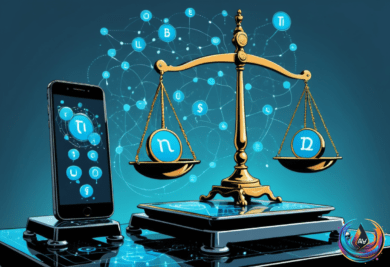
Bill Gates is calling for government action on artificial intelligence, warning that unchecked AI could “cause a billion deaths.” The Microsoft co-founder and philanthropist says lawmakers and law enforcement officials must help decide how AI systems are monitored before the technology becomes harder to control.
Gates made the warning as governments and AI companies debate how to manage systems that are growing more capable. His message is direct: safeguards should be built into AI development now, not added after a serious failure. He believes government monitoring will not stop progress or leave the United States behind in its race with China.
Gates Wants Monitoring Built Into AI Development
Gates has called on the US’s federal legislators and law enforcers to join the discussion about AI safety. “You need law enforcement and the politicians to get into the discussion about what safeguards and monitoring look like,” he said.
His concern goes beyond mistakes made by AI systems. Gates said the most dangerous threat is people with bad intent using AI to cause harm. He warned that AI could help criminals defraud people, shut down electric networks, or scramble bank accounts.
“The most dangerous thing we’re facing right now is people with bad intent using AI,” Gates said. He also described AI as powerful enough to drive events that “cause a billion deaths,” while making clear that today’s systems have not reached the point where they can autonomously seize computers and resist shutdown.
Gates supports legislation requiring a “kill switch” for AI, but he does not view that measure as a complete answer. “It’s not enough to have a kill switch,” he said, arguing that monitoring AI’s actions is another important safeguard that can be added without slowing development.
“We’re not yet at the point where … they autonomously grab computers and, you know, can’t be shut down,” Gates said. His warning focuses on preparing for that risk before systems gain more independence, rather than waiting for a tragedy to expose gaps in oversight.
A Global Problem With No Easy Agreement
Gates believes the United States should lead efforts to create global AI rules. At the same time, he said getting countries to agree on those rules will be harder than Cold War-era negotiations over nuclear weapons. AI regulation, in his view, presents a more difficult diplomatic challenge than nuclear arms control.
That challenge includes competition between the United States and China. Gates said requiring AI companies to use monitoring systems would not hamper the U.S. in that race. He believes governments can oversee the technology while allowing the industry to keep moving forward.
The debate has already drawn competing views from political and technology leaders. Donald Trump, the US President who rejected calls for AI regulation, said superintelligence would be a major topic of discussion with President Xi of China but that he wanted to leave it where it was. On 23 September 2026, Bernie Sanders proposed legislation to pause advanced AI development.
Technology executives have also offered different approaches. Mark Zuckerberg said each AI lab should take the time it needs to make sure it is proceeding safely when issues arise. Brad Smith, Microsoft’s president, compared the race between AI companies to a world with only two companies producing commercial airplanes, asking whether anyone would say, “I need to win this race.”
At Anthropic, whistleblower Jacob Coxon accused two companies of acting irresponsibly, saying they were “racing straight to self-improving superintelligence and gambling with our lives.” The comment reflects the central fear behind Gates’s call for regulation: competition may push companies to move faster than their safety systems can keep up.
Gates Also Points to AI’s Uneven Reach
Gates’s foundation is working with 60 AI companies to expand language capabilities in non-English languages. That work matters because AI systems have an error rate in African languages about 10 times higher than in English.
The gap shows that AI safety is not only about extreme scenarios. It also includes whether people can rely on these systems in the languages they use. Better language coverage could help expand access, but it also requires companies to monitor errors and improve how their systems work across different communities.
The Gates Foundation has over $200 billion in total funds, giving Gates a major platform for both AI development work and calls for safeguards. His public warning in a September 2026 essay places regulation, monitoring, and broader language access in the same conversation: AI should advance, but its risks cannot be left to companies alone.
Gates has also faced questions about his past relationship with Jeffrey Epstein, the disgraced financier and convicted sex offender. Gates called the relationship “regrettable,” said Epstein used their friendship to boost his reputation, and said he regrets every minute he spent with Epstein. He testified about the relationship in June 2026 and said he did not engage in illegal activity with Epstein.
For Gates, the AI debate now comes down to who sets the limits and when. His answer is that lawmakers, law enforcement, companies, and countries must act before AI systems become capable of causing damage that no switch can undo.
Based on
- Bill Gates says unchecked AI could ‘cause a billion deaths’ in call for regulation — theguardian.com
- Bill Gates joins calls for AI safeguards, including legislation | Reuters — reuters.com
- Bill Gates says getting countries to agree on AI regulations will be harder than Cold War-era nuclear negotiations — nbcnews.com
- Bill Gates says AI companies self-regulating isn’t enough and governments should be involved in monitoring — nbcnews.com