Autonomous vehicles are moving from forecast to policy problem. A report from the Centre for British Progress urges the UK government to tax self-driving cars before they put hundreds of thousands of private hire jobs at risk. The proposed charges would help manage congestion, support affected workers and create a future revenue stream as fuel duty fades.
The timing matters because 40% of cars sold could have self-driving capability by the middle of the next decade. Ministers should act early to mitigate the effects on England’s 417,000 taxi and private hire drivers, including 121,000 in London, before autonomous vehicles gain a large customer base that can resist new charges.
“There is not yet a substantial constituency of AV owners who will resist a charge; once there is, taxing them becomes far harder,” says the report. That is the political logic behind introducing a tax now, while self-driving vehicles remain a developing market rather than a well-organised voting bloc.
A new charge for an old fiscal hole
Fuel duty brings in about £27bn a year, but that revenue is projected to disappear as vehicles shift to electric power. The report argues that charges on autonomous vehicles could replace part of that income while also addressing the extra road use created by vehicles that no longer need a human behind the wheel.
Highly automated driving is expected to bring a 24% rise in road miles by 2050, with major effects on congestion and road speeds. An AV charge set to match the social cost of congestion—about 88p per mile—would raise £47bn per year by 2050.
The calculation rests on an awkward feature of driverless transport: empty vehicles can keep moving. Almost half of the mileage covered by Waymo’s robotaxis in California occurs with no passenger on board, and the cost of running an empty vehicle is minimal without a driver to pay. Driving around can become cheaper than parking, which is exactly the sort of incentive cities tend to regret after the traffic arrives.
Fuel duty, introduced in 1909, offers the report’s historical warning. Building up a replacement system before the political fight is easier than trying to impose one after a large group of vehicle owners has learned to organise against it.
Robotaxis are already entering the market
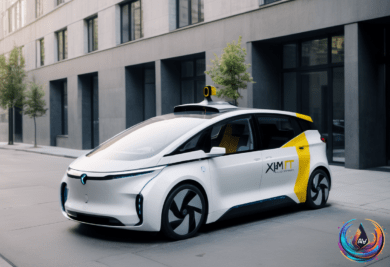
The policy debate is arriving as autonomous services begin to move beyond demonstrations. AVs are described as a “transformative opportunity” for the UK, with robotaxi services starting in London this year, while Uber, partnering with the British tech firm Wayve, has started limited AV services in the capital.
Europe’s first fully driverless taxi trials started in Zagreb, Croatia, this week. Google’s Waymo operates robotaxis in California, and Baidu is also part of the global AV market, which is valued at £700bn.
Wayve’s Sarah Gates, VP global affairs and assurance, rejects a sector-specific tax at this stage. “A sector-specific tax at this early stage would undermine the government’s growth agenda and send precisely the wrong signal: that the UK will penalis”
The Department for Transport therefore faces a familiar policy clash: encourage a technology that could strengthen Britain’s share of a £700bn global market, while preparing for job losses and heavier traffic. A charge designed before mass adoption could fund that transition; a charge designed after adoption could face a much stronger backlash.
David Lawrence, the report’s author, also argues that the effect would reach beyond future tax receipts. “In terms of the way that bond markets behave, even if tax revenue doesn’t peak until 2050, that’s still going to affect your 30-year bond yields today, which obviously is something the government is having to deal with. It can have an immediate impact on fiscal headroom, even if the actual revenue doesn’t come until much further down the line.”
That gives ministers a reason to decide before robotaxis become ordinary transport. The argument is not only about taxing cars that drive themselves; it is about replacing fuel duty, limiting empty journeys and giving taxi workers time to absorb a technology that may remove their jobs.