A British startup called Mass Balance recently launched a small chemical experiment into orbit. Its goal is to study proteins linked to age-related diseases. The experiment will circle the Earth for a few months. During that time, it will observe how live cells grow, react, and function in microgravity.
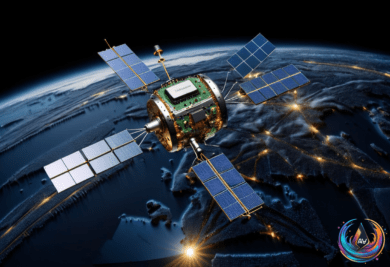
The experiment is packed inside a tiny 10 centimeter pod. This pod was built by an Austrian company named Tumbleweed. Mass Balance aims to collect data that will help train AI models. These models will predict how disordered proteins behave in weak gravity. Toby Call from Mass Balance explains, “When you take away gravity, a lot of weird and wonderful things happen, some of which will be very valuable for life sciences and pharma.”
Besides protein studies, the mission will test an industrial biocatalyst. This biocatalyst breaks down chemical compounds while in space. The goal is to understand how such processes work beyond Earth’s gravity. This could open new doors for chemical manufacturing and medicine.
NASA’s Swift Telescope Rescue Mission
At the same time, NASA launched a robotic mission to save the Swift space telescope. Swift has been studying gamma ray bursts for over two decades. These bursts are intense flashes of high-energy light. Brad Cenko described them as “short-lived flashes of high-energy light that release more energy in just a few seconds than the sun will in its entire lifetime.”
The Swift observatory has confirmed the heaviest elements, like gold and platinum, form in systems involving gamma ray bursts. But Swift is slowly falling toward Earth’s atmosphere. NASA wants to extend its life by moving it to a higher orbit.
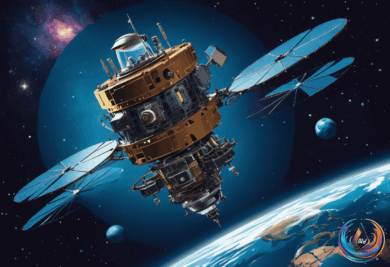
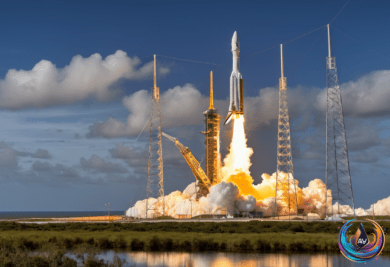
The rescue mission involves a robotic spacecraft named LINK. LINK was developed by an American startup called Katalyst. It launched on July 3 at 4:36 AM Eastern time. The spacecraft rode a Pegasus XL rocket, attached to a plane called Stargazer. This plane took off from Kwajalein Atoll in the Marshall Islands. LINK was released at about 40,000 feet altitude.
Once in space, LINK will check its systems. Then it will dock with the Swift observatory. After docking, LINK will tug Swift to a higher orbit, around 370 miles up. This process should take 10 to 12 weeks. Moving Swift to this higher orbit could extend its life by about a decade.
Why These Missions Matter
Both missions highlight how space technology is evolving. Mass Balance’s experiment could change how we understand diseases and drug development. Studying protein behavior in microgravity will create new data for AI. This data can unlock treatments for age-related illnesses.
At the same time, NASA’s robotic mission shows how satellite servicing is becoming essential. Instead of letting important tools like Swift fall back to Earth, robots can repair or move them. This keeps valuable instruments working longer in space. Extending Swift’s life means more discoveries about cosmic events and element formation.
These missions also show growing cooperation between startups and space agencies. Mass Balance and Katalyst bring fresh ideas and new technology to space exploration. NASA supports these efforts by providing launch opportunities and expertise. This partnership model could speed up innovation in both space science and AI research.
In total, these efforts reflect a new era where small companies play big roles in space. The $30 million investment in these experiments and robotics missions underlines their importance. As space becomes more accessible, expect more projects combining AI, biology, and robotics to take flight.
Based on
- British Space Startup Launches Longevity Lab Into Orbit — wired.com
- Nasa launches robotic mission to save space telescope | South China Morning Post — scmp.com
- NASA Mission To Rescue The Falling Swift Observatory Has Launched — engadget.com
- Roundtables: Longevity’s Next Frontier: “Reprogramming” Your Body | MIT Technology Review — technologyreview.com