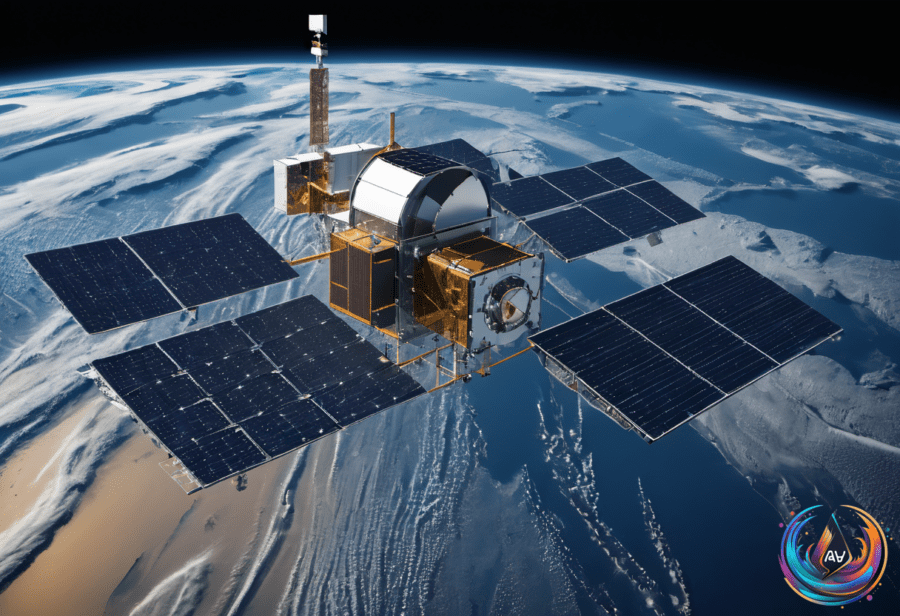
Starcloud has raised another $250 million to build satellites that run AI inference in orbit, taking its total funding to $420 million. The extension follows the company’s $170 million Series A round in March and values Starcloud at $2.3 billion.
The new money comes as Starcloud prepares to expand its manufacturing work and secure launch capacity for a growing lineup of orbital data center spacecraft. The company plans to open a larger manufacturing facility while developing Starcloud-3, its largest orbital data center spacecraft so far.
“We can see what’s coming — we’re going to need to book an enormous amount of launch,” Philip Johnston, Starcloud’s CEO, said.
Building satellites for AI in orbit
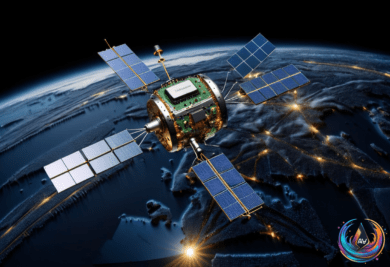
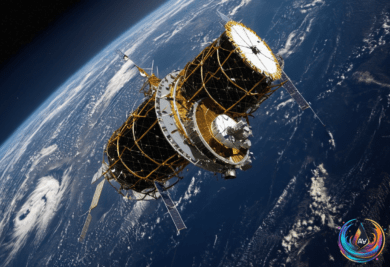
Starcloud is developing satellites that can perform AI inference in orbit, rather than sending every computing task back to Earth. The company is also the only one currently operating a Nvidia H100 terrestrial data center GPU in orbit and the first to train a model using it.
Most other space GPUs are designed for edge processing. Starcloud’s work with the H100 gives the company experience with a terrestrial data center GPU operating in orbit, and it is sharing those learnings with Nvidia as the companies develop the Vera Rubin Space-1 chip.
Starcloud hopes to fly the space-ready chip into orbit sometime in late 2028. The timing places the chip alongside the company’s wider effort to build production lines and prepare new generations of orbital computing hardware.
Those production lines are being developed at a 100,000-square-foot facility in Woodinville, Washington. Starcloud currently has 25 employees and is growing.
Launch capacity becomes the next challenge
Starcloud’s plans depend on access to rockets. The company is focused on launching two of its new generation of 8 kW compute satellites, called Starcloud-2, on rideshare flights in 2027. It is also considering buying a dedicated Falcon 9 launch and signing contracts with other providers.
Starcloud-3 is intended to fly on SpaceX’s forthcoming Starship rocket. The company is built around the potential of Starship to reduce launch costs, but the rocket’s schedule remains part of the planning challenge.
SpaceX CEO Elon Musk said his company will delay an attempt to catch a returning Starship rocket for a few months and will try to re-fly the vehicle at the end of the year or early 2027. Starcloud’s largest spacecraft is intended for that rocket, connecting the company’s manufacturing plans to Starship’s development.
At the same time, SpaceX’s Falcon 9 program is scheduled to end in 2028. That deadline matters because Starcloud is planning launches beyond the company’s near-term Starcloud-2 rideshare flights.
“One of the biggest costs is now on securing your launch capacity…launch is pretty constrained right now because [SpaceX’s] Falcon 9 program is scheduled to end in 2028,” Johnston said.
He also described the risk facing Starcloud’s longer-term plans: “Obviously if we can’t book any SpaceX launch capacity in 2029, that will be challenging for us.”
Funding follows early orbital data
Manhattan West Ventures led the funding extension, with Nvidia and Cisco participating. Nvidia contributed $25 million. Benchmark, EQT, Soma, NFX, 776, Cedar Capital, Goanna Capital, and Standard Capital also participated.
Johnston said Starcloud’s earlier orbital work helped drive the new investment. “The reason they’ve chosen to do this investment now is because of all of this data that we got from Starcloud One,” he said.
The $250 million extension gives Starcloud more capital to expand its manufacturing operation, develop Starcloud-3, and prepare its Starcloud-2 satellites for planned 2027 rideshare flights. It also arrives as the company works to secure enough launch opportunities for a future fleet.
Starcloud has requested permission from the FCC to operate 88,000 spacecraft. That request sits alongside a smaller near-term plan: two 8 kW Starcloud-2 satellites in 2027, followed by the development of Starcloud-3 and work toward flying the Vera Rubin Space-1 chip in late 2028.
The company now faces two linked tasks. It must grow from its current 25 employees and build production capacity at its Woodinville facility, while also finding rockets for the spacecraft that come next.
For Starcloud, orbital AI depends on both sides of that equation: satellites capable of handling data center workloads and enough launch capacity to place them in orbit.
Based on