Big moves are happening in AI infrastructure and physical-world tech. The landscape is shifting fast, and investors are leaning into the hard stuff: energy, manufacturing, and data centers. Why? Because the physical world holds the real moat now. Software’s edge is fading. Infrastructure is where the future is being built.
From Meta’s CTO to $250 Million Fund
Mike Schroepfer left Meta in 2022. He didn’t just disappear. Instead, he launched Gigascale Capital. This month, Gigascale raised its first institutional fund — a hefty $250 million. That’s serious firepower. The fund has already backed over 25 companies, with investments ranging from $1 million to $10 million. Their focus? Companies rebuilding the physical economy.
Schroepfer’s Meta experience shaped this. He saw firsthand how vital infrastructure is to power massive AI and software systems. “I could see the trends coming. We’re going to need all the compute,” he said. Gigascale targets startups from pre-seed through Series A, with some later-stage bets. These companies work on energy infrastructure and advanced manufacturing — the backbone of future tech.
Europe’s AI Infrastructure Challenge and Opportunity
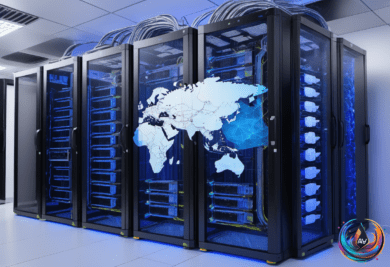
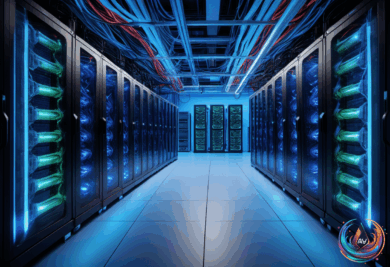
Europe faces a big gap in AI compute capacity. Right now, it hosts only about 5% of global AI compute. The U.S. dominates with roughly 75%. Why? Most European data centers can’t handle modern AI demands. High power density GPUs need special support. Europe’s grid-connections are slow, with waits of seven to ten years in major hubs.
The demand for data centers in Europe is exploding. It’s expected to jump from 10GW in 2023 to 35GW by 2030. McKinsey estimates the region needs $250 to $300 billion in infrastructure investment to keep up. Energy access, regulation, permitting, and environmental risks complicate building these centers. Reliability is key, too. It’s a design and operations challenge that demands redundancy and strong procedures.
Damir Špoljarič, founder of Gi21 Capital, shares a bold vision. His firm, backed by founder capital, has invested in over 25 companies valued at more than $4 billion. He insists, “Europe isn’t behind in talent, models or applications, it’s behind in the physical layer underneath them.” He adds, “The demand side is moving fast. European data centre demand is forecast to roughly triple — from around 10GW in 2023 to 35GW by 2030.”
Gi21 plans to launch a platform to build Europe’s largest AI-ready data center network. Špoljarič says, “Closing the gap by 2028 is about resilience and sovereignty as much as growth.” For him, founder-led capital beats traditional VC. It avoids pressure from limited partners and short fund lifecycles, allowing a longer-term focus.
Why Physical Tech Is the Real Catalyst
The physical world isn’t just infrastructure. It represents 85% of global GDP. Investors see it as the next frontier. Susan launched Eclipse Ventures in 2015, betting on this shift. Her firm’s early $6.5 million Series A investment in Cerebras Systems exploded into a $2.5 billion return after its IPO. That’s a massive win.
Shares of companies like TSMC and Micron hit all-time highs. These giants drive physical-world tech growth. AI helps, but it’s not the only driver. Robotics, energy, and defense startups raised nearly $15 billion last year. The U.S. government’s subsidies and regulations fuel innovation here.
Chi-Hua Chien, co-founder of Goodwater Capital, captures this well: “The largest winners of the AI era won’t be the businesses promoting AI but those leveraging it to transform industries.” That means companies using AI to revolutionize manufacturing, health, and real-world interfaces like Fever, Midi Well Health, and Bump.
Špoljarič sums it up: “The next decade will see even more convergence between hardware and software, driven by AI but not limited to it.” He calls infrastructure “the real moat” today. Software’s easy to copy. Physical assets and deep operational know-how make tech defensible.
What’s Next for Builders and Investors?
If you’re a budding founder in Prague, Warsaw, or Madrid, Špoljarič’s advice is clear: “First, actually start. Build something real and put it in front of a paying customer as fast as possible.” Funding is fuel, not the finish line. Many well-funded startups never build lasting businesses.
The road ahead isn’t easy. Data centers demand complex energy access and regulatory navigation. Reliability requires smart design and operations. But the prize is huge. Infrastructure controls the future of AI and physical tech. It offers real, defensible advantages that software alone can’t match.
Gigascale Capital and Gi21 are racing to fill this gap. Eclipse Ventures’ success proves the bet pays off. The physical economy is ripe for transformation. The trillion-dollar companies of tomorrow will own the infrastructure. The question is: Who will build it first?
Based on
- Why Ex-Meta CTO Mike Schroepfer Says It’s A Great Time To Build A Hard Tech Company: ‘Infrastructure Is The Moat’ — news.crunchbase.com
- Ex-Meta CTO Raises $250M for Climate Tech: A Bold Move Against the Tide (2026) — stcokshareprice.com
- Damir Špoljarič: Why Gi21 Capital is betting on Europe’s largest AI-ready data centre platform – – EU News Week — eunewsweek.com
- How Eclipse Ventures’ $2.5B Cerebras Win Signals a Shift to Physical-World Tech Investing (2026) — coupeintel.com
- Chi-Hua Chien noticed Fb coming — now he says the true AI winners will not be promoting AI – Evanino.com — evanino.com