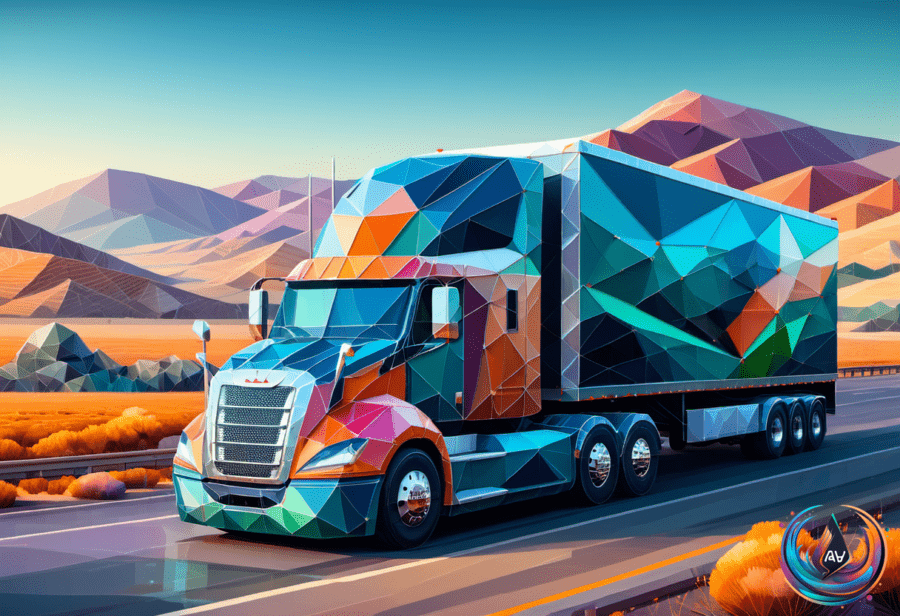
The California Teamsters union is suing state agencies over new rules about self-driving trucks. They claim the state’s Department of Motor Vehicles (DMV) rushed these regulations without proper review. The union says the rules threaten hundreds of thousands of truck driving jobs in California.
California once banned large autonomous trucks because unions worried about job losses. Now, the DMV has created a new framework allowing both light-duty and heavy-duty trucks to test self-driving technology on roads. The Teamsters argue this is a huge risk for workers.
The lawsuit asks the court to stop the DMV from enforcing the rules. The union also wants the regulations declared invalid. Their attorney, Julie Gutman Dickinson, said the DMV “irresponsibly, carelessly, and unlawfully” kept the public from understanding the real economic and human costs.
She added, “The only way to protect the public’s right to properly scrutinize these regulations is for the court to order the DMV to immediately rescind the illegally enacted regulations.” The union also claims the DMV skipped a required economic study before adopting the rules.
California leads the nation in truck driver employment. There are more than 200,000 employee semi-truck drivers in the state. The Teamsters warn that these new rules could eventually eliminate up to 400,000 jobs nationwide. That’s a huge blow to the truck driving community.
Autonomous Vehicles and the Changing Landscape
The US autonomous vehicle (AV) trucking market is expected to reach $18 billion by 2030. California is a key market for this growth. The DMV’s new regulations follow a national trend toward testing and deploying self-driving trucks.
Meanwhile, in Washington, D.C., lawmakers are considering a bill called the “Autonomous Vehicle Deployment Authorization Amendment Act.” This bill would allow widespread use of AVs in the city. But organized labor opposes it because of worries about driver wages and job security.
About 35,000 people work as gig drivers in D.C. That’s around 9% of the labor force. The metro area lost over 100,000 jobs in the past year, mostly due to federal job cuts. Crystal Middleton, a part-time rideshare driver and union member, said she cannot understand why the city would bring in companies that threaten thousands of drivers’ jobs.
Middleton said, “Robotaxis also don’t pay taxes. They don’t raise families here. They don’t vote. They don’t make judgment calls when someone is in trouble.” She warned this is more than a safety issue. “It’s all about profits that won’t get reinvested into the district but go straight to Silicon Valley.”
Industry Responses and the Future of AVs
Uber supports expanding autonomous vehicles and the D.C. legislation. Harry Hatfield, Uber’s director of AV and AI policy, said AVs can improve safety, speed electrification, expand transportation access, and lower costs. He believes the future will blend human drivers and autonomous vehicles.
Hatfield said, “The future of transportation is not a binary choice between human drivers and autonomous vehicles. It will be hybrid, with human drivers and AVs operating side by side.” He added one AV in California now does the work of roughly four drivers, showing the impact of automation.
Uber has invested heavily in this space. It set aside $7.5 billion for robotaxi fleet development and another $2.5 billion for investments in other AV developers. The company also created Uber Autonomous Solutions to bring autonomous platforms to market, including mapping and navigation technology.
Despite supporting AV expansion, Uber acknowledges the challenges for workers. The company supports a hybrid network to ease workforce transitions and prevent sudden job losses. This contrasts with some legislation in New Jersey and D.C. that could ban hybrid models entirely.
Waymo, another big player in the AV world, remains optimistic about growth, especially in D.C. Its regional head, Matthew Walsh, says market operation should be up to riders and that hybrid networks will not be restricted. Waymo is also considering ending partnerships with Uber in Austin and Atlanta by 2028.
Meanwhile, federal regulators are clearing the way for robotaxis to operate without manual controls like steering wheels or brake pedals. This move signals a strong push toward fully autonomous vehicles in public use.
Another labor-related lawsuit is underway in New Jersey, where Amazon faces claims it illegally controls contract delivery drivers. The suit alleges Amazon blocks unionization and restricts drivers from working elsewhere, lowering wages and worsening conditions for thousands.
The rise of autonomous vehicles marks a turning point. It promises safer roads and new technology. But it also raises big questions about jobs and fairness. Unions, companies, and lawmakers are all wrestling with how to balance progress with protecting workers.
Based on
- The California Teamsters union is suing the state over self-driving trucks — engadget.com
- Inside Uber-Waymo rift, there’s a battle over AVs in nation’s capital — cnbc.com
- Some robotaxis approved to operate without steering wheels — ctvnews.ca
- Some robotaxis approved to operate without steering wheels and losing the brake pedal could be next | AP News — apnews.com
- New Jersey is suing Amazon, alleging it “unlawfully maintains” power over contract delivery drivers. | The Verge — theverge.com