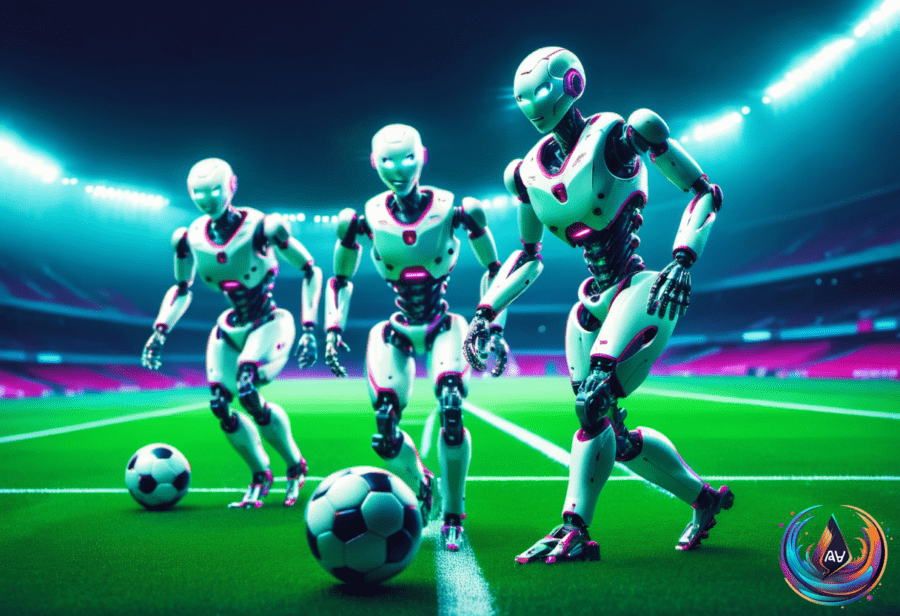
Robots made a clean sweep at RoboCup 2026. From June 30 to July 6, humanoid teams battled it out in three divisions. Beijing’s Booster Robotics stole the show. Their robots took gold, silver, and most of the podium spots across Small, Middle, and Large divisions.
Out of 59 teams in the humanoid leagues, 38 used Booster Robotics machines. Booster handles both hardware and software. Their software focuses on perception, fast decision-making, and team coordination. They even launched Booster Studio, a new environment to develop embodied intelligence. Plus, Booster started its own 3v3 robot football league to push the sport further.
China shipped about 90% of the world’s humanoid robots last year. That dominance is clear at RoboCup. The event also marked the first time two full teams of 11 humanoid robots played each other on real hardware. The German team, B-Human, beat HTWK Robots 4:0 in the humanoid football division.
The goal behind all this robot football goes way beyond trophies. Since 1997, RoboCup has aimed to build humanoid robots that can beat the human World Cup champion by 2050. One competitor said bluntly, “Our team’s ultimate goal is that we will beat the FIFA champion in 2050.”
Atlas Steals the World Cup Spotlight
Just two days after RoboCup ended, Boston Dynamics’ Atlas robot took center stage at the 2026 World Cup in New Jersey. Owned by Hyundai Motor Group, Boston Dynamics showed off Atlas during halftime. The six-foot, 200-pound humanoid robot presented the match ball and even mimicked Norway striker Erling Haaland’s celebration.
Atlas also delivered the soccer ball to the referee during the match. This appearance marked a first in World Cup history. It showed just how far humanoid robots have come. Atlas has been around since 2013, known for parkour, dances, and backflips. The latest versions have fully rotational joints. That means its head, torso, and limbs can spin 360 degrees.
Boston Dynamics designed Atlas with a friendlier look inspired by the Pixar lamp. The company also demonstrated Atlas doing soccer skills in videos made for the World Cup. Meanwhile, Spot, their robot dog, provided security at the New York-New Jersey stadium.
The Future of Humanoid Robots Looks Bright
The market for humanoid robots is booming. Morgan Stanley estimates it will grow from $3 billion in 2025 to $28 billion by 2030. Companies like Weave, Sunday Robotics, 1X, and Tesla plan to ship robotic helpers soon. Hyundai plans to deploy Atlas in its Georgia factory in the next few years.
David Kehr, president of Humanoid Robotics, said, “You see China and the US … because of AI … typically they are considered the leaders, but do not count out Europe.” He also warned that regulation should not become so heavy that it “stifles” the humanoid and physical AI market.
Humanoid robots have already outrun human records in running. They finished half-marathons faster than people. The next generation of humanoid robots aims to learn independently and adapt to new environments. Unlike industrial robots, they won’t just follow pre-set programs. This shift could change how robots work and interact with the world.
Robots are no longer just machines on factory floors. They are playing sports, entertaining crowds, and learning on the fly. The dream of robots beating human World Cup champions by 2050 is no longer science fiction. It’s a goal that feels closer every year.
Based on
- Robots swept RoboCup 2026, and they’re coming for the human World Cup by 2050 — thenextweb.com
- The robots have made it to the World Cup | Business Insider Africa — africa.businessinsider.com
- Hyundai robot Atlas performs at World Cup – UPI.com — upi.com
- Physical AI ‘space race’: can Europe compete with China and the US in humanoid robotics? | South China Morning Post — scmp.com