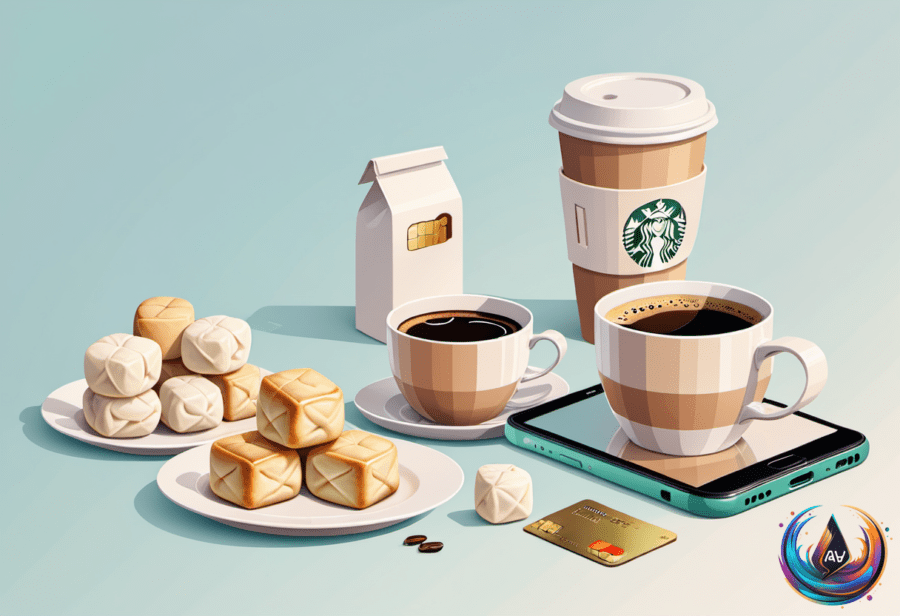
AI tokens are leaving the data center. Chinese banks, cafes, telecom operators, restaurants, and online marketplaces are turning them into consumer incentives, treating computing credits like mobile data, loyalty points, or free Wi-Fi.
An AI token is a unit of computing that an AI model uses to process text. Most ordinary users still encounter AI through an app or feature, without seeing a token balance. That is changing as businesses put tokens directly into credit card rewards, monthly service plans, meals, drinks, and marketplace listings.
China’s daily token consumption surged from 100 billion in early 2024 to 500 trillion in mid-2026. Token prices have become a new front in the global AI race, with U.S. and Chinese AI companies cutting prices to win wider adoption of their models.
Credit cards and phone plans become AI wallets
Chinese banks have started attaching large token allowances to cards aimed at developers and AI users. In June 2026, China Merchants Bank launched a credit card targeting AI developers, offering new cardholders up to 1.8 billion tokens for use on MiniMax’s models.
Shanghai Pudong Development Bank launched another credit card for AI developers, offering subsidies worth up to 3 billion tokens for Alibaba Qwen models. In July 2026, Chinese AI startup Moonshot AI launched a credit card named after its Kimi model in partnership with the Agricultural Bank of China and American Express.
The country’s three major telecom operators have packaged AI usage much like mobile data plans. China Telecom offers consumer plans starting at 9.9 yuan ($1.40) a month for 10 million tokens, while China Mobile offered 400,000 tokens for 1 yuan (14 cents) in Shanghai.
China Unicom introduced monthly plans for business users ranging from 15 yuan ($2.10) for 6 million tokens to 45 yuan ($6.30) for 18 million tokens. The structure is familiar: pay a recurring fee, receive a fixed allowance, and watch the balance become someone else’s problem when it runs out.
Chinese open-source and open-weight models can cost 60% to 90% less than comparable models from OpenAI and Anthropic. Lower prices make token allowances easier to use as promotions, but they also turn the token itself into a competitive product.
Free computing arrives with dumplings and coffee
Restaurants, cafes, and bars are using AI computing as a promotional incentive. At Beijing’s AGI Bar, customers who buy a drink and connect to Wi-Fi can get unlimited access to DeepSeek V4 Flash; on August 9, 2026, a customer looked at a menu board there.
Beijing’s Jingu Yuan dumpling restaurant gives customers 10 yuan ($1.40) worth of computing credits after a meal. Cards on tables tell diners to collect tokens at the cashier for their AI agent, and the restaurant’s two stores have been handing out more than 100 vouchers a day.
A 24-hour coffee shop in Changsha offers customers AI tokens with their coffee. The promotion does not require a new behavior from customers—just a purchase, a token allowance, and a reason to return before the machines stop handing out the digital equivalent of a free side dish.
Poe Zhao captured the current user experience plainly: “Most ordinary users still encounter AI through an app or feature, without seeing a token balance.” Businesses are now making that balance visible by attaching it to ordinary transactions.
The token economy has also reached Xianyu, Alibaba-owned China’s large online secondhand marketplace. Sellers advertise access to AI models in packages measured by tokens, with listings offering millions of tokens for a few dollars through day passes or monthly subscriptions.
Some sellers break up model allowances and resell them to students, independent developers, and small businesses. The result is a secondary market where access to AI models is packaged like a prepaid service rather than sold as a single software product.
Banks in Guangzhou are testing tokens as a way to boost business for AI startups. In August, the city’s Haizhu district launched a financial product called “token loan,” allowing banks to measure a company’s token production and consumption when deciding its borrowing capacity.
That move pushes tokens beyond discounts and giveaways. They become a measure of business activity—and, at least in Haizhu, a factor in whether a company can borrow money. China’s AI market is not waiting for tokens to remain an invisible backend detail. It is putting them on cards, menus, phone bills, resale listings, and loan applications.
Based on